

More news on this day
A tentative ceasefire across key flashpoints in the Middle East is beginning to steady traveler confidence and airline schedules, with new and returning EgyptAir routes to the United Arab Emirates, Saudi Arabia, Iraq and other markets signaling a cautious revival in regional tourism flows.
Get the latest news straight to your inbox!
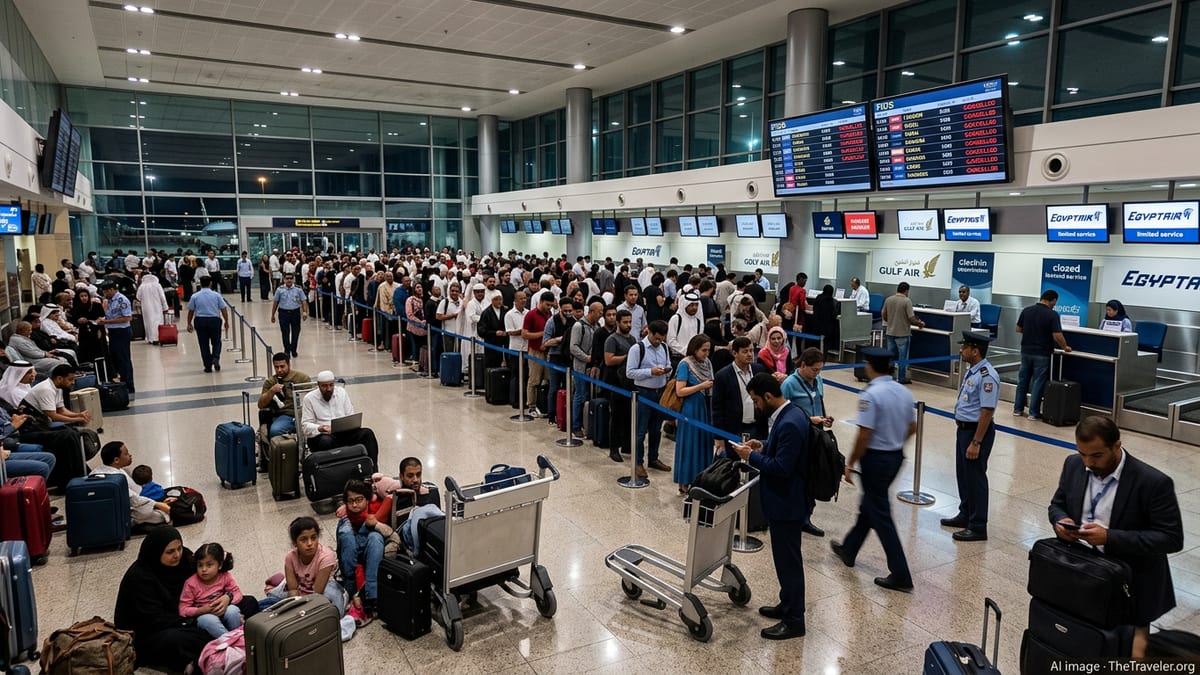
Ceasefire Eases Travel Disruptions Across the Region
After several years of conflict-linked airspace closures and rapidly shifting travel advisories, a series of ceasefire arrangements has started to reduce operational uncertainty for airlines serving the Middle East. Publicly available information shows that truce agreements connected to the Gaza conflict and related fronts have curbed the most disruptive phases of missile and drone attacks that previously forced widespread rerouting and cancellations. While risks remain and aviation security levels stay high, the relative lull is beginning to translate into more predictable schedules for carriers and travelers.
Industry analyses indicate that the easing of hostilities is particularly significant for the busy air corridors linking the Gulf, the Levant and the Red Sea. These routes underpin tourism and business travel to hubs such as Dubai, Abu Dhabi, Sharjah, Riyadh and Muscat. During the height of the crisis, carriers regularly suspended services or shifted to ad hoc operations in response to short-notice airspace closures. The emerging ceasefire conditions are now allowing airlines to plan capacity several months ahead, a prerequisite for tour operators and travel agencies to rebuild demand.
Travel data providers report that booking patterns into Gulf Cooperation Council destinations have started to normalize compared with the most volatile months of regional tension. Forward bookings remain sensitive to political headlines, but search volumes for UAE and Saudi Arabia stays, in particular, have edged back toward pre-disruption trends. That shift suggests travelers are increasingly willing to commit to trips once they perceive a basic level of stability in air links and border policies.
Despite the improving outlook, aviation and tourism analysts caution that the recovery rests on a fragile security balance. The experience of sudden escalations in recent years means airlines are keeping contingency plans in place, and travelers are being encouraged to maintain flexible itineraries. The present moment is less a full reset than a window of relative calm that regional tourism players are keen to use to re-establish confidence.
Gulf Destinations Lead Tourism Revival
Even amid geopolitical turbulence, Gulf destinations have emerged as some of the strongest performers in the global tourism rebound. Recent tourism barometers and economic reports highlight that Saudi Arabia, the United Arab Emirates and Oman, among others, recorded some of the fastest growth in international arrivals and visitor spending in 2024 and 2025, outpacing the global average recovery. Investment in new attractions, streamlined visa regimes and aggressive marketing campaigns have positioned these countries as resilient, year round destinations.
Saudi Arabia, in particular, has been at the forefront of regional tourism growth. Government and industry figures show that the kingdom has hosted record numbers of foreign visitors in recent seasons, with leisure travel now accounting for a growing share alongside religious and business segments. Large scale projects aligned with the country’s diversification plans, including new coastal destinations and heritage circuits, are designed to lock in this momentum by broadening the range of experiences on offer.
The UAE continues to consolidate its role as a key global transit and tourism hub. Dubai’s mix of mega events, shopping festivals and beach resorts, alongside Abu Dhabi’s cultural institutions, has helped sustain strong international demand. Sharjah, with its family focused and cultural positioning, has also benefited from the wider upswing, attracting visitors seeking a quieter alternative within the same air and road network. Oman, meanwhile, is seeing steady growth in adventure and eco oriented tourism, supported by investments in coastal and mountain infrastructure.
Regional organizations tracking travel trends note that intra Gulf travel has been one of the standout stories of the recovery, with citizens and residents moving more frequently between neighboring states for leisure and short breaks. That pattern amplifies the impact of every additional seat an airline adds on routes within the bloc, reinforcing hotel occupancies and ancillary spending even when long haul markets are slow to return.
EgyptAir Restores and Expands Key Routes
Within this gradually stabilizing environment, Egypt’s flag carrier is moving to rebuild its Middle Eastern network. According to recent statements and local media coverage, EgyptAir has begun the gradual resumption and expansion of flights from Cairo to major Gulf and Iraqi cities, reversing a wave of suspensions that affected more than a dozen regional destinations earlier in 2026. The airline had halted services amid heightened regional tensions that disrupted operations and narrowed available air corridors.
Updated schedules reported in Egyptian and regional outlets indicate that EgyptAir is now operating daily flights to Dubai, Sharjah and Riyadh, alongside increased frequencies to Abu Dhabi, Dammam and Amman. The carrier is also restoring direct links to Erbil and Baghdad, reconnecting Egypt with important business and diaspora markets in northern and central Iraq. These moves are being presented locally as part of a broader effort to re normalize air connectivity between Egypt and its near neighbors following months of instability.
The renewed services to the United Arab Emirates align EgyptAir with some of the highest demand flows in the wider region. Dubai and Sharjah, in particular, act as both final destinations and connection points for travelers heading to Asia, Europe and the Indian Ocean. By reinstating multiple daily flights, EgyptAir is seeking to retain Egyptian and African passengers who might otherwise route through competing hubs.
Direct services to Riyadh and other Saudi cities are equally strategic. Saudi Arabia’s tourism expansion, as well as the continued growth of religious travel, creates sustained demand for capacity from Egypt and beyond. Regular flights to Erbil and Baghdad re open important trade and labor channels, underscoring how aviation links underpin economic and human ties alongside tourism.
Stability Supports Investor and Airline Confidence
The interaction between security conditions and airline strategy is at the center of the current phase of regional tourism recovery. When missile and drone risks were at their peak, many carriers either suspended services entirely or relied on complex routings that raised costs and extended travel times. With the ceasefire easing immediate threats on some fronts, airlines are beginning to restore more direct paths and re introduce aircraft that had been redeployed elsewhere.
Airline planners typically require a degree of predictability before committing aircraft, crews and marketing budgets to a route. The current relative calm is therefore creating space for medium term planning, from seasonal capacity increases to the launch of new services. Reports from aviation consultancies suggest that carriers based in the Gulf and wider Middle East are once again studying network growth scenarios that assume stable or gradually improving risk levels, rather than recurring large scale disruptions.
Investors in tourism infrastructure are responding in parallel. Data from regional development agencies and international market analyses show multi billion dollar pipelines of hotels, resorts and mixed use projects progressing across the UAE, Saudi Arabia, Oman and Egypt. Financing agreements and construction timelines depend heavily on expectations of steady visitor flows. The perception that a ceasefire is holding, even if imperfectly, reduces some of the uncertainty that had threatened to delay or downsize such projects.
However, industry observers emphasize that resilience strategies remain essential. Many Gulf and Levant destinations are prioritizing domestic and intra regional tourism alongside long haul markets, in order to cushion against potential external shocks. Airlines, including EgyptAir, are maintaining flexibility in fleet deployment and are prepared to adjust frequencies if conditions deteriorate. The lesson of recent years is that diversification and contingency planning are now core components of tourism growth strategies.
Tourists Return Cautiously to a Reconnected Middle East
As flight networks are rebuilt and travel advisories soften, visitor behavior is beginning to shift from postponement and cancellation toward cautious return. Booking portals and travel agencies report renewed interest in multi stop itineraries that combine Egypt with Gulf cities such as Dubai, Sharjah or Riyadh, facilitated by the reappearance of EgyptAir’s direct connections. These routes make it easier for travelers to combine cultural sightseeing in Cairo or Luxor with shopping and beach stays in the UAE or city breaks in Saudi Arabia.
Regional tourism boards are tailoring campaigns to this evolving demand, highlighting both new attractions and perceived improvements in safety. In the UAE and Saudi Arabia, marketing materials emphasize family friendly entertainment districts, major cultural festivals and sporting events scheduled over the coming seasons. Egypt is promoting its forthcoming museum openings and archaeological sites, banking on improved connectivity to convert global curiosity into arrivals.
Travelers, for their part, are weighing attractive deals and expanded flight options against lingering concerns about sudden escalations. Travel insurance uptake for Middle East trips remains high, and many itineraries are built with flexible booking conditions. Industry sources note that tourists are increasingly informed about airspace dynamics and route alternatives, reflecting lessons learned from earlier rounds of disruption.
For now, the combination of a fragile ceasefire, strong tourism fundamentals in Gulf destinations and EgyptAir’s expanding web of direct flights is tipping the balance in favor of renewed movement. If relative stability holds, the coming seasons could mark a turning point in restoring the Middle East’s position as one of the world’s most interconnected and fast growing travel regions.