

More news on this day
Cebu Pacific has suspended all flights between the Philippines and Dubai until April 30, 2026, as the escalating conflict and airspace restrictions in the Middle East continue to disrupt travel across the region.
Get the latest news straight to your inbox!
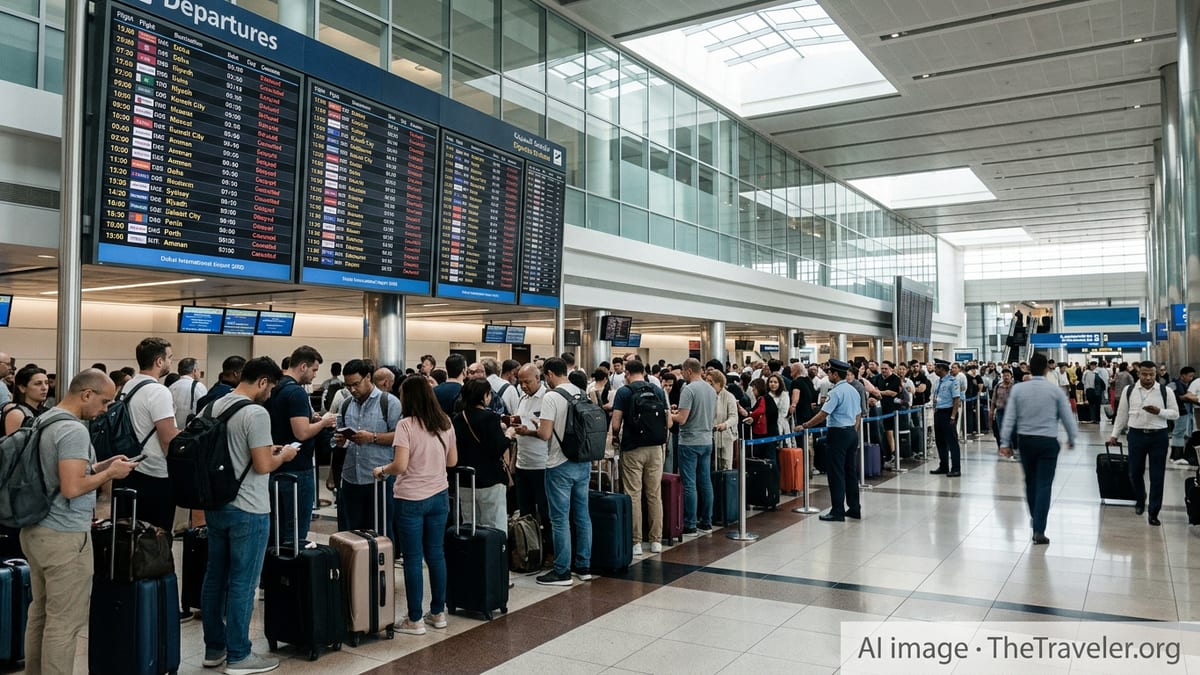
Regional Security Turmoil Forces Route Suspension
The decision to halt services on the Manila–Dubai and other Philippines–Dubai routes comes against the backdrop of ongoing instability linked to the conflict involving Iran and several Gulf states. Publicly available information on recent airspace closures and missile and drone activity around the United Arab Emirates indicates that carriers serving Dubai have faced repeated operational disruptions since late February 2026.
Flight tracking data and published coverage of the broader aviation impact show that Dubai International Airport, one of the world’s busiest hubs, has experienced intermittent shutdowns and a wave of cancellations in recent weeks. Airlines flying into and over the Gulf have been forced to reroute or ground services as conflict-related risks to commercial aviation increased.
Within this volatile environment, Cebu Pacific has opted to suspend all commercial flights to and from Dubai until April 30, 2026, as a precautionary measure. The move is framed by the airline’s broader response to the Middle East crisis, in which it has been progressively cutting and adjusting international services exposed to higher security and fuel risks.
Observers note that the suspension aligns with a wider pattern of carriers temporarily pulling out of certain Middle Eastern gateways while the regional situation remains fluid. Aviation analysts point out that airlines have limited flexibility when key air corridors are restricted, leaving suspensions and large-scale rerouting as the only viable options.
Passenger Impact and Options for Affected Travelers
The suspension of Cebu Pacific’s Dubai services affects thousands of passengers with bookings in the March and April 2026 travel window, including overseas Filipino workers, returning residents, and leisure travelers. Public advisories and customer discussions indicate that many travelers bound for or returning from Dubai have seen flights canceled or removed from schedules, often with limited alternative options on the same carrier.
According to information shared in Cebu Pacific’s travel advisories and summarized in local business and consumer coverage, affected passengers are being offered the ability to rebook at a later date, convert unused tickets into travel credits, or explore other remedies within the airline’s disruption policy. Some notices suggest that flexibility is being extended for travel dates around the suspension period, with fees waived in specific cases.
However, traveler accounts on public forums highlight the challenges of securing new itineraries amid high demand for remaining seats on alternative airlines. With many competitors also cutting or suspending flights to Dubai, available capacity has tightened, pushing up fares on carriers that continue to operate in and out of the United Arab Emirates.
Reports from passenger groups further underscore the uncertainty faced by those with onward connections or expiring visas. Many are weighing whether to wait for Cebu Pacific’s Dubai route to resume after April 30, 2026, or to purchase new tickets on Middle East or European carriers that are maintaining reduced services into the region.
Fuel Prices, Capacity Cuts, and Airline Strategy
In addition to security risks, surging jet fuel prices linked to the Middle East conflict are putting further pressure on airlines such as Cebu Pacific. Business and energy reports from the Philippines indicate that local carriers have been grappling with higher operating costs and are trimming capacity on selected routes to conserve fuel and protect finances.
Cebu Pacific has already announced network-wide adjustments, including the suspension and reduction of flights on a series of international routes, particularly those with thinner demand or higher operating costs. The Dubai suspension fits into this broader strategy of concentrating resources on core markets that remain commercially and operationally viable during the crisis period.
Industry analysts note that low-cost carriers have less room to absorb prolonged spikes in fuel prices, given their tight margins and reliance on high aircraft utilization. As a result, suspending long-haul or fuel-intensive routes can be a faster way to stabilize operations than imposing steep fare increases that might dampen demand.
At the same time, aviation market commentary suggests that Cebu Pacific, like many regional airlines, is trying to preserve flexibility. By setting an end date of April 30, 2026, for the Dubai suspension, the carrier retains the option to either resume flights if conditions improve or extend the halt again should security and cost pressures persist.
Part of a Wider Wave of Middle East Flight Disruptions
Cebu Pacific’s move mirrors a broader global response as airlines around the world adjust to the Middle East conflict. International coverage of the situation documents how multiple Asian and European carriers have suspended or limited operations to Dubai, Doha, Riyadh, and other regional hubs, often citing airspace closures and safety concerns.
Some full-service airlines have temporarily halted all services to Dubai or neighboring destinations through late April 2026, while others have rerouted flights to avoid affected airspace, resulting in longer flight times and higher fuel burn. Low-cost and leisure-focused carriers have been particularly quick to suspend or consolidate routes seen as high risk or marginally profitable in the current environment.
For passengers, the cumulative effect has been one of the most significant periods of disruption to Middle East travel since the height of the global health crisis. Travel media and consumer organizations report widespread rebookings, extended layovers, and a rise in complex multi-leg journeys as travelers piece together itineraries across several airlines and hubs.
Within Southeast Asia, Philippine carriers, Gulf-based airlines, and regional competitors are all recalibrating their networks in response to shifting demand and operational constraints. Cebu Pacific’s suspension of its Dubai flights until April 30, 2026, is one of the clearest signals yet of how deeply the conflict has reshaped air connectivity between the Philippines and the Gulf.
What Travelers Should Watch in the Coming Weeks
As the April 30, 2026 suspension deadline approaches, travelers with bookings to or from Dubai are being advised by consumer advocates and travel commentators to monitor airline advisories closely. Changes to the security situation, fuel prices, or airspace restrictions could prompt Cebu Pacific and other carriers to either restore capacity more quickly or introduce further cancellations.
Passengers are also being encouraged to review the terms of their tickets and any applicable travel insurance. Published guidance from travel industry groups notes that policies differ on how disruption caused by conflict or airspace closure is treated, and that knowing the options in advance can help travelers make faster decisions if flights are canceled.
For now, publicly available schedules show that Dubai remains off the map for Cebu Pacific until at least the end of April. Whether the route can resume as planned will depend not only on the security outlook in the Middle East, but also on how quickly fuel markets stabilize and whether demand from Filipino travelers and overseas workers rebounds.
In the meantime, aviation observers expect the Philippines to rely heavily on Middle East and European carriers that continue to serve Dubai and other Gulf gateways, ensuring that essential traffic flows are maintained even as local airlines navigate one of the most complex operating environments of recent years.