

More news on this day
Celestyal is cancelling several April departures after its two ships became stranded in the Arabian Gulf amid the escalating conflict involving Iran, reshaping early-season cruise plans across Greece and the wider Mediterranean.
Get the latest news straight to your inbox!
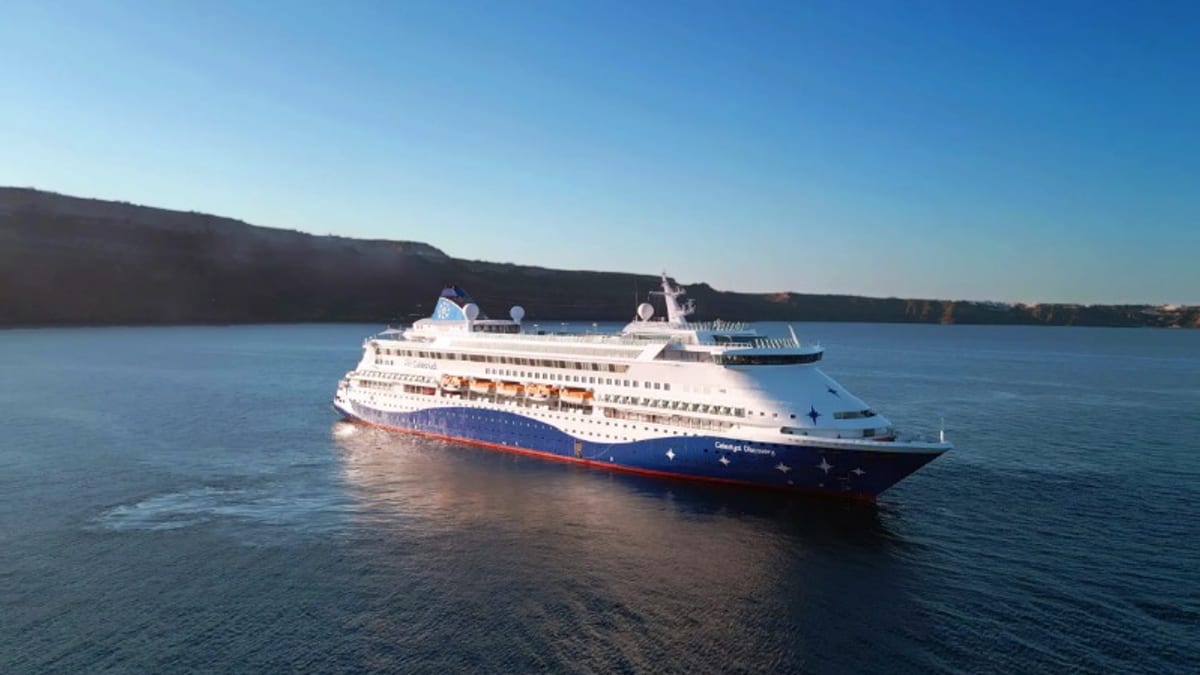
Image by Cruise Industry News | Cruise News
April Sailings Pulled as Ships Remain in the Gulf
Celestyal has withdrawn a series of early April cruises after both Celestyal Journey and Celestyal Discovery failed to return from the Arabian Gulf in time for the start of their Mediterranean season. Publicly available information indicates the company has cancelled at least three departures in the first week of April 2026, including the inaugural Aegean sailings that were due to mark the ships’ return to Europe.
Travel trade coverage reports that an April 3 Aegean voyage on Celestyal Discovery and early April itineraries on Celestyal Journey and Celestyal Discovery from Greek and Adriatic ports are among the departures now removed, with guests offered rebooking options or refunds. These cancellations come on top of earlier decisions to end the Arabian Gulf winter season ahead of schedule, as itineraries in Qatar, the United Arab Emirates and Saudi Arabia became increasingly uncertain.
Additional specialist cruise reports describe the vessels as effectively trapped in the region, with repositioning voyages toward Greece and the eastern Adriatic repeatedly delayed. The April cancellations are framed as a knock-on effect of those delays rather than operational issues with the ships themselves, which remain in service but out of position for their scheduled European programs.
Celestyal has stated in public information that it continues to monitor the security situation and to adjust itineraries where necessary. For now, the April gaps in its schedule leave a visible hole at the very start of the peak season for Greek Island and eastern Mediterranean cruising.
Iran Conflict Closes Key Routes and Triggers Industry-Wide Disruption
The cancellations follow the closure of key routes in and out of the Arabian Gulf after a joint United States and Israel offensive against Iran on February 28, 2026, which has sharply raised security risks in the Strait of Hormuz and surrounding waters. Cruise and maritime news outlets describe a build-up of vessels idling at ports in the United Arab Emirates, Qatar and Saudi Arabia, unable to reposition to Europe on their usual spring timetable.
Marine and aviation coverage shows that insurers have tightened or withdrawn war-risk coverage on several Middle East routes, while airlines have cut frequencies or suspended flights to hubs such as Dubai, Doha and Abu Dhabi. This broader risk environment has made it harder and slower for cruise operators to move ships between winter homeports in the Gulf and summer bases in Europe.
Industry reports place Celestyal Journey and Celestyal Discovery among several cruise ships stranded in Gulf ports after the Strait of Hormuz became difficult or impossible to transit safely. As a result, the line’s normal late March and early April repositioning voyages toward Greece, Turkey and the Adriatic have been postponed, leaving insufficient time to reach the eastern Mediterranean for the first scheduled departures.
Analysts quoted in trade coverage suggest that smaller operators with only one or two ships, such as Celestyal, are particularly exposed when geopolitical events disrupt a key chokepoint. With limited fleet flexibility, losing access to a single corridor can lead directly to the cancellation of entire blocks of departures rather than simple redeployments.
Impact on Passengers and Mediterranean Spring Travel Plans
The decision to cancel April sailings is already rippling through travel plans for Greece and neighboring destinations. Travel forums and regional tourism coverage describe affected guests scrambling to rearrange itineraries, switch to land-based stays on the Greek islands, or rebook on later-season cruises once Celestyal’s ships finally arrive in Europe.
Some travelers report that their short Greek Island cruises, designed to dovetail with city stays in Athens or Thessaloniki, have been withdrawn, leaving gaps in carefully arranged spring holidays. While published information indicates that Celestyal is offering refunds and alternative dates, the loss of early April departures coincides with Easter and school holiday periods for many European markets, when availability on other ships and hotels can be tight.
Tourism commentators in Greece and Cyprus note that the Middle East conflict is already weighing on regional bookings more broadly, with hotel associations in Cyprus, for example, citing a sharp drop in reservations for March and April compared with last year. Celestyal’s April cancellations add another layer of uncertainty for visitors considering eastern Mediterranean travel at the start of the 2026 season.
For ports that rely on early-season cruise calls, such as smaller Aegean islands and emerging Adriatic destinations, the absence of the Celestyal ships may also mean fewer day visitors in April. Local businesses that typically open early to capture cruise traffic could see reduced footfall until the larger summer wave of ships arrives later in the season.
Revised Start Dates and What Comes Next for Celestyal
Despite the April setbacks, cruise industry outlets report that Celestyal is working toward revised start dates for its Mediterranean operations once safe passage out of the Gulf is assured. Current schedules referenced in trade press point to Celestyal Journey commencing revised eastern Mediterranean and Greek Island voyages in mid-April after a repositioning cruise to Greece, while Celestyal Discovery is expected to start its program later in the spring.
Some reports list a mid-April departure from Palma de Mallorca for one of the ships as the new launch point for a season of eastern Mediterranean and Adriatic itineraries, subject to ongoing security assessments and maritime restrictions. These adjusted dates remain contingent on the reopening of key sea lanes and the ability of cruise operators to obtain appropriate insurance and port clearances.
Travel agents quoted in coverage say that demand for summer and autumn sailings in Greece, Turkey and the Adriatic remains resilient, even as spring departures are pared back. Many passengers whose April cruises were cancelled are opting to shift to later dates rather than abandon plans altogether, indicating continued confidence in the region’s longer-term appeal.
For Celestyal, the next several weeks will be critical in determining the full scale of its 2026 season. The company’s experience highlights how quickly a localized conflict can upend carefully constructed deployment plans, particularly for lines that straddle the divide between Middle East winter itineraries and European summer cruising.
A Wider Test for Cruise Resilience in a Volatile Region
Celestyal’s April cancellations form part of a broader stress test for the cruise industry’s resilience in the eastern Mediterranean and Middle East. In recent years, operators have promoted Gulf and Red Sea routes as reliable winter alternatives to the Caribbean, pairing them with summer seasons in Europe. The current conflict underscores the extent to which those strategies depend on stable access to strategic waterways.
Cruise analysts writing in specialist publications note that lines may now need to reassess the balance between Gulf-based winter deployments and more traditional off-season regions that are less exposed to geopolitical flashpoints. Some foresee a shift toward longer repositioning routes that avoid certain chokepoints, even at the cost of higher fuel use and fewer saleable cruise days, to maintain continuity between winter and summer programs.
For travelers, the events surrounding Celestyal’s April departures are a reminder that itineraries touching or depending on volatile regions can change at short notice, even when the final destination, such as the Greek islands, is far from the epicenter of a conflict. Publicly available guidance from travel advisors increasingly emphasizes flexible bookings, comprehensive insurance that addresses schedule disruption, and close monitoring of operator updates when planning sailings linked to the Middle East.
As the situation in and around Iran continues to evolve, the experience of Celestyal and other lines may help shape future route planning and risk management across the industry. For now, passengers booked on early-season Mediterranean cruises are watching closely to see whether April’s cancellations prove to be a temporary setback or the start of a more extended reshaping of 2026 deployment plans.