

More news on this day
Travelers heading through Paris Charles de Gaulle Airport are facing a fresh wave of disruption, as severe operational problems ripple across one of Europe’s busiest international hubs and threaten thousands of travel plans worldwide.
Get the latest news straight to your inbox!
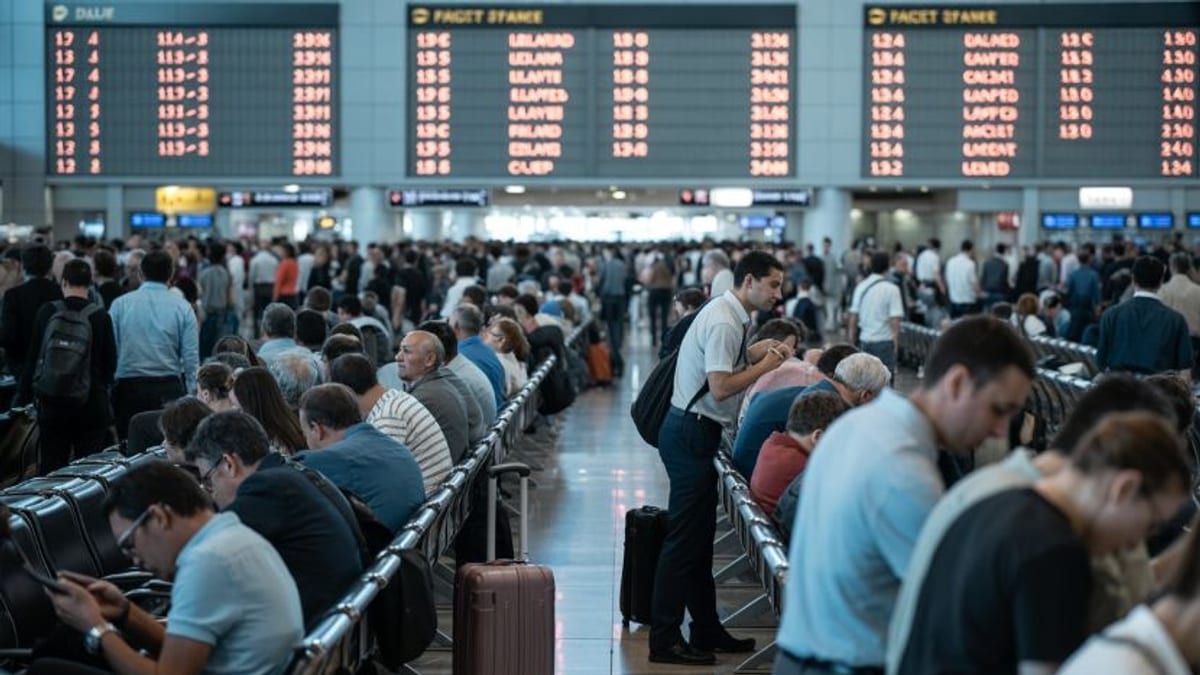
Image by Latest International / Global Travel News, Breaking World Travel News
What Is Happening at Paris Charles de Gaulle
Recent days have brought mounting disruption at Paris Charles de Gaulle Airport, with reports indicating widespread delays, cancellations, and diversions as the hub struggles to absorb pressure from extreme weather and knock-on effects from wider regional airspace turmoil. The problems are emerging at a time when global aviation is already strained by rerouted long haul traffic and capacity limits on key corridors between Europe, Asia, and the Middle East.
Coverage of the 2025 to 2026 European winter season points to repeated bouts of severe storms and high winds affecting major airports across the region, including Paris. Storm systems in early 2026 led to hundreds of delayed and cancelled flights at several European hubs, and publicly available information shows that Charles de Gaulle has been among the airports forced to manage large backlogs of aircraft and passengers.
The airport is also caught in the wider reshaping of global flight paths as airlines avoid conflict zones and closed airspace. Industry reports describe carriers shifting routes away from parts of the Middle East, adding extra flying time, and funnelling more connections through European gateways. As flights are retimed and rerouted, even a short-lived weather or technical problem in Paris can now have an outsized impact on schedules.
While the precise balance of causes varies by day, the result for passengers is similar. Long queues, rolling gate changes, missed connections, and crowded terminals have become familiar scenes, turning what should be a routine transit through Charles de Gaulle into an unpredictable ordeal.
Why This Disruption Matters for Global Travel
Charles de Gaulle is the principal international gateway for France and one of the busiest connecting hubs in the world. The airport handles tens of millions of passengers each year and serves as a critical link between North America, Europe, Africa, and Asia. When its operations are constrained, the impact often extends far beyond Paris.
According to published aviation data and financial disclosures from the airport’s operator, recent years have seen a strategic push to position Paris as a premier global connection point, with new long haul routes and expanded partnerships. That expansion increases the number of itineraries that rely on a smooth transfer at Charles de Gaulle. When delays cascade, passengers in cities as far apart as Los Angeles, Lagos, and Lahore can find their journeys disrupted even if conditions at their local airports appear normal.
These current difficulties are unfolding against the backdrop of ongoing global shocks to aviation. Coverage from travel and business outlets has highlighted how airspace closures and military tensions in parts of the Middle East are forcing airlines to add hours to long haul routes, cut frequencies, or redeploy aircraft. As airlines reconfigure networks, they lean more heavily on stable hubs in Europe. Any instability at a key node like Paris quickly reverberates across timetables and crew rosters.
The result is a fragile system in which each additional stress, whether a storm over northern France or a technical outage affecting air traffic systems, risks tipping operations from manageable delay into widespread disruption over the course of a single day.
How Passengers Are Feeling the Impact
For travelers, the current disruption at Charles de Gaulle is translating into missed connections, involuntary overnight stays, and uncertainty around checked baggage. Social media posts and travel forums describe passengers landing in Paris only to learn that onward flights have departed, been merged, or canceled outright, often with limited rebooking options on the same day.
Some travelers are reporting hours-long waits to clear immigration and security as staff attempt to process surges of passengers from delayed flights arriving in tight clusters rather than in their planned staggered sequence. Others describe aircraft waiting on taxiways for extended periods as congestion builds during peak arrival and departure waves.
Accommodation is another pressure point. When large numbers of passengers misconnect at the same time, hotel capacity near Charles de Gaulle and in central Paris quickly tightens. Airline and airport customer-service teams are then left juggling vouchers, transportation, and rebooking requests, which can extend queues and heighten frustration inside the terminals.
Even those not flying through Paris directly may notice subtler effects. Some long haul passengers have reported last minute schedule changes, earlier departure times, or longer connections introduced by airlines seeking extra buffer to navigate the current instability at key European hubs, including Charles de Gaulle.
Ground Transport and Access to the Airport
The disruption in the air is compounded by challenges on the ground. Charles de Gaulle relies heavily on regional rail links to move passengers to and from central Paris, particularly the RER B suburban line. Recent maintenance projects and temporary closures on sections of this route have reduced rail capacity to the airport on certain days and times, pushing more travelers onto road transfers and shuttle services.
Publicly available transport updates and traveler accounts point to periods when segments of the RER B have been closed near the airport for overnight or weekend works, with replacement buses and alternative rail connections in place. While these measures keep access open, they typically add travel time and complexity, especially for visitors unfamiliar with the network or carrying heavy luggage.
Traffic congestion around the airport can intensify when rail service is limited. Taxis, ride hailing vehicles, and private shuttles compete for space on access roads, leading to slower journeys and prompting airlines and travel advisers to recommend that passengers leave significantly more time than usual to reach their terminals.
For time-sensitive itineraries, such as tight morning departures or same day connections from domestic French cities by train, this interplay between airside disruption and ground transport constraints increases the risk that a manageable delay turns into a missed flight.
What Travelers Can Do if Their Plans Run Through Paris
With conditions at Charles de Gaulle in flux, travel experts and consumer advocates are emphasizing preparation and flexibility. Guidance from major airlines and travel organizations suggests that passengers should monitor their bookings closely in the days before departure, checking both flight status and any messages about schedule changes or re-routing.
Many carriers now provide real time notifications through mobile apps and email, and some introduce flexible change policies when large disruptions are anticipated, such as severe storms or airspace issues. While policies differ, passengers may be able to move their journey to another day, reroute via a different hub, or obtain a refund or voucher if delays or cancellations are substantial.
Travel industry advice also stresses the importance of building in extra time for connections that pass through Paris, especially when linking long haul and short haul flights. Longer layovers can reduce the risk of misconnecting when the schedule is under strain. For trips beginning or ending in the French capital, allowing additional time to reach the airport and considering backup transport options can help absorb shocks from rail closures or traffic gridlock.
Finally, travelers are encouraged to review the protections available under airline conditions of carriage and regional passenger rights frameworks before they fly. Understanding what assistance, compensation, or accommodation may be available in case of disruption can help passengers make faster decisions when plans unravel at a crowded gate in Charles de Gaulle.