

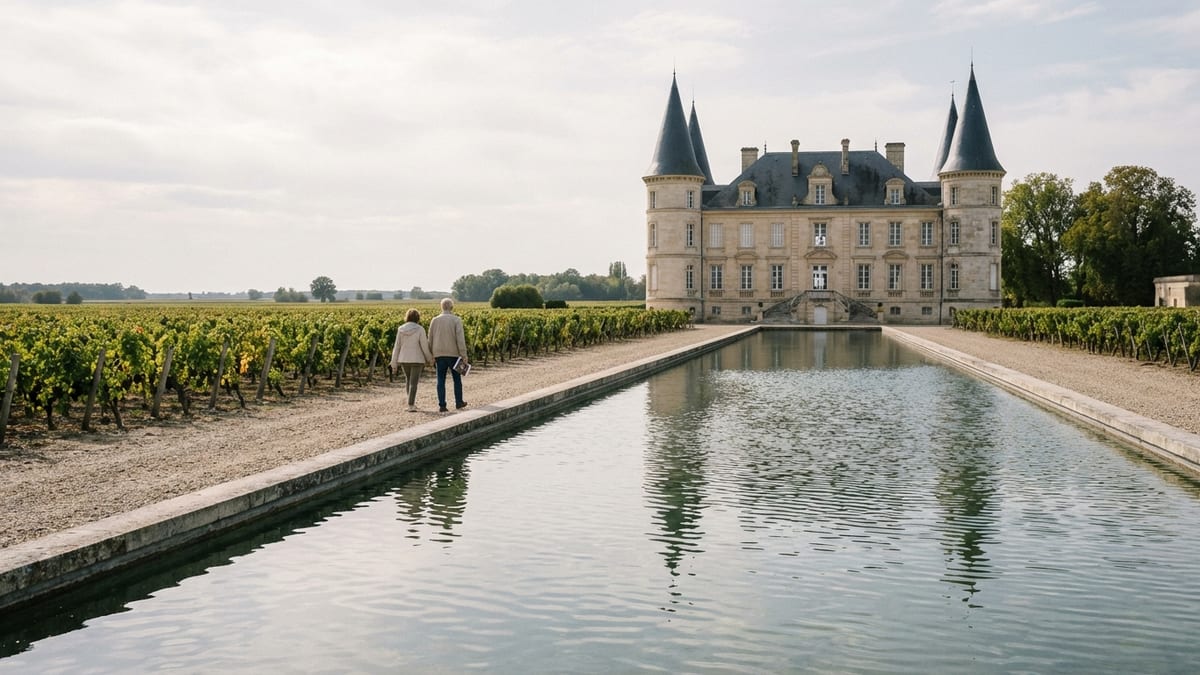
Among the great châteaux of Pauillac, few names capture the imagination of serious wine travelers and collectors quite like Château Pichon Baron. Its turrets rise from the gravel of the Left Bank as dramatically as the wines rise from the glass, offering a muscular yet polished expression of Cabernet Sauvignon that rewards both patience and curiosity. For anyone planning a pilgrimage to Bordeaux or building a cellar at home, understanding Pichon Baron’s style, vintages and aging potential adds a valuable dimension to the experience of this celebrated Second Growth.
Setting the Scene: Pauillac, Terroir and Classification
Château Pichon Baron, formally Château Pichon Longueville Baron, lies on the southern edge of Pauillac, just a short distance from the border with Saint-Julien. The estate occupies prime gravelly rises overlooking the Gironde estuary, a classic Médoc landscape where deep layers of gravel over limestone and clay provide the perfect conditions for Cabernet Sauvignon. These free-draining soils, warmed by reflected light from the river, help grapes ripen fully while maintaining the structure and freshness that define Left Bank Bordeaux.
The château is one of the fifteen estates ranked as Deuxième Grand Cru Classé in the 1855 classification, an enduring benchmark that still shapes how wine travelers and collectors perceive Bordeaux today. This Second Growth status places Pichon Baron in an elite tier just under the First Growths, and in modern times its quality often rivals them. Visiting the property, you immediately sense this heritage in the dramatic neo-Renaissance château built in the mid-19th century, whose twin turrets have become an emblem of Pauillac itself.
The vineyard holdings extend to roughly 70 to 75 hectares, dominated by Cabernet Sauvignon with a substantial proportion of Merlot and smaller parcels of Cabernet Franc and Petit Verdot. Average vine age is around 35 years, with some parcels significantly older, contributing natural concentration and complexity to the wines. In the cellar, an extensive program of new French oak and meticulous élevage help translate this terroir into wines of depth, finesse and remarkable longevity.
Signature Style: What Château Pichon Baron Tastes Like
At its best, Pichon Baron is a textbook Pauillac: powerful, structured and driven by Cabernet Sauvignon, yet increasingly polished in texture. The grand vin typically shows a dark ruby to nearly opaque color, with intense aromas of blackcurrant, blackberry and cassis complemented by graphite, cedar, tobacco leaf and often a hint of pencil shavings. Subtle notes of cocoa, licorice, spice and occasionally menthol develop with time in bottle, especially in great years such as 2010 and 2018.
On the palate, the wine is full-bodied and concentrated, built on a backbone of firm but refined tannins. Modern vintages emphasize precision over brute force, with fine-grained structure, vibrant acidity and a sense of energy that carries through a long, saline or mineral-tinged finish. The oak regime, frequently around 80 percent new barrels for the grand vin, contributes subtle notes of toast, vanilla and sweet spice while remaining in balance with the fruit when the wine is fully evolved.
Stylistically, Pichon Baron has moved over recent decades toward a harmonious blend of classic Pauillac austerity and contemporary plushness. In cooler or more traditional vintages, you can expect more red fruit, tobacco and herbal complexity, with a slightly firmer profile and a need for longer aging. In warmer, riper years, the wine leans into dark fruit, richness and opulence, yet modern viticulture and careful picking dates ensure freshness is preserved. Across vintages, a common thread is the sense of authority and composure that marks the wine as a serious, ageworthy Médoc.
Inside the Range: Grand Vin and Second Wines
The flagship wine of the estate is Château Pichon Baron, the grand vin produced from the oldest vines on the historic core plots nearest the château. These parcels, resting on especially deep gravel, yield grapes with natural concentration and tannic spine. The grand vin is typically dominated by Cabernet Sauvignon, often at 75 to 85 percent of the blend, completed by Merlot and occasionally small amounts of Cabernet Franc or Petit Verdot depending on the year. It is this wine that anchors the château’s reputation and commands the greatest attention from collectors.
Beneath the grand vin, Pichon Baron produces two additional labels that travelers and enthusiasts should know. Les Griffons de Pichon Baron, introduced in the 2012 vintage, functions as the true second wine of the property. It is sourced largely from gravel-rich parcels close to the river and tends to emphasize vigor, freshness and a more accessible structure. Les Griffons is still firmly Pauillac in identity, with dark fruit, cedar and ample tannin, but it can usually be enjoyed younger and offers significant value compared to the flagship wine.
Les Tourelles de Longueville occupies a slightly different role. Rather than being a conventional second wine, it is increasingly considered a separate cuvée based on a specific, Merlot-heavy plot known as Sainte-Anne. This gives it a rounder, more supple profile, with softer tannins and redder fruit notes. For travelers who prefer a more approachable Bordeaux or for pairing with a wide variety of dishes, Les Tourelles can be an excellent introduction to the estate’s style without the need for extended cellaring.
Together, the trio of wines allows Pichon Baron to maintain very strict selection for the grand vin while ensuring that grapes from younger vines or slightly less favored parcels still contribute to wines of character. For visitors tasting at the château, sampling the range side by side offers a clear lesson in how parcel selection, cépage and élevage shape style and aging potential.
Vintage Highlights: From Benchmark Years to Modern Classics
Because Pichon Baron is so closely tied to climate and terroir, understanding its notable vintages is crucial for anyone considering a purchase or planning a cellar visit. Among older modern vintages, 2010 stands out as a benchmark. It produced a wine of formidable structure and depth, with intense black fruit, spice and menthol aromas, powerful tannins and a long, vibrant finish. The estate notes that the 2010 can age for more than 40 years, and today it is still evolving, gradually revealing tertiary notes of cocoa, leather and cedar while retaining impressive freshness.
The 2018 vintage marks another high point in the contemporary era. A warm, dry growing season produced ripe fruit with high potential alcohol and rich textures. At Pichon Baron, the resulting wine is dark, concentrated and opulent yet balanced by a frame of fine tannin and supportive acidity. The blend of roughly four-fifths Cabernet Sauvignon and one-fifth Merlot, aged in predominantly new French oak, created a wine that combines lush fruit with classic Pauillac signatures of graphite and spice. It is already impressive in the glass but is clearly built for decades in the cellar.
Recent vintages in the 2020s continue this run of quality. The 2020 Pichon Baron is widely praised for its depth of blackcurrant and blackberry fruit, firm structure and long, powerful finish, with many commentators suggesting an aging window well beyond 20 years. The cooler, more restrained 2021 shows a fresher, more classical profile, offering redder fruit, tobacco and a livelier palate that should age gracefully while being slightly more approachable in youth. Early reports on 2022 and 2024 portray them as wines of impressive aromatic complexity and balance, with vibrant fruit, mineral notes and substantial yet polished tannins, again indicating strong aging potential.
For collectors, these vintages offer different expressions of the same terroir. Warm, sunny years deliver richness, density and early charm, while more temperate seasons produce wines that emphasize structure, nuance and subtlety. Both styles have their place, and a small vertical of recent vintages can make for a compelling tasting at home or at the estate, illustrating the influence of each growing season on the finished wine.
Aging Potential: How Long to Cellar Château Pichon Baron
Château Pichon Baron is firmly in the category of Bordeaux that rewards patience. The grand vin, especially from top years, is designed to age for decades. Official notes from the estate on vintages like 2010 and 2018 suggest an optimal drinking window extending 30 to 40 years from the harvest, and in exceptional cases even longer. During the first ten years after bottling, the wine is often marked by prominent tannins and a primary fruit profile that can feel somewhat closed, particularly in more structured vintages.
From around 10 to 15 years of age, Pichon Baron generally enters a more expressive phase. The nose broadens to include layers of cigar box, leather, forest floor and dried flowers alongside the core of black fruit. Tannins soften, integrating into a smoother texture without losing their ability to support the wine. For many enthusiasts, this period, between 12 and 25 years for excellent vintages, offers the most complete and satisfying expression of the château’s style.
Beyond 25 or 30 years, the evolution depends heavily on the specific vintage and on storage conditions. In the best years, well-cellared bottles can remain vibrant, with delicate tertiary aromas and a silky, almost weightless palate that still carries Pauillac’s distinctive graphite and cedar notes. Less robust vintages may fade earlier, with fruit receding and structure dominating. For travelers buying at the property or from reputable merchants, provenance is critical if you plan to explore these older, fully mature examples.
The second wines have a shorter but still respectable horizon. Les Griffons, with its solid structure and concentration, can comfortably age for 15 to 20 years in good vintages, though many drinkers will find it most appealing between 5 and 12 years after harvest. Les Tourelles, being more Merlot-driven and supple, typically shows best earlier, from 4 to 10 years of age, offering a softer, more approachable take on Pichon Baron’s character.
Buying and Drinking: Practical Guidance for Enthusiasts
For travelers and collectors considering Pichon Baron, a strategy based on vintage style and intended drinking window can be helpful. If your priority is to enjoy the wine within the next decade, consider slightly more approachable years or plan to focus on the second wines. Vintages like 2014, 2017 and 2021 tend to show classic balance and can be enjoyed relatively younger, especially after a couple of hours in a decanter. Les Griffons and Les Tourelles from recent harvests are also excellent choices for near-term drinking, offering a clear link to the grand vin’s personality at a more accessible price.
If you are building a long-term cellar, focus on structurally strong vintages with proven aging potential: 2005, 2009, 2010, 2016, 2018, 2019 and 2020 are particularly compelling. Buying these wines on release or shortly thereafter, and storing them under stable, cool conditions, allows you to follow their development over decades. When serving mature bottles, decanting time should be approached with nuance. Younger vintages may benefit from two to three hours in a decanter to soften tannins and open the bouquet, whereas older wines often need only a gentle splash decant to remove sediment and avoid losing fragile aromatics.
Food pairing is another dimension where Pichon Baron excels. The grand vin’s structure and depth make it a natural partner for classic dishes such as roast lamb, grilled ribeye, duck breast, game birds or slow-braised beef. The wine’s savory elements of cedar, tobacco and graphite also work beautifully with mushroom-based dishes, truffle accents and hard cheeses like aged Comté. Les Tourelles, with its rounder Merlot character, can be particularly appealing with veal, pork or poultry, while Les Griffons bridges the gap between these more supple pairings and the robust demands of red meat.
For travelers planning a visit to Bordeaux, including Pichon Baron on your itinerary offers a chance not only to taste these wines in situ, but also to appreciate the architecture, vineyards and cellar work that shape them. The proximity to other renowned Pauillac estates makes it easy to compare styles across short distances, highlighting just how distinctive Pichon Baron’s expression of Cabernet Sauvignon can be.
Understanding Vintage Variation: Climate, Technique and Style
One of the most instructive aspects of following Pichon Baron is seeing how the estate navigates different climatic conditions. In years with cool springs and moderate summers, the wines tend to show brighter acidity, more red-toned fruit and a slightly leaner frame. These vintages can be wonderfully classic, with a clear line of minerality and a relatively transparent expression of terroir. They often demand patience but reward it with nuance and aromatic complexity.
In contrast, warm, dry years with plenty of sunshine and reduced disease pressure, such as 2009, 2018 or 2020, yield wines of dark color, ripe fruit and considerable body. The challenge in such vintages is to maintain freshness and avoid overripeness. At Pichon Baron, careful vineyard work, capped yields and precise harvest timing help retain acidity and balance. The resulting wines manage to be both generous and structured, marrying the richness of modern Bordeaux with the spine that collectors expect from Pauillac.
Advances in winemaking and viticulture over the past three decades have also played a role in refining the style. Modern sorting techniques, including optical sorting, allow the estate to eliminate imperfect berries with great precision, leading to cleaner, more focused wines. Temperature-controlled fermentations and tailored macerations enable winemakers to extract color and tannin gently, avoiding harshness. Meanwhile, aging in a high proportion of new French oak barrels, with regular racking off fine lees, contributes to texture and aromatic complexity without overwhelming the fruit when handled judiciously.
For drinkers, this means that while vintage differences at Pichon Baron remain significant, the baseline of quality is consistently high. Even in challenging years, the estate typically produces a wine that is solidly structured, clearly Pauillac in character and capable of aging for a respectable period. This makes Pichon Baron a relatively safe choice when exploring Bordeaux, particularly if you are willing to do a bit of research on individual vintages before buying.
The Takeaway
Château Pichon Baron occupies a sweet spot in Bordeaux for travelers and collectors alike. Its dramatic château and prime Pauillac terroir embody the romance of the Médoc, while its wines consistently deliver the power, depth and longevity that define great Cabernet-based Bordeaux. The grand vin offers a benchmark expression of Pauillac, built to age for decades, while Les Griffons and Les Tourelles provide more accessible windows into the estate’s style.
Across vintages, Pichon Baron balances tradition and modernity: classic flavors of cassis, cedar and graphite framed by firm yet refined tannins, alongside a contemporary polish that makes recent releases particularly compelling. Benchmark years such as 2010 and 2018 showcase the château at full throttle, while more restrained vintages deliver elegance and clarity. For anyone serious about understanding Bordeaux, tasting Pichon Baron over multiple vintages is both an education and a pleasure.
Whether you encounter the wines at the château itself, in a restaurant along your travels or in the quiet of your own cellar, they invite contemplation of time, place and craftsmanship. With thoughtful choosing and patient aging, Pichon Baron can become one of the enduring pillars of a collection, illustrating the enduring appeal of Pauillac and the continuing relevance of the 1855 classification in the 21st century.
FAQ
Q1. What grape varieties are used in Château Pichon Baron?
Château Pichon Baron is dominated by Cabernet Sauvignon, typically around three-quarters or more of the blend, with Merlot making up most of the remainder and small amounts of Cabernet Franc and Petit Verdot in some vintages. The exact proportions vary year by year depending on conditions and the quality of each parcel.
Q2. How long should I age a bottle of Pichon Baron before drinking it?
In most vintages, the grand vin benefits from at least 8 to 10 years of bottle age before it begins to show its full character. Top vintages such as 2010, 2016, 2018 and 2020 can evolve positively for 30 years or more, while more approachable years may reach their peak between 12 and 20 years after the harvest.
Q3. What is the difference between Château Pichon Baron, Les Griffons and Les Tourelles?
Château Pichon Baron is the flagship wine, produced from the oldest and best-situated vines on the historic core of the estate. Les Griffons de Pichon Baron is the true second wine, often more Cabernet-focused and structured but approachable earlier. Les Tourelles de Longueville is a separate cuvée based largely on a Merlot-dominant plot, making it rounder and softer, ideal for earlier drinking.
Q4. Which recent vintages of Pichon Baron are considered particularly strong?
Among recent releases, vintages such as 2010, 2016, 2018, 2019 and 2020 are widely regarded as standouts, offering depth, concentration and excellent aging potential. The more classical 2014 and 2021 also have many admirers for their balance and terroir expression, even if they are slightly less powerful.
Q5. How should I serve and decant Château Pichon Baron?
Serve Pichon Baron at around 60 to 64 degrees Fahrenheit, slightly cooler than typical room temperature. Young vintages often benefit from two to three hours in a decanter to help the tannins soften and the aromas open. Older bottles, especially those over 15 to 20 years of age, should be decanted more gently and for a shorter time, primarily to remove sediment without losing delicate aromatics.
Q6. Is Pichon Baron suitable for someone new to Bordeaux?
Pichon Baron can be a superb introduction to top-tier Left Bank Bordeaux, but it is a serious, structured wine that shows best with some age and food. Beginners might first try Les Tourelles or Les Griffons, which express the estate’s character in a more immediately accessible style, then explore mature bottles of the grand vin to appreciate its full complexity.
Q7. What foods pair best with Château Pichon Baron?
The wine’s structure and depth make it ideal with roasted or grilled red meats such as lamb, beef and game, as well as dishes featuring mushrooms, truffles or rich sauces. Hard cheeses like aged Comté or Cheddar also match well. The more supple Les Tourelles can work beautifully with veal, pork or poultry, while Les Griffons bridges lighter dishes and heartier fare.
Q8. How does Pichon Baron differ from its neighbor Pichon Comtesse?
Although the two estates share historical roots and lie across the road from each other, their styles differ. Pichon Baron is typically more Cabernet-driven, muscular and structured, emphasizing power and depth. Pichon Comtesse often shows a higher proportion of Merlot and Cabernet Franc, leading to a more floral, silky and sometimes more overtly feminine expression of Pauillac.
Q9. Is it better to buy Pichon Baron en primeur or after bottling?
Buying en primeur can secure favored formats and sometimes better pricing, especially in highly rated vintages. However, purchasing after bottling allows you to benefit from more complete critical assessments and, in some cases, early signs of how the wine is evolving. The choice depends on your tolerance for risk, your budget and the availability of reliable merchants.
Q10. Can I visit Château Pichon Baron during a trip to Bordeaux?
Yes, Château Pichon Baron welcomes visitors by appointment, offering tours that typically include the vineyards, winemaking facilities and barrel cellars, often followed by a tasting of the estate’s wines. Because schedules and offerings can change, it is advisable to contact the château or a local wine tourism office well in advance of your planned visit to confirm availability and arrange a suitable time.