

More news on this day
Flights serving the Washington, D.C. region were briefly halted Friday evening after a strong chemical odor at a key regional air traffic control center prompted a pause in operations across multiple airports.
Get the latest news straight to your inbox!
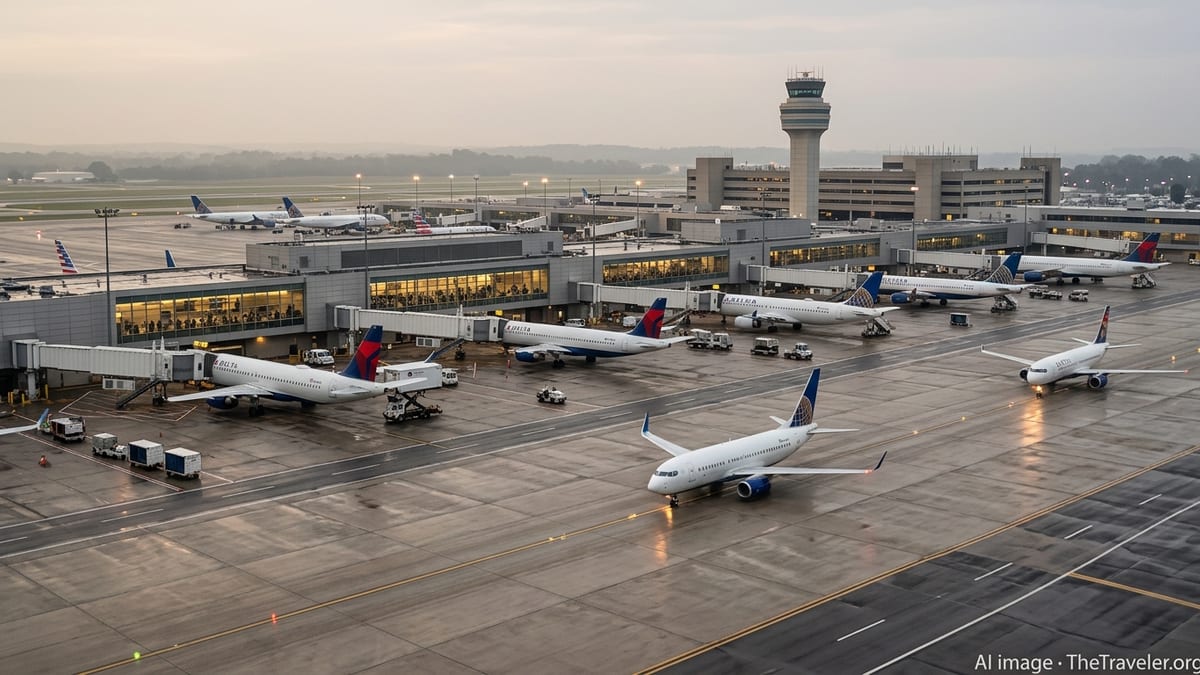
Ground Stop Ripples Across Major Mid-Atlantic Hubs
Publicly available information from federal transportation updates and news coverage indicates that arrivals and departures were temporarily stopped at Ronald Reagan Washington National Airport, Washington Dulles International Airport, Baltimore-Washington International Thurgood Marshall Airport, Charlottesville-Albemarle Airport and Richmond International Airport. The disruption began during the busy early evening period on Friday, March 27, when the odor was detected at the Potomac Consolidated TRACON facility in Warrenton, Virginia, which manages approach and departure traffic for the broader capital region.
The pause in flights was described in published reports as a ground stop, affecting both aircraft bound for the Washington-area airports and those preparing to depart. Aircraft already in the air were in some cases placed in holding patterns or diverted to alternate airports, while those still on the ground waited at gates or on taxiways for the halt to be lifted.
Updates shared by affected airports indicated that the ground stop was relatively short-lived, but the cascading impact on schedules was more prolonged. Baltimore-Washington International announced that the ground stop affecting its operations had been lifted later in the evening, while cautioning travelers that knock-on delays would continue for several hours.
Chemical Smell at Potomac TRACON Triggers Precaution
The source of the disruption was a strong chemical smell reported at the Potomac Consolidated TRACON, the regional terminal radar approach control center that oversees airspace for the Washington metropolitan area, Baltimore, and portions of Virginia. According to published coverage, the odor affected some controllers at the facility and led to a temporary interruption in normal staffing and procedures.
The Potomac TRACON is a critical node in the national air traffic system, coordinating low-altitude approach and departure flows for multiple large airports within a complex airspace that includes the Washington Special Flight Rules Area. When operations at this facility are disrupted, controllers must reduce or suspend flows into the airports under its control to maintain safety margins.
Reports indicate that after the odor was investigated and the environment was deemed safe, controllers gradually returned to their positions and traffic levels were allowed to increase. The precise nature of the chemical smell has not been fully detailed in publicly available information, but earlier incidents this month at the same facility were linked in federal updates to an overheated circuit component that produced a strong odor before being replaced.
Second Odor-Related Interruption Heightens Concerns
The latest disruption follows a similar episode earlier in March in which a strong chemical smell at the same Potomac-area control center led to a roughly one-hour halt in flights at several Washington-region airports. In that earlier case, transportation officials publicly linked the smell to an electrical issue involving a circuit board at the facility.
That earlier incident, also reported in national and regional media, prompted questions about the resilience of key air traffic infrastructure and the potential for localized technical problems to cause widespread travel impacts. The recurrence of an odor-related interruption within the same month is likely to draw renewed scrutiny to maintenance, ventilation and environmental safety protocols at busy control centers.
Recent events elsewhere in the system underscore that such issues are not limited to the Washington region. Earlier this week, a burning smell in the control tower at Newark Liberty International Airport led to a brief pause in arrivals and departures there, according to aviation updates. In both the Newark and Potomac occurrences, subsequent evaluations reported no active fire, but the odors were enough to trigger precautionary evacuations or staffing changes.
Travelers Face Delays and Diversions Across the Network
The timing of the Washington-area ground stop, during the Friday evening rush leading into a spring travel weekend, magnified its effect on passengers. Flight tracking data and airline communications cited in media coverage show that delays at the major airports stretched into the late evening, with some departures pushed back by several hours and scattered cancellations as aircraft and crews fell out of position.
Some flights bound for the capital region diverted to airports in neighboring states to wait out the disruption. Social media posts from travelers and aviation watchers described aircraft being held over other parts of the East Coast while controllers worked to meter traffic back into the restricted airspace once the ground stop was lifted.
New York City’s emergency management agency issued a public advisory warning that flights between the New York area and Washington might experience significant delays on Friday night as a result of the disruption further south. Passengers were urged to confirm flight status directly with airlines before heading to airports, a standard recommendation during large-scale airspace interruptions.
What the Incident Means for Future DC-Area Flyers
For travelers using Washington-area airports in the coming days, current information suggests that operations are returning to normal, but residual effects may linger in the form of aircraft and crew imbalances. Published advisories from airports and carriers indicate that most flights are expected to operate, though some may continue to see minor schedule adjustments as the system rebalances.
The incident highlights the degree to which a single specialized facility, such as the Potomac TRACON, can influence flight operations across an entire region. Unlike disruptions caused by local weather at a single airport, an issue at a regional control center affects multiple hubs simultaneously and can quickly propagate delays across the broader network.
Aviation analysts observing the situation note in published commentary that odors and environmental anomalies at air traffic facilities are typically handled with an abundance of caution, particularly when controllers report feeling unwell or equipment may be affected. While such incidents are relatively rare, the two odor-related interruptions in the Washington region this month are likely to fuel ongoing discussions about infrastructure investments and contingency planning within the national airspace system.