

More news on this day
Passengers at Ronald Reagan Washington National Airport faced mounting frustration on March 28 as a brief but disruptive air traffic control shutdown linked to a reported chemical odor backed up flights at Washington area airports and contributed to delays in major hubs including New York, Boston, Philadelphia, and Atlanta.
Get the latest news straight to your inbox!
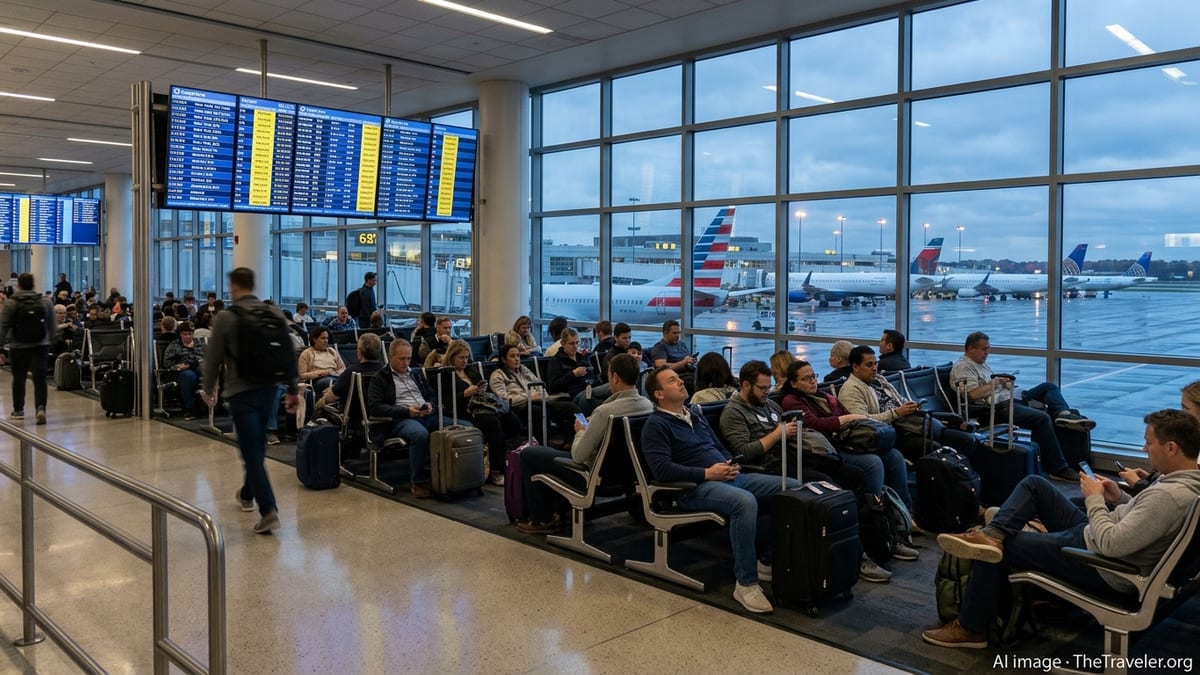
Ground Stop at Reagan National Sparks Travel Turmoil
Publicly available information shows that the Federal Aviation Administration temporarily halted flights into and out of Ronald Reagan Washington National Airport on Friday evening after a strong chemical smell was detected at the Potomac Terminal Radar Approach Control facility, which manages traffic for the Washington region. The pause in operations affected not only DCA but also Washington Dulles, Baltimore/Washington International, Charlottesville, and Richmond, forcing aircraft already in the air to slow, hold, or divert and keeping many departures at the gate.
Although the official ground stop lasted for a relatively short period, the knock-on effects extended well into the night as airlines worked through a queue of delayed departures and arrivals. By late evening, data from flight tracking services indicated more than a hundred delays and a small number of cancellations tied to the disruption, with American Airlines, Delta Air Lines, United Airlines, Southwest Airlines, and other carriers adjusting schedules to cope with backed-up operations.
Reports from airline dashboards and aviation tracking platforms indicated at least 134 delays and four cancellations across a cluster of key East Coast airports, including Washington, New York, Boston, Philadelphia, and Atlanta. While those numbers represent only a fraction of daily flight activity in the region, the timing of the disruption during a busy evening travel period compounded the impact for passengers trying to make connections or reach weekend plans.
At Reagan National itself, social media posts and traveler forums described crowded gate areas, rolling departure times, and inbound flights diverted to cities such as Philadelphia and Charlotte while controllers worked through the outage. Some passengers reported spending several extra hours on the tarmac or in terminal seating areas as airlines waited for clearance to resume normal flows into the Washington airspace.
Ripple Effects Reach New York, Boston, Philadelphia, and Atlanta
The air traffic slowdown around Washington quickly rippled along the East Coast corridor. According to widely used flight status tools, arrivals bound for New York area airports, Boston Logan, Philadelphia International, and Hartsfield Jackson Atlanta International experienced cascading delays as aircraft and crews became misaligned with their scheduled rotations.
New York bound flights that originated in or routed through the Washington region saw their departure times pushed back, in some cases by more than an hour, as carriers prioritized clearing the backlog at DCA and neighboring airports. That slowdown, in turn, created congestion at gates in New York, with some inbound aircraft waiting for space to park and disembark passengers.
Boston and Philadelphia, both heavily connected to Washington by shuttle style services and regional operations, experienced similar disruptions. Publicly available feeds showed delayed departures for evening flights headed south to the capital, while some northbound services from the Washington region arrived late and compressed already busy nighttime operations at those airports.
In Atlanta, one of the country’s largest airline hubs, the impact was felt primarily in connecting traffic. Several Washington originating flights arrived behind schedule, forcing travelers rushing between concourses to rebook missed onward segments. Airlines used spare aircraft where possible to protect key late night departures, but crews and equipment arriving late from Washington added complexity to an already intricate hub operation.
Airlines Struggle to Rebalance Schedules
For airlines, the sudden air traffic restriction in the Washington region posed an operational puzzle that extended beyond the immediate hour of the ground stop. Aircraft headed for DCA, Dulles, and Baltimore were forced into holding patterns or diversions, altering routes and crew duty times. Planes slated to operate onward legs to New York, Boston, Philadelphia, and Atlanta arrived late, which in some cases triggered a chain of delayed or canceled follow on flights.
American Airlines, with a significant presence at Reagan National, appeared to bear much of the brunt. Tracking data showed numerous American departures from DCA pushed back well past their scheduled times as the carrier cycled aircraft through late arrivals and turned them for overnight routes. Travelers reported receiving notifications of revised departure times multiple times over the course of the evening.
Delta, United, and Southwest also faced challenges, particularly on short haul business routes that typically rely on tight turnarounds. A delayed Washington departure could mean a missed last flight of the night from New York or Boston, leaving travelers with few same day alternatives. In some instances airlines opted to cancel lightly booked late night segments rather than operate them at very late hours, contributing to the total of four recorded cancellations tied to the disturbance.
Regional carriers operating under major airline brands were also affected, as many of their smaller jets connect secondary cities into the Washington hub before continuing on to other destinations. When those inbound flights missed their scheduled slots, they arrived at downline airports well behind plan, complicating early morning schedules for the following day.
Travelers Confront Long Waits and Uncertain Information
For passengers, the most visible effect of the disruption was time. Many travelers bound for or connecting through Washington described multi hour delays, unexpected diversions, and late night arrivals that stretched into the early hours of Saturday. Airport concourses at Reagan National remained active far later than usual as people waited out revised boarding times and watched departure boards cycle through new estimates.
Accounts shared on social platforms indicated that some travelers experienced a lack of clear, real time explanations about the cause and likely duration of delays. Airlines repeated general references to air traffic control issues affecting the Washington area without being able to forecast precise takeoff or landing windows, a common challenge when the constraint lies outside an airline’s direct control.
Families with young children and business travelers on tight schedules appeared particularly affected by the late hour of the disruption. Those with onward international connections out of hubs like New York and Atlanta faced the prospect of rebooking for the next day, while some domestic passengers scrambled to secure hotel rooms near airports as it became clear they would not reach their final destinations before morning.
Despite the frustrations, available reports did not indicate any safety concerns for passengers or crew. Aircraft that diverted or entered holding patterns did so as part of established procedures designed to keep traffic separated and orderly while airspace capacity is restricted, even when the underlying cause is an unexpected incident such as a reported chemical odor at a control facility.
Ongoing Questions Around Repeated Facility Incidents
The March 28 disruption marks at least the second time this month that a chemical smell at the Potomac air traffic facility has triggered a temporary halt to flights in the Washington region, according to national news coverage. Earlier in March, a similar incident led to a shorter ground stop, after which firefighters inspected the facility and operations resumed.
The recurrence has drawn public attention to the vulnerability of regional air travel to localized technical or environmental issues at critical control centers. Potomac TRACON plays a central role in managing arrivals and departures for multiple high traffic airports in the mid Atlantic, meaning even a brief interruption can reverberate across the broader network, especially along the busy Northeast corridor.
Industry analysts note that air traffic infrastructure has built in redundancies, but not all functions can be instantly shifted to backup facilities when personnel must vacate a building for safety reasons. The process of safely reducing traffic, holding or diverting aircraft, and then ramping back up once a facility is cleared can take hours, particularly when weather, crew duty limits, and gate availability are factored in.
As of late Friday night, publicly available information suggested that operations at Reagan National and the surrounding airports were gradually returning to normal, though residual delays were expected to persist into the early hours of Saturday. Passengers scheduled to travel through Washington, New York, Boston, Philadelphia, and Atlanta were advised by airlines and airport messaging channels to monitor flight status closely and allow extra time for connections while the system worked through the backlog created by the evening’s temporary shutdown.