

More news on this day
A strong chemical odor at a key Federal Aviation Administration radar facility in Virginia has twice forced ground stops at Washington-area airports in March, causing cascading delays for American Airlines, Delta, United and Southwest passengers and leaving international tourists scrambling for beds at Hilton and Marriott properties across the capital region.
Get the latest news straight to your inbox!
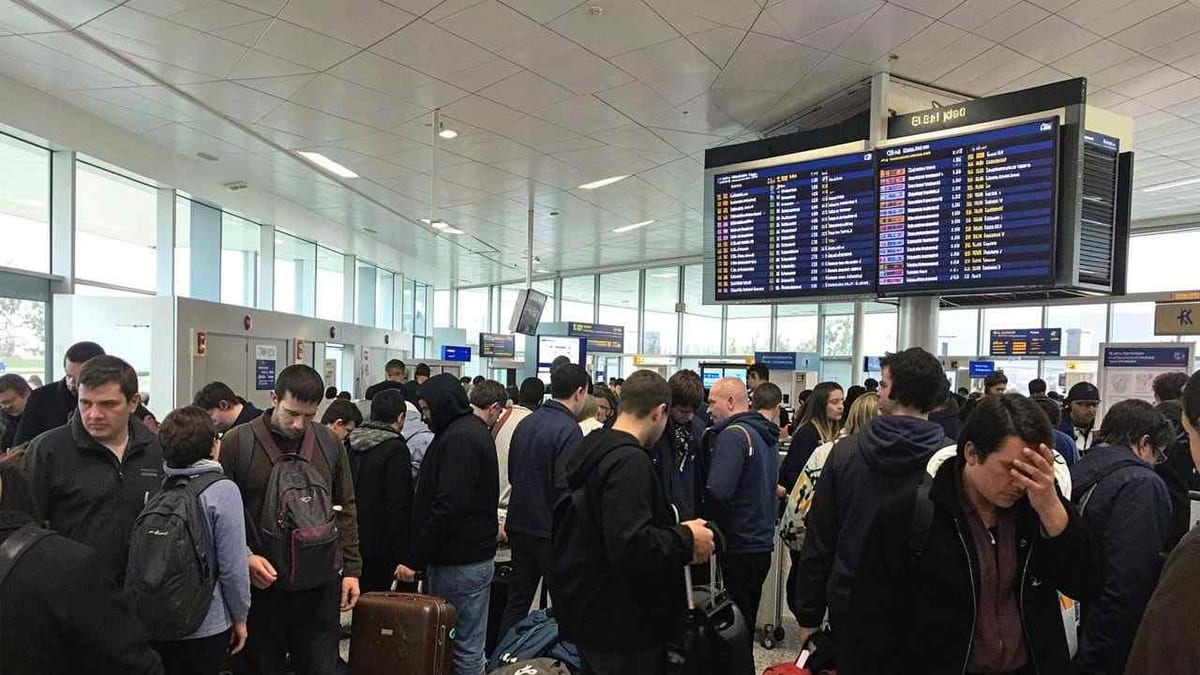
Image by Travel and Tour World – Tourism, Airline, Destination, MICE, Gobal Travel Market, Hotel news that you will find only over here.
Potomac TRACON At Center Of Repeated Ground Stops
Publicly available FAA information and local coverage indicate that the disruption traces back to the Potomac TRACON terminal radar approach control facility in Warrenton, Virginia, which manages arrivals and departures for Ronald Reagan Washington National, Washington Dulles International and Baltimore/Washington International Thurgood Marshall. Earlier in March, reports described a strong chemical smell in the building, prompting an evacuation and a broad ground stop that halted flights into and out of the three major airports and affected nearby fields such as Richmond and Charlottesville.
Advisories posted on aviation tracking platforms and referenced in news reports show that the mid-March ground stop lasted for more than an hour, with knock-on delays running three hours or longer into the night. Social media posts from passengers and aviation enthusiasts described aircraft diverted to cities such as Raleigh-Durham, Chicago and Philadelphia while controllers were moved out of the affected facility and traffic volumes drastically reduced.
On March 27, a similar issue again led to a full stoppage of departures and arrivals across the Washington region, with regional media and airline updates pointing once more to air traffic control problems tied to smoke or an odor at the same radar center. Although the second incident was shorter in duration, travelers reported lingering delays into March 28 as airlines attempted to reassemble schedules and reposition aircraft and crews.
Recent coverage in national and local outlets has noted that the chemical-smell incidents at Potomac TRACON follow a pattern of environmental or equipment-related disruptions at critical air traffic facilities, including a temporary tower evacuation at Newark Liberty International Airport earlier in March because of a burning smell. Aviation analysts quoted in that coverage highlight the vulnerability of tightly scheduled airline operations when a single control node for a busy airspace suddenly goes offline.
Major U.S. Carriers Face Network-Wide Ripple Effects
The mid-Atlantic ground stops hit at a time of high spring travel demand, magnifying their impact on the country’s largest airlines. Flight status boards for American Airlines, Delta Air Lines, United Airlines and Southwest Airlines on the affected days showed dozens of delays and cancellations at DCA, IAD and BWI, with irregular operations radiating outward to hubs such as Dallas Fort Worth, Atlanta, Chicago O’Hare, Denver and Phoenix.
Publicly accessible flight-tracking data indicates that aircraft bound for Washington were held at origin, diverted en route or forced into lengthy airborne holding patterns while controllers worked around the outage. For carriers like American and United, which rely heavily on Washington National and Dulles as connecting points for the East Coast and transatlantic routes, even a one-hour full stop translated into missed connections, crew-duty timeouts and aircraft being stranded at the wrong airports.
Low-cost and point-to-point carriers were not spared. Southwest Airlines, a major operator at BWI, saw turn times stretch and evening rotations compressed as arriving aircraft waited for gates and crews. According to published coverage, airlines across the board waived some change fees and encouraged travelers bound for the capital region to rebook for later in the weekend or switch to nearby airports outside the affected airspace when possible.
Industry analysts following the events note that these kinds of air traffic control disruptions add to a broader pattern of operational stress for U.S. airlines, which are already navigating tight staffing, aircraft availability challenges and robust leisure demand. While the chemical-smell issues were outside airline control, the events have renewed scrutiny of how carriers plan buffers into their schedules and communicate with passengers during fast-moving outages.
International Tourists From Canada, Germany And India Stranded
The timing of the disruptions has been particularly painful for inbound international visitors using Washington-area airports as their first stop in the United States. Dulles, in particular, is a primary gateway for transatlantic and long-haul flights from Canada, Germany and India, including nonstop services operated by United and partner airlines from cities such as Toronto, Frankfurt, Munich, Delhi and Mumbai, along with codeshare connections on European and Asian carriers.
Travel forums, social media posts and trip-report blogs from the past two weeks describe Canadian travelers held on the tarmac after landing as gates remained occupied, German tourists diverted to Northeast airports for refueling and crew changes, and Indian passengers facing missed domestic connections onward to cities across the eastern United States. Some itineraries that were supposed to deliver travelers to Washington by early evening stretched into overnight odysseys involving multiple diversions and last-minute rebookings.
Publicly available airline advisories suggest that re-accommodating international passengers was complicated by high load factors on subsequent transatlantic and transpacific flights, leaving limited spare seats for next-day travel. Families on spring holidays and tour groups heading to Washington’s museums and cherry blossoms reported being offered itineraries that routed them through distant hubs or required extended overnight stays to wait for space.
International tourism boards and destination marketing organizations have not issued formal impact estimates, but travel-industry commentators point out that such high-visibility disruptions can influence future booking decisions, particularly among first-time visitors who may be more sensitive to perceptions of reliability. At the same time, they note that many affected travelers differentiate between one-off air traffic control problems and the overall attractiveness of Washington, Baltimore and the broader mid-Atlantic corridor as destinations.
Hilton And Marriott Brace For Surging Walk-In Demand
With aircraft and crews out of position and scores of flights canceled or arriving hours late, hotel operators across the capital region saw a spike in last-minute demand. Hilton and Marriott, which maintain dense portfolios of properties around DCA, IAD and BWI as well as in downtown Washington and suburban corridors, were among the brands most exposed to the sudden influx of stranded passengers seeking rooms on short notice.
Publicly accessible booking engines on the evenings of the March ground stops showed room availability tightening rapidly at airport-adjacent properties, with same-day rates climbing as remaining inventory disappeared. Travelers posting online described long lines at front desks, shuttle buses filled beyond their usual capacity and confusion over whether airlines would issue vouchers or ask passengers to cover lodging costs out of pocket.
Hospitality-industry analysts note that large chains like Hilton and Marriott typically plan for weather-related surge nights but can be caught off guard by airspace or facility-related disruptions that are not as easily forecast. In this case, the combination of two separate chemical-smell incidents in the same month and ongoing strong demand for business and leisure travel to Washington created a challenging environment for revenue management teams trying to balance contracted airline crew blocks, loyalty-program redemptions and last-minute public bookings.
Some commentary in travel trade publications suggests that airport-area hotels may revisit contingency planning after this month’s events, considering measures such as closer coordination with airline operations teams, clearer communication to guests about shuttle schedules during mass disruptions and flexible staffing models that can handle sudden late-night check-in surges when ground stops are lifted.
Travelers Urged To Build Extra Cushion Into DC Itineraries
As flights and hotel operations gradually normalized after each incident, travel advisors and consumer-focused outlets began emphasizing practical steps for anyone planning trips to or through the Washington region in the coming weeks. Guidance circulating in public travel advice columns encourages passengers to monitor flight status frequently on the day of departure, allow extra connecting time when itineraries route through DCA, IAD or BWI and consider early-morning departures, which are often less exposed to cumulative delays.
For international visitors from Canada, Germany, India and other long-haul markets, commentators recommend scheduling at least one overnight in the Washington area before time-sensitive activities such as cruises, conferences or onward nonrefundable rail journeys. That buffer, they argue, can reduce the risk that a localized air traffic control issue or weather event will derail larger itineraries spanning multiple countries and transport modes.
Consumer advocates also highlight the importance of understanding passenger rights and airline policies around delays and cancellations. Publicly available resources from government transportation agencies and airline customer-service pages outline when travelers may be eligible for meal vouchers, hotel stays or alternative routing, and when disruptions caused by factors beyond an airline’s control, such as air traffic control issues at an FAA facility, may limit compensation options.
While the ground stops linked to the chemical smell at the Potomac TRACON facility have now been lifted, the pair of incidents in March has underscored how a problem in a single, specialized building can ripple through aviation networks, vacation plans and hotel corridors from the mid-Atlantic to far beyond the United States.