

More news on this day
A commercial flight bound for Chicago made an unscheduled landing at Detroit Metropolitan Wayne County Airport after an in-flight disturbance involving at least one passenger, according to early media and passenger reports.
Get the latest news straight to your inbox!
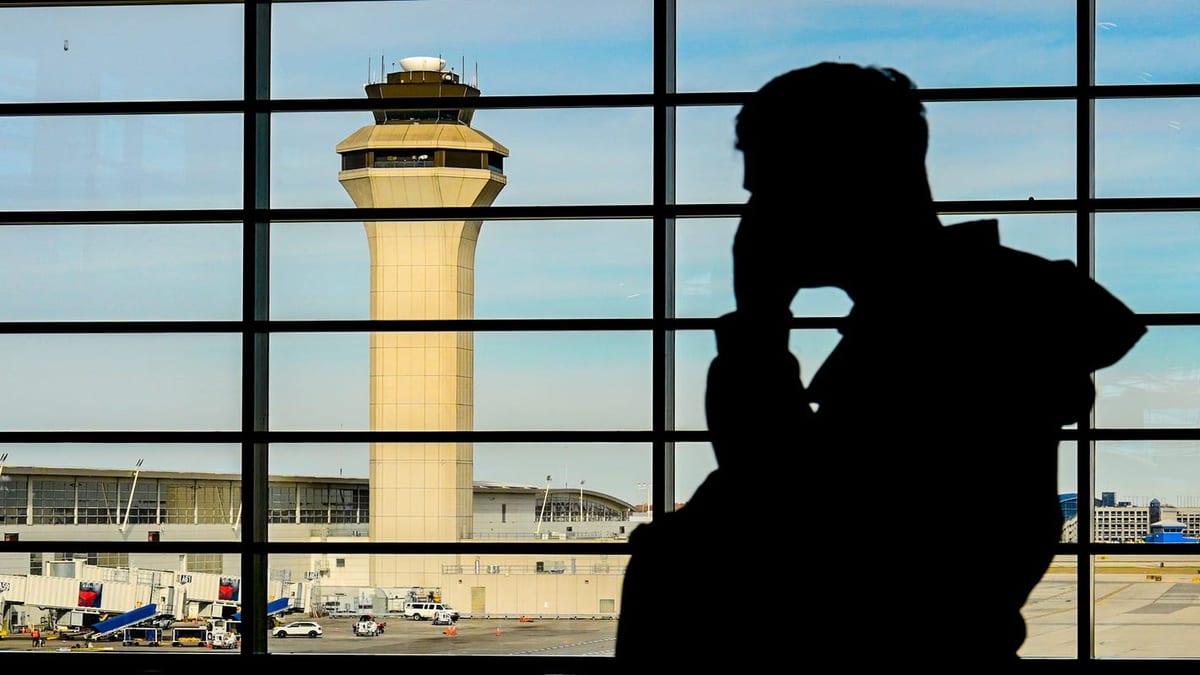
Image by Detroit Free Press
Unplanned stop in Detroit after incident in the cabin
The flight, which had been scheduled to arrive at Chicago O’Hare International Airport, diverted to Detroit after crew members reported a disturbance in the cabin and requested to land at the nearest suitable airport. Publicly available flight-tracking data shows the aircraft breaking off its planned route toward Chicago and turning toward Detroit, where it landed without further incident.
Reports indicate that the disturbance involved at least one passenger whose behavior raised safety concerns for those on board. The exact nature of the conduct has not been fully detailed in initial coverage, but descriptions from passengers shared with news outlets describe raised voices, movement in the aisle area, and difficulty bringing the situation under control during the cruise portion of the flight.
After landing in Detroit, the aircraft proceeded to a gate where local law enforcement officers and airport personnel met the flight. Passengers were instructed to remain seated while responders boarded the aircraft, a common protocol when authorities are called to handle an onboard incident. There were no immediate reports of serious physical injuries among passengers or crew.
Airline representatives have not yet released a detailed public summary of the sequence of events, but standard procedure typically requires crew members to submit incident reports describing the behavior that prompted the diversion. Those reports may later inform any criminal or civil actions related to the passenger or passengers involved.
Response on the ground and impact on passengers
Upon arrival in Detroit, passengers experienced an unplanned delay as law enforcement and security personnel completed their initial response on board. Travelers reported remaining in their seats for a period while the involved passenger was escorted off the aircraft and basic interviews were conducted with crew members and selected witnesses.
Publicly available information from airport operations suggests that the unscheduled arrival created some short-term disruption to gate assignments at Detroit Metro, which is already a busy hub for domestic and international traffic. However, there were no indications that the incident affected runway availability or caused broader operational slowdowns beyond this particular flight and its immediate surroundings.
Once clearance was given for passengers to disembark, some travelers were rebooked on later flights to Chicago or connecting destinations, while others were reportedly offered the option to continue by ground transportation. Airline customer-service teams typically assist diverted passengers with updated itineraries, hotel vouchers in cases of significant delay, and information on baggage handling when an aircraft stops at an unplanned airport.
For travelers, the diversion added several hours of uncertainty to their journeys. Passenger accounts circulating on social media describe missed connections, late-night arrivals, and last-minute changes to ground transportation plans, reflecting the wider ripple effects that a single in-flight disturbance can have across multiple itineraries.
Safety protocols guiding in-flight diversion decisions
Commercial pilots have broad authority to divert a flight when a situation on board is judged to pose a potential safety risk or to interfere significantly with the safe operation of the aircraft. Industry guidance and regulatory frameworks emphasize that crew members are expected to act conservatively in such scenarios, choosing diversion if they believe conditions in the cabin could escalate or distract from critical duties in the cockpit.
Reports on similar incidents indicate that airline crews undergo regular training in conflict de-escalation, handling disruptive passengers, and coordinating with ground-based security and medical teams. In many cases, diversion decisions are made after the cabin crew informs the pilots of a disturbance that cannot be resolved through verbal intervention or standard in-flight procedures.
Once a diversion is initiated, dispatchers and air traffic control units work to identify an appropriate alternate airport, taking into account runway length, weather conditions, available emergency services, and the airline’s local support infrastructure. Detroit, with its extensive facilities and status as a major hub, is a frequent choice for diversions in the Great Lakes region when issues arise on flights headed toward or away from Chicago.
While diversions can be costly for airlines and frustrating for passengers, aviation safety specialists generally view them as evidence of a cautious approach. Industry data on past incidents shows that these decisions are relatively rare when measured against overall flight volumes, but they are considered an essential tool for maintaining order and safety in the confined environment of an airliner cabin.
Disruptive passenger incidents under closer scrutiny
The diversion to Detroit comes at a time when disruptive behavior on flights continues to draw heightened scrutiny from regulators, airlines, and passenger-rights advocates. Recent years have seen a series of high-profile incidents in which unruly conduct led to emergency landings, restraints being used in the cabin, or long-term travel bans imposed on individual passengers.
Publicly available data from aviation regulators and trade groups points to fluctuating numbers of reported incidents, with spikes during periods of heightened tension around air travel regulations, health measures, or major weather disruptions. While not every incident leads to a diversion or formal charges, even lower-level disruptions can trigger internal reviews and potential penalties by airlines.
Many carriers now highlight their codes of conduct more prominently during booking and check-in, reminding passengers that behavior considered threatening, harassing, or violently disruptive may result in removal from the aircraft and potential legal consequences. Travel industry commentators note that such messaging is intended both as a deterrent and as reassurance to passengers who may be concerned about conflicts in crowded cabins.
In the wake of the latest diversion involving a Chicago-bound flight, aviation analysts expect renewed discussion about how airlines can balance rapid, decisive action in the air with clear communication and support for affected travelers on the ground. As more details emerge through official records and follow-up reporting, the incident is likely to be examined alongside other recent cases as part of broader efforts to keep air travel orderly and predictable for passengers and crews alike.