

More news on this day
Passengers traveling through Chicago O’Hare International Airport are facing fresh disruption, with publicly available data indicating around 95 flight delays and seven cancellations affecting services operated or codeshared by Lufthansa, Air Canada, Delta Air Lines and several other carriers on key routes including Toronto, Atlanta and Frankfurt.
Get the latest news straight to your inbox!
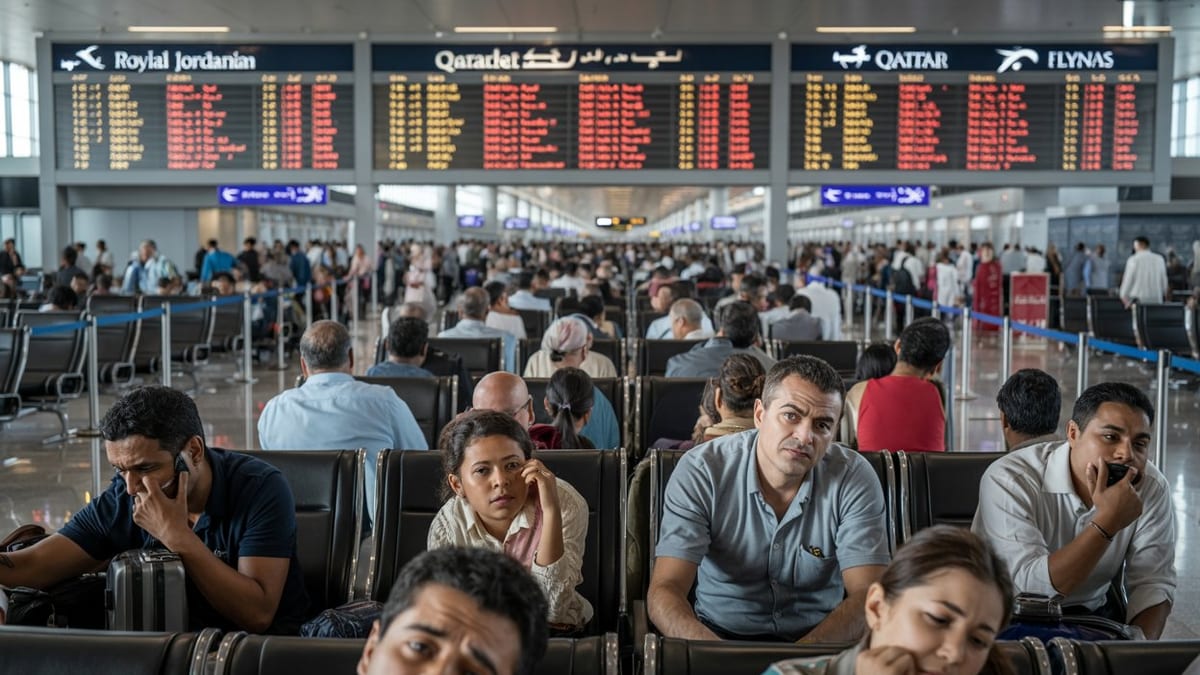
Delays and Cancellations Ripple Across Key Hubs
Operational data from Chicago O’Hare on Friday, April 10, suggests a concentrated wave of disruption touching both domestic and international networks. The latest status boards and tracking services point to roughly 95 delayed departures and arrivals and at least seven cancellations linked to a mix of mainline and codeshare services, including flights marketed by Lufthansa, Air Canada and Delta Air Lines.
The impact is being felt most visibly on high-traffic corridors such as Chicago to Toronto, Atlanta and major European hubs like Frankfurt. Some affected passengers are seeing departure times pushed back by one to three hours, while others are being rebooked onto later services or different routings entirely as airlines attempt to reset schedules.
While Chicago O’Hare is reporting no broad airfield closure, the clustering of delays in peak bank periods is causing knock-on effects across the day. According to published tracking data, several midmorning and early afternoon departures are leaving behind schedule, which in turn compresses turnaround times for aircraft returning to Chicago later in the day.
The pattern mirrors previous periods of strain at O’Hare, where even modest operational challenges can quickly push a complex hub network into rolling disruption, particularly on days with high aircraft and gate utilization.
Lufthansa, Air Canada and Delta Services Among Those Affected
Among the most visible disruptions are flights marketed by Lufthansa, Air Canada and Delta Air Lines, alongside partner and regional operators flying under their codes. Tracking information shows delayed departures on transatlantic services connecting Chicago with Lufthansa’s European hubs, including Frankfurt, as well as on feeder flights that route passengers through partner networks.
Air Canada’s cross-border operations between Chicago and Canadian hubs such as Toronto and Montreal are also experiencing delays. Publicly available performance statistics for recent months already show moderate levels of schedule variation on some Chicago linked routes, and the current disruptions are adding to a pattern of uneven on time performance for certain departures.
Delta services between Chicago O’Hare and Atlanta are likewise facing schedule pressure. As one of the country’s busiest domestic corridors, the Chicago Atlanta link is particularly sensitive to disruption. A delayed departure from O’Hare can cascade into further delays in Atlanta, where aircraft are scheduled to operate onward legs across the Southeast and beyond, tightening crew duty windows and reducing options for recovery later in the day.
Codeshare arrangements deepen the impact, as passengers booked on Lufthansa or Air Canada flights may in practice be flying on aircraft operated by US partners, and vice versa. When irregular operations hit one carrier’s schedule, travelers across multiple booking channels and frequent flyer programs can be caught up in the same wave of disruption.
Underlying Pressures at a Congested Mega Hub
The latest interruptions are occurring against a broader backdrop of congestion at Chicago O’Hare, one of the busiest hubs in the United States. Federal data and industry analyses in recent years have consistently ranked O’Hare among the country’s more delay prone major airports, with a significant share of flights arriving or departing 15 minutes or more behind schedule.
Capacity and weather remain two of the primary drivers. O’Hare’s role as a central connecting point means that even localized thunderstorms, shifting wind patterns or temporary ground stops can rapidly affect hundreds of flights. Recent reports also point to the cumulative effect of ongoing construction and infrastructure work at the airport, which can limit gate availability and lengthen taxi times during peak periods.
In anticipation of mounting pressure in the coming peak travel seasons, the US Federal Aviation Administration has already signaled plans to cap daily flight movements at O’Hare this summer, aiming to limit the number of takeoffs and landings to reduce systemic congestion. Industry commentary suggests that such measures are designed to prevent the kind of cascading delays that have previously affected major hubs during busy months.
For passengers, these structural factors mean that short connection windows through O’Hare can be risky on days with elevated disruption. Travel forums and prior incident reports frequently highlight missed connections and overnight misalignments when outbound flights depart late from Chicago or inbound services are held in extended taxi or holding patterns.
Passenger Options and Rights During Disruption
As airlines work through the current slate of delays and cancellations, travelers face the immediate challenge of rebooking and understanding what assistance they may be entitled to. Published airline policies for Lufthansa, Air Canada and Delta outline a mix of rebooking options, meal or hotel vouchers in some circumstances, and in certain jurisdictions cash compensation, depending on the cause and length of the disruption.
For flights originating or terminating in Canada or the European Union, passenger protection regulations can provide additional remedies when delays or cancellations are within an airline’s control. In other instances, such as weather or air traffic related issues, airlines may focus on rebooking and basic care rather than direct financial compensation. The exact outcome often depends on the route, the operating carrier and the documented reason for the irregular operation.
Consumer advocates regularly encourage passengers to document actual departure and arrival times, keep records of any written notifications and retain receipts for unexpected expenses such as meals or lodging. These details can be important in later discussions with customer service teams or if travelers choose to pursue formal claims.
Given the complexity of codeshare operations at O’Hare, passengers whose tickets involve multiple airlines may need to coordinate with more than one carrier, particularly when one segment is canceled and the remainder of the itinerary must be stitched together using available seats on different partners.
What Travelers Through Chicago O’Hare Should Do Now
With delays and cancellations continuing to filter through Friday’s schedule, public information suggests that travelers heading to or from Chicago O’Hare should build extra time into their plans and monitor flight status closely. Airline mobile apps and airport status boards are typically updated more quickly than email notifications and can provide early warning of gate changes or creeping departure time shifts.
Passengers connecting through O’Hare may wish to consider longer layovers where possible, reducing the risk of missed onward flights if inbound services are held on the ground or slowed by congestion. Those with flexible travel dates might also benefit from rebooking to less busy times of day, when schedules can be more resilient to disruption.
Travel planning resources often recommend packing essential items, including medications and a change of clothes, in carry on luggage to better cope with extended delays or unexpected overnight stays. Maintaining updated contact information in airline profiles can also help ensure that text or app based alerts arrive promptly if a flight’s status changes.
As airlines and airport operators work to stabilize operations at Chicago O’Hare, passengers on routes to Toronto, Atlanta, Frankfurt and other key destinations may continue to experience schedule shifts. For now, publicly available information indicates that today’s wave of 95 delays and seven cancellations is another reminder of how sensitive one of America’s busiest hubs remains to operational stress.