

More news on this day
Thunderstorms sweeping across the Chicago area have triggered a major operational meltdown at O’Hare International Airport, with 1,318 flight delays and 148 cancellations rippling across the US air travel network and stranding thousands of passengers nationwide.
Get the latest news straight to your inbox!
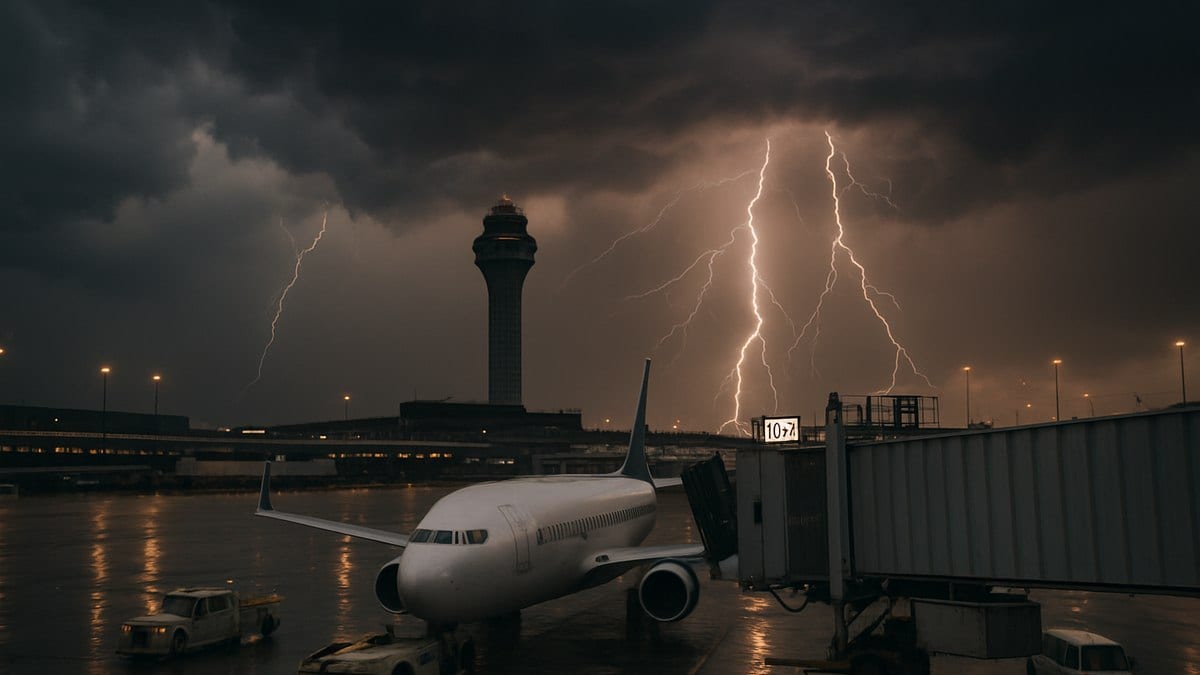
Image by nomadlawyer.org
Storms Over Chicago Turn Routine Day into Network-Wide Gridlock
The latest disruptions began as a fast-moving line of thunderstorms crossed northern Illinois, forcing air traffic managers to sharply reduce arrivals and departures at Chicago O’Hare. Publicly available data on flight-tracking platforms shows the airport quickly climbing to the top of national delay rankings as the afternoon wore on, with departure queues lengthening and average delays stretching close to or beyond an hour on many routes.
Reports indicate that the Federal Aviation Administration implemented a combination of ground stops and ground-delay programs for flights bound to O’Hare as the most intense cells passed over the region. These measures, intended to keep traffic volumes in line with what the storm-affected airport could safely handle, dramatically slowed the flow of aircraft into and out of the hub.
According to aggregated travel-industry coverage, the thunderstorm activity produced more than 1,300 delayed flights and almost 150 outright cancellations tied to O’Hare alone over the course of the day. That volume places the event among the more severe single-day weather disruptions at the airport so far this year, particularly given that the problems spread well beyond Chicago.
While O’Hare has long been known as one of the most weather-sensitive hubs in the United States, the latest storm system underscored how quickly local conditions can cascade into nationwide disruption when they collide with already crowded schedules and limited slack in airline operations.
Ripple Effects Hit New York, Toronto, Detroit and Other Key Cities
Because O’Hare serves as a central connecting point for both domestic and international traffic, the spike in delays and cancellations in Chicago quickly radiated across the broader US network. Travel news reports describe knock-on disruptions affecting flights to and from major markets including New York, Toronto, Detroit and Atlanta, as well as a range of secondary cities that depend heavily on connections through Chicago.
Many of the hardest-hit routes were short-haul and regional services operated by partner carriers that funnel passengers into larger hubs. When O’Hare’s arrival rate was cut back during the storms, those flights were among the first to face extended holding patterns, departure pushes or cancellations, leaving travelers stuck at origin airports far from the severe weather itself.
Schedule data reviewed by travel analysts shows that some hubs experienced accumulating congestion even without significant local weather. Aircraft and crews scheduled to operate later flights out of cities such as New York and Toronto were out of position after being delayed or grounded in Chicago, forcing airlines to scrub or delay subsequent departures to restore balance to their networks.
By the evening peak, delays linked in some way to the O’Hare slowdown were being reported across multiple time zones, illustrating how a single weather event at a major hub can reshape travel for tens of thousands of passengers across North America in a matter of hours.
Airlines and Regional Carriers Struggle to Maintain Schedules
Publicly available flight statistics show that the disruption was shared across a broad mix of airlines serving O’Hare, from large mainline operators to their regional partners. Coverage from aviation-focused outlets notes that United Airlines and American Airlines, both with substantial hub operations in Chicago, logged large numbers of delayed departures as the thunderstorms moved through, even when their cancellation totals remained relatively contained.
Regional operators such as Envoy Air, Republic Airways, SkyWest and GoJet, which run many of the shorter feeder flights into O’Hare, appear to have shouldered a disproportionate share of the cancellations. When airport arrival and departure slots became scarce, some of these flights were removed from the schedule in order to prioritize longer-haul services, a common strategy during weather-driven capacity squeezes.
Travel-industry reporting indicates that disruption was not limited to passenger operations. Freight and belly cargo moving through Chicago also faced knock-on delays, with aircraft held on the ground and missed connections forcing shipments onto later flights. For business travelers and time-sensitive freight customers, those delays can reverberate well beyond a single travel day.
While airlines have become more adept in recent years at preemptively trimming schedules in advance of major storms, the rapidly evolving nature of convective weather around Chicago on this occasion left carriers reacting in real time, leading to a more chaotic operational picture and longer recovery window.
O’Hare’s Chronic Vulnerability to Weather Back in the Spotlight
The meltdown has revived attention on O’Hare’s longstanding vulnerability to weather-related disruption. Federal transportation statistics and independent analyses consistently rank the airport among the most delay-prone in the United States, with thunderstorms, snow events and low clouds all contributing to lost capacity during peak travel periods.
Earlier assessments by aviation researchers have highlighted how O’Hare’s high traffic intensity, complex runway layout and heavy reliance on banked connecting schedules can magnify the impact of even brief weather slowdowns. When thunderstorm cells line up over the approach paths, controllers often must increase separation between aircraft and temporarily suspend certain arrival flows, sharply reducing the number of planes that can land each hour.
Recent policy discussions have also focused on whether further constraints on scheduling might be needed to prevent the airport from operating so close to its practical limits during busy periods. Industry commentary notes that when an already stretched hub is hit by adverse weather, the margin for error is minimal and recovery from a meltdown can take many hours.
The latest thunderstorm-driven gridlock is likely to feed into those debates, providing fresh data points for regulators, airlines and airport planners who are weighing how best to balance growth ambitions with resilience in an era of increasingly volatile weather patterns.
Travelers Face Missed Connections, Long Waits and Limited Options
For travelers caught up in the O’Hare disruption, the statistics translated into long lines, missed connections and difficult rebooking choices. Social media posts and passenger accounts gathered by travel publications describe terminal crowds building through the afternoon and evening as rolling delays accumulated on departure boards.
As the number of cancellations climbed, seats on remaining flights tightened, especially on routes with limited daily frequencies. Some passengers reported being offered routings that would add many hours and multiple extra stops to their journeys, while others were forced to wait until the following day for confirmed space.
Consumer advocates point out that in weather-related events, airlines have limited obligations to provide hotel rooms or meal vouchers, leaving many stranded passengers to shoulder additional expenses on their own. At an airport as busy as O’Hare, same-day availability at nearby hotels can quickly evaporate during major meltdowns, adding a lodging scramble to an already stressful experience.
Travel planners advise that when severe weather is forecast around Chicago or other major hubs, passengers with flexible plans may wish to proactively move flights earlier in the day, build in longer connection times or route through alternative airports when possible. The latest O’Hare storm disruption offers a pointed reminder of how fragile tight itineraries can be when one of the country’s most critical hubs is knocked off balance by the atmosphere.