

More news on this day
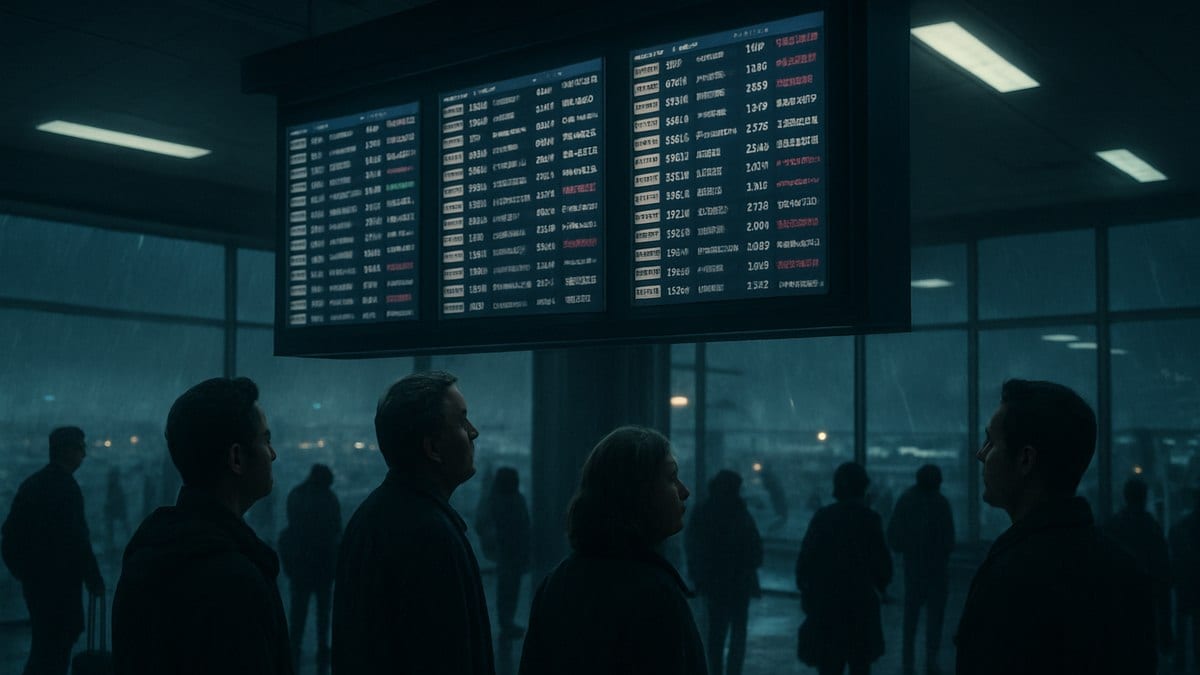
Chicago O’Hare International Airport has become a flashpoint for April 2026 air travel disruption, as repeated weather shocks and operational strains radiate delays and cancellations across the United States and into Europe.
Get the latest news straight to your inbox!
Stormy Spring Sets the Stage for System Stress
A volatile stretch of late March and early April weather in the Midwest set the conditions for O’Hare’s latest meltdown. Severe storms and heavy rain around Chicago triggered multiple ground stops and ground delay programs, constraining arrivals and departures at one of the world’s busiest hubs. Local coverage of an early April storm described flooding near the airport and an evening ground delay program that left hundreds of flights significantly behind schedule and contributed to hundreds of cancellations.
These weather shocks hit an already strained network. Industry analyses in recent weeks have highlighted how a mix of spring break demand, shifting airline schedules and fragile crew rotations has limited the ability of major hubs to recover quickly from any disruption. When storms roll over an airport the size of O’Hare, the backlog of aircraft and passengers can take many hours, and often days, to unwind.
Travel commentary from aviation specialists has also pointed to the lingering effects of winter and early spring operational issues, including one major March blizzard across the central United States that forced widespread rerouting and aircraft repositioning. Those residual imbalances left airlines with fewer margins as April’s severe weather swept into the Great Lakes region.
Ground Stops, Staffing Gaps and a Fragile Hub
O’Hare’s importance within the U.S. air system has amplified the impact of each disruption. Recent reporting in aviation trade publications has described mornings when dozens of departure gates at O’Hare displayed the same notice of a ground stop, with no estimated departure time. Air traffic control staffing constraints, particularly during peak periods, have added another layer of complexity to the airport’s operations.
Publicly available advisories indicate that Chicago-area air traffic facilities have periodically resorted to formal ground delay programs this spring, limiting the rate of incoming flights and forcing departure holds at other airports. Even when conditions at O’Hare itself improve, these traffic management initiatives can sustain rolling delays for six to ten hours after the initial restrictions are lifted.
Travelers and frequent flyers using O’Hare have also drawn attention to mounting congestion and long security and check-in lines in recent weeks, noting that routine delays now feel more frequent and more severe. A newly published ranking from a national broadcaster placed O’Hare among the most stressful airports in the United States, citing high passenger volumes, frequent operational disruptions and tight connection windows.
Combined, these factors have turned what might once have been short-lived weather events into broader operational meltdowns, where missed connections, crew time limits and aircraft out of position compound into complex, multi-day recovery efforts.
Cascading Disruption Across U.S. Hubs
The turbulence at Chicago has not remained a local story. Nationwide statistics for the first week of April 2026 show thousands of delayed flights and hundreds of cancellations on single days, with O’Hare repeatedly cited among the hardest hit airports. A recent operational snapshot compiled by a travel industry outlet identified more than 3,000 delayed flights and dozens of cancellations across the United States in one day alone, affecting hubs from Atlanta and Houston to New York, Orlando, San Francisco and Chicago.
Other airports have reported their own flashpoints that interact with O’Hare’s struggles. Orlando International, for example, has seen hundreds of delays since the start of April, with flights to and from Chicago among the most affected. When departures from O’Hare run late or are canceled, aircraft and crews that should be cycling through Florida, Texas or the coasts fail to arrive on time, constraining capacity far from the original problem.
Industry data providers tracking real-time performance show how quickly these effects can cascade. A delay on a morning departure from Chicago can translate into a late inbound to a secondary hub, a missed connection for transcontinental passengers and, by evening, a cancellation on a different route altogether because a crew has reached its duty limit. For travelers, the result is a patchwork of rolling disruptions that may appear unconnected at the airport level but share roots in earlier constraints at O’Hare and other major nodes.
Transatlantic Flights and European Bottlenecks
The ripple effects have extended across the Atlantic. O’Hare is a key departure and arrival point for long-haul services linking the Midwest with major European hubs such as London, Frankfurt and Rome. When thunderstorms, ground stops or staffing restrictions slow operations in Chicago, widebody aircraft are held at gates or on taxiways, and some transatlantic departures leave hours late or are re-timed for the following day.
In early April, European media and travel services documented sharp spikes in delays and cancellations at multiple airports, including Rome, Milan and a cluster of northern European hubs. One analysis cited more than 1,400 delayed flights and dozens of cancellations on a single day, attributing the disruption to a combination of weather, staffing shortages and knock-on effects from late-arriving aircraft.
While many of those European problems are homegrown, the interconnected nature of airline schedules means that delayed arrivals from North America can exacerbate local strains. Aircraft scheduled to operate early morning departures within Europe may arrive late at night from the United States, forcing rapid turnarounds or schedule shuffles. When Chicago-originating flights miss their slots into key European hubs, passengers on connecting itineraries to destinations across the continent can lose their same-day options, lengthening total travel times and adding pressure to rebooking desks.
Specialist travel outlets have noted that April’s wave of disruptions in Europe has coincided with school holidays and early-season tourism, leaving leisure travelers particularly exposed to overnight delays and missed cruises, tours or rail connections.
What April 2026 Reveals About Network Resilience
The unfolding situation at O’Hare is highlighting long-running concerns about the resilience of global air travel networks. Government audits and policy documents over recent years have warned that contingency planning and security protocols at major air traffic facilities around Chicago have not always kept pace with demand growth and modern risk scenarios. Cases from past disruptions have shown how equipment failures or staffing shortfalls can take longer than anticipated to resolve, prolonging operational interruptions.
Analysts comparing April 2026 to previous systemic events note familiar patterns. Whether triggered by a software failure, a regional storm or a localized staffing issue, disruptions at a few major hubs can quickly spread when airlines operate high-load schedules with minimal slack. Once delays accumulate, efforts to restore normality can be slowed by aircraft maintenance windows, crew duty rules and tight airport curfews in Europe.
For travelers, the O’Hare meltdown and its transatlantic echoes reinforce the importance of contingency planning in peak seasons. Consumer advocates are advising passengers to build longer connection buffers at busy hubs, monitor weather and traffic advisories closely, and understand their rights under both U.S. carrier policies and European compensation regulations for delays and cancellations.
For airports, airlines and regulators, April 2026 is emerging as another stress test of how well the system can cope with concurrent shocks. How quickly O’Hare and its partner hubs can restore more predictable operations in the weeks ahead may shape traveler confidence and booking patterns for the critical summer season.