

More news on this day
Chicago’s two major airports are entering one of their most turbulent spring break seasons in years, as heightened passenger volumes, a federal funding impasse and ongoing capacity pressures converge to strain Transportation Security Administration checkpoints at O’Hare and Midway.
Get the latest news straight to your inbox!
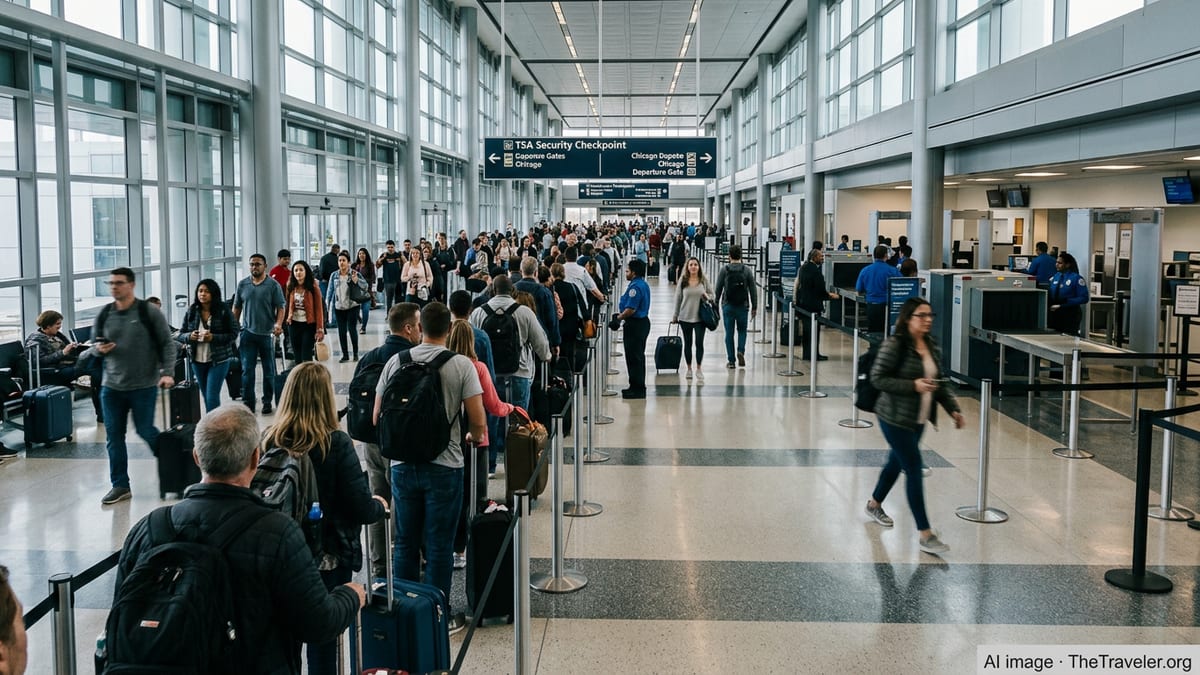
Spring Break Surge Collides With National TSA Disruptions
Airports across the United States are reporting longer lines and sporadic delays at security checkpoints as the spring break rush overlaps with a partial federal government shutdown affecting TSA staffing and pay. National coverage describes wait times stretching well past two hours at several large hubs as screeners work without full compensation and schedules are adjusted to cope with staffing gaps.
For Chicago, the timing is particularly sensitive. Spring break demand typically arrives in several distinct waves through March, bringing elevated leisure traffic on top of already busy business travel patterns. Recent seasons have seen millions of passengers move through O’Hare and Midway over a roughly two week spring break window, and early indications for 2026 point to another strong travel period, supported by a robust schedule of domestic and international flights.
Publicly available information indicates that TSA throughput nationally has climbed back above pre pandemic benchmarks in recent years, placing additional pressure on screening lanes at peak times. In this context, even airports that usually post comparatively efficient security performance are vulnerable when staffing or federal funding conditions worsen just as passenger volumes spike.
O’Hare Faces Capacity Questions as Flight Counts Grow
Chicago O’Hare International Airport has entered 2026 with a dense flight schedule and an ongoing multi year capital program that is reshaping gates, concourses and airfield layouts. Aviation coverage in recent days has highlighted that federal regulators are reviewing summer capacity at O’Hare after several major carriers announced aggressive flight growth beginning as early as this spring, raising the risk of delays if operations outpace available runway and terminal capacity.
While construction is aimed at expanding O’Hare’s long term capabilities, the near term effect includes temporary closures and reconfigurations that can move passenger flows and concentrate crowds at certain checkpoints. Historically, security lines at O’Hare have compared favorably with many other large hubs, with some industry analyses in recent years ranking its average TSA wait times among the shorter in the country. However, those averages can mask sharp spikes when surges in departures overlap with early morning or late afternoon banks of flights.
Travelers tracking conditions this week have reported busier than normal security areas and rising wait times at some terminals as spring break departures accelerate. Data shared through travel and airline information services suggests that early week morning waits, which often hover at modest levels, recently pushed toward three quarters of an hour at certain checkpoints, a noticeable jump for an airport accustomed to moving passengers more quickly at those times.
Advisories circulating among frequent flyers now emphasize building in a wider buffer at O’Hare than many Chicago based travelers may be used to, particularly for families traveling with children or those without trusted traveler status. With passenger counts expected to remain elevated through late March, the combination of robust scheduling, construction constraints and national TSA uncertainties is likely to keep pressure on security operations at the city’s primary hub.
Midway Security Lines Tighten as Leisure Demand Peaks
Chicago Midway International Airport, a key base for domestic low cost carriers, is also feeling the effects of spring break season. The airport typically experiences heavy waves of point to point leisure traffic bound for sun destinations, and that pattern appears to be repeating in March 2026 as travelers seek warm weather getaways despite broader concerns about potential delays tied to the federal funding dispute.
Operational details published by the Chicago Department of Aviation show that Midway’s TSA checkpoints operate long hours to handle early morning departures through late evening flights. Historic performance reports for the airport document years of efforts to reduce security wait times through staffing changes and checkpoint adjustments, and third party trackers in the days leading up to this weekend continued to show relatively short average waits during off peak hours.
The challenge, according to travel data providers monitoring the current environment, lies in handling concentrated morning and late afternoon peaks when multiple flights depart within tight windows. In those periods, social media posts and traveler forums indicate that lines have occasionally extended well beyond the typical queuing areas, prompting some passengers to advise arriving significantly earlier than the two hour standard guideline for domestic flights.
Midway’s smaller footprint compared with O’Hare can heighten the sense of congestion when spring break crowds arrive en masse, especially at a time when national coverage is closely watching how TSA staffing levels and morale are holding up across the system. While real time tools still show Midway performing better than some of the hardest hit airports in other regions, localized bottlenecks are becoming more common as the travel rush intensifies.
Data Tools and Past Benchmarks Paint a Mixed Picture
Travelers heading through Chicago this spring have access to a growing set of tools designed to predict and monitor TSA wait times at both O’Hare and Midway. The MyTSA mobile application, crowd sourced wait time trackers and airport specific dashboards enable passengers to see approximate conditions at particular checkpoints, often broken down by hour of day and lane type.
Financial and travel industry guides published over the past year note that under typical conditions, TSA waits at O’Hare and Midway frequently fall under half an hour, with only brief stretches approaching or exceeding 45 minutes. This relative efficiency has helped Chicago’s airports maintain strong reputations among frequent flyers, especially when compared with some coastal hubs that regularly report far longer lines.
However, the current convergence of national and local pressures means historical norms can only serve as rough benchmarks. National throughput statistics compiled by TSA and released in recent years show steadily rising passenger volumes, and commentary from aviation analysts suggests that even well managed airports can see their average metrics deteriorate quickly when staffing is constrained by events beyond local control.
For passengers, published guidance now stresses using prediction tools as one input rather than a guarantee. Reports from recent days show that apparent lulls in data can be followed by rapid surges as groups of travelers arrive or as flight banks shift, reinforcing the advice to err on the side of caution when planning arrival times at Chicago’s airports during the remainder of the spring break period.
What Travelers Can Expect in the Coming Weeks
Looking ahead to the second half of March 2026, projections for air travel demand suggest that Chicago’s TSA checkpoints will likely remain under strain. Many colleges, private schools and public school districts schedule breaks on a staggered basis through the month, effectively extending the peak period at airports like O’Hare and Midway instead of concentrating it into a single week.
Federal aviation updates indicate that broader coordination efforts are underway to manage capacity at some of the nation’s busiest facilities, including Chicago. While those discussions are largely focused on flight schedules and runway usage, any adjustments could have downstream effects on passenger arrival patterns, potentially smoothing some peaks but also shifting them into new time bands that catch unprepared travelers off guard.
For now, publicly available information across travel advisories, airport communications and third party data services points to a common message for Chicago bound and departing passengers: expect full terminals, lines that may be longer and less predictable than usual, and a system that is functioning but under visible stress. Families traveling with children, infrequent flyers and anyone connecting through Chicago during tight layovers may feel these impacts most acutely.
As the spring break season progresses, the experience at O’Hare and Midway will serve as an early test of how the nation’s aviation infrastructure copes with simultaneous shocks from policy disputes, construction projects and a resurgent appetite for air travel. For travelers trying to navigate that environment, additional time and flexibility may be the most reliable safeguards against missed flights and frayed plans.