

More news on this day
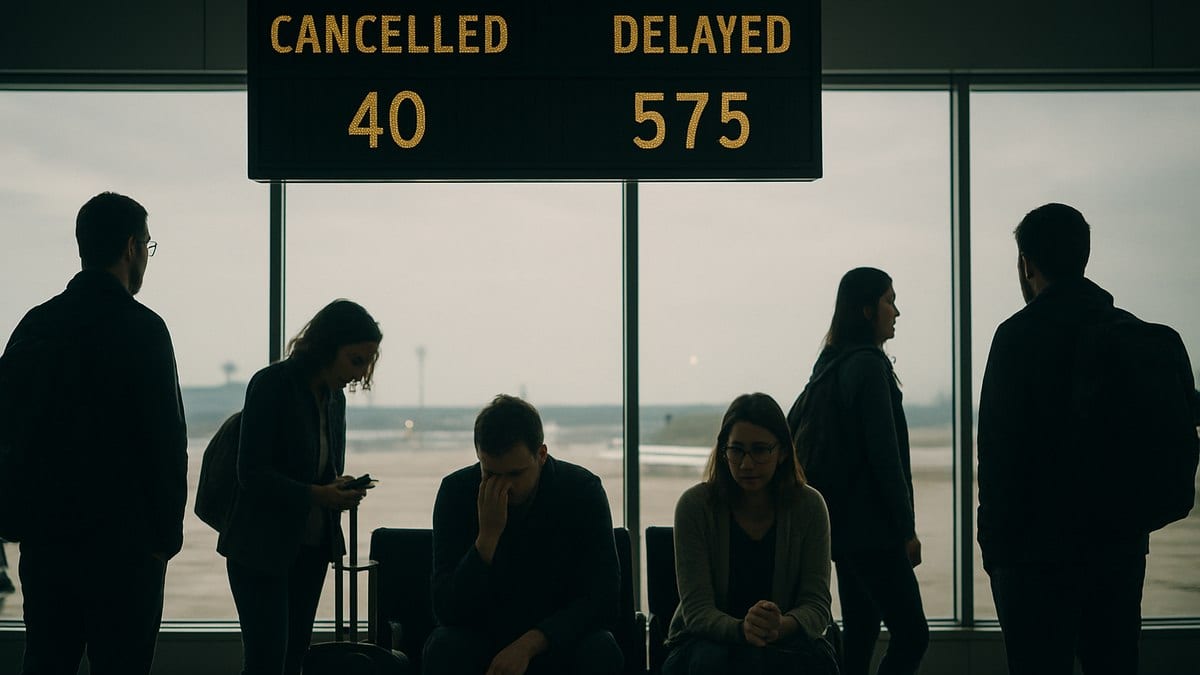
China’s spring travel season has opened under renewed strain, with publicly available tracking data indicating at least 40 cancellations and around 575 delays on China Eastern and China Southern services in early April 2026, compounding broader weather related turbulence across the country’s major air hubs.
Get the latest news straight to your inbox!
Spike in Disruptions as Summer Schedule Begins
The latest wave of cancellations and long delays for China Eastern and China Southern has coincided with the transition into the 2026 summer and autumn timetable, a period when carriers typically add frequencies and restore international links. Aggregated operational data for the opening days of April show both airlines experiencing elevated disruption compared with typical early spring patterns, particularly on dense domestic trunk routes linking Shanghai, Guangzhou and key interior cities.
While the figures of about 40 cancellations and 575 delayed flights represent a fraction of each carrier’s total daily schedule, they cluster on specific days and routes, multiplying the impact for travelers making connections or relying on tight turnaround times. Reports from travel tracking services point to rolling knock on effects, as aircraft and crews displaced by one disruption cycle create fresh delays downstream on the same calendar day.
The strain is emerging just as Chinese carriers continue to rebuild capacity lost during the pandemic era, with China Eastern and China Southern once again operating some of the country’s largest domestic and regional networks. Aviation analytics coverage notes that both airlines entered April with higher scheduled seat counts year on year, leaving less slack in their systems when storms or air traffic control restrictions occur.
Severe Weather Across Southern and Eastern Provinces
Weather has been a central factor behind the latest irregular operations. In recent days, strong convective systems, heavy rainfall and hail have swept across southern hubs such as Guangzhou and parts of neighboring provinces, prompting widespread flow control measures and ground stops. Meteorological bulletins and domestic financial media describe high delay rates at Guangzhou Baiyun, one of China Southern’s primary bases, with some periods seeing the majority of departures running late or being cancelled outright.
These conditions have not been confined to the far south. Forecasts for the first week of April highlight bands of heavy rain affecting sections of Guangxi, Hunan, Jiangxi, Fujian and Zhejiang, as well as low cloud and reduced visibility at airports in the lower Yangtze region. China Eastern, headquartered in Shanghai, routinely operates dense schedules into and out of these weather sensitive areas, making its flights particularly vulnerable when spring storms align with peak travel times.
Travel and aviation publications note that similar storm systems in late March already produced multi airport disruption, with several carriers, including China Eastern, experiencing clusters of cancellations and hundreds of delays on individual high impact days. The early April figures for China Eastern and China Southern appear to continue that pattern, suggesting that the seasonal weather phase is not yet easing for passengers.
Knock-on Effects at Key Hubs and Regional Gateways
The ripple effects from delays and cancellations on China Eastern and China Southern have been felt across a network of primary and secondary airports. Shanghai Pudong and Guangzhou Baiyun, the two airlines’ flagship hubs, have seen banks of departing and arriving flights pushed back by hours, affecting onward connections to interior cities as well as regional international destinations.
Coverage on Chinese aviation and travel platforms describes parallel disruption at other major gateways, including Beijing area airports and large provincial hubs in Shandong and Liaoning. Some of these airports are served by multiple carriers, meaning that schedule instability at China Eastern or China Southern can indirectly affect itineraries booked on partner airlines or codeshare services that rely on the same aircraft rotations.
Publicly available information specific to Shenyang Taoxian, for example, shows an unusual level of early April disruption across several domestic routes, with China Eastern featuring among the affected operators. When such airports experience elevated cancellation and delay rates, even a relatively modest number of problem flights on any single carrier can leave large numbers of passengers stranded, particularly late in the day when alternative departures are limited.
How Travelers Are Experiencing the Disruptions
Accounts shared on travel forums and social platforms over the last week illustrate how operational statistics translate into individual travel headaches. Passengers connecting through Guangzhou on China Southern or through Shanghai on China Eastern have reported last minute schedule changes, long tarmac waits and missed onward flights, sometimes compounded by limited English language communication for international travelers.
Some travelers describe being rebooked on later services or on so called “invisible” or non publicly sold flights that carriers use to reposition passengers after cancellations, particularly on busy routes such as Guangzhou to Osaka. Others report difficulty getting through to customer service hotlines or managing irregular operations through websites, and note that mobile apps often provide clearer real time information on gate changes or retimings.
Consumer discussion threads repeatedly highlight the importance of keeping boarding passes and delay certificates, tools that can assist when seeking refunds, compensation or proof of disrupted travel for insurance purposes. Documentation is especially critical when delays stretch into many hours, accommodation is required, or separate tickets on different airlines are involved in a single journey.
What the Latest Numbers Mean for April Travelers
The early April tally of 40 cancellations and 575 delays for China Eastern and China Southern should be viewed in the wider context of China’s air travel recovery and the region’s volatile spring weather. Aviation industry reports show that national totals for delayed flights on bad weather days can reach into the several thousands, so even a single day’s instability can reverberate for days as carriers work through aircraft and crew backlogs.
For travelers, the pattern suggests that flexibility and preparation remain essential when flying on Chinese domestic and short haul regional routes this month. Travel advisories and airline guidance consistently recommend monitoring bookings closely in the 24 hours before departure, using airline apps for live updates, and building longer buffers between self booked connections, particularly when itineraries route through storm prone southern and eastern hubs.
Analysts following China’s aviation sector indicate that, barring an abrupt improvement in meteorological conditions, intermittent pockets of disruption are likely to continue through April as warm, moist air masses drive thunderstorm activity across a wide swath of the country. For passengers on China Eastern and China Southern, the recent 40 cancellations and 575 delays serve as a reminder that even as capacity returns and international links expand, operational resilience can still be tested sharply by a few days of severe weather.