

More news on this day
Passengers across China, India, the United Arab Emirates and Saudi Arabia are facing fresh travel disruption as China Eastern and China Southern record dozens of cancellations and hundreds of delays at key hubs including Shanghai, Guangzhou, Beijing and Dubai, according to publicly available flight-tracking data and recent aviation analyses.
Get the latest news straight to your inbox!
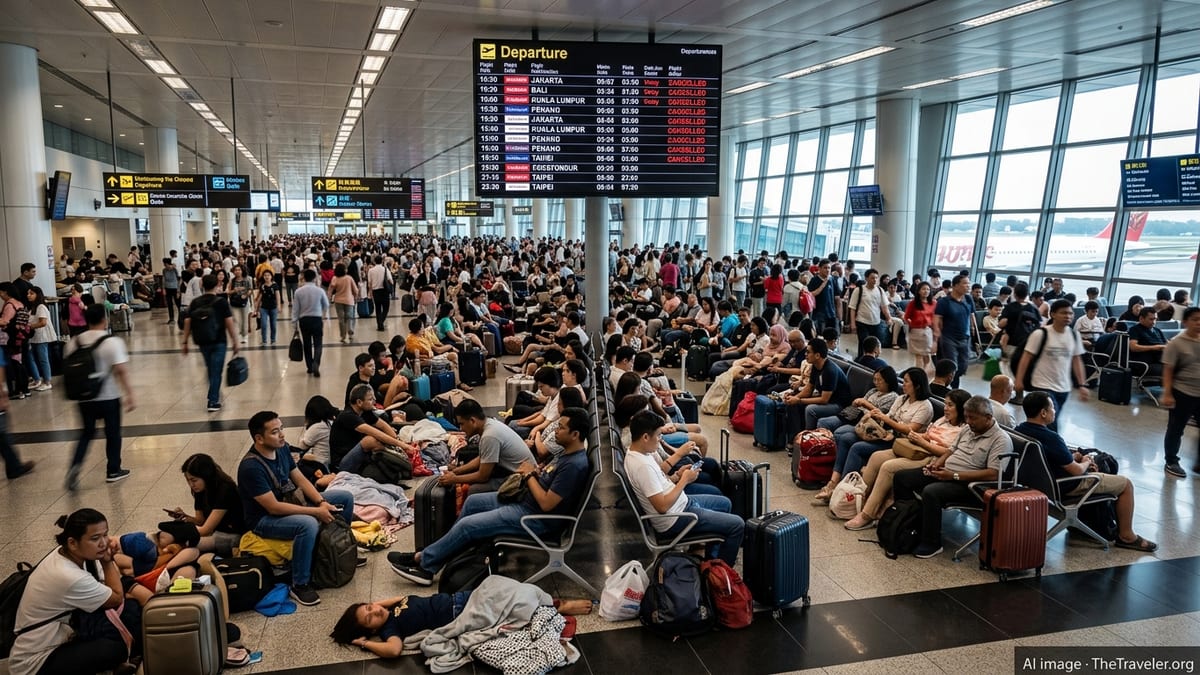
Wave of Cancellations and Delays Hits Chinese Mega-Hubs
Recent operational data indicates that China Eastern and China Southern have been among the carriers most affected by a new wave of schedule disruption at major Chinese airports. Specialist aviation trackers and regional travel media report that on some peak days the two airlines together have logged roughly 40 cancellations and more than 500 delays, centered on Shanghai Pudong and Hongqiao, Guangzhou Baiyun and the dual Beijing gateways at Capital and Daxing.
Civil aviation coverage in China has linked much of the disruption to intense spring storm systems sweeping across eastern and southern provinces, bringing low visibility, heavy rain and thunderstorms to airport catchment areas. These conditions reduce runway capacity and force extended spacing between arrivals and departures, creating long backlogs at already busy hubs. When delays exceed crew duty-time limits or push aircraft rotations out of sequence, airlines cancel flights rather than risk cascading safety and scheduling violations.
Publicly available network statistics show that the impact is not limited to a single day. Over several recent days, Chinese hubs have collectively recorded thousands of delayed flights and several hundred cancellations among all airlines, with China Eastern and China Southern carrying a significant share due to their large domestic footprints. The two carriers use Shanghai, Beijing and Guangzhou as critical connection points for both domestic and international itineraries, amplifying the downstream effects when flights are pulled from the schedule.
For travelers, the result has been long lines at customer service counters and busy transfer zones as passengers attempt to rebook or secure hotel vouchers. Social media posts and traveler reports describe rolling departure boards, repeated gate changes and overnight airport stays for those unable to find seats on later departures.
Knock-on Effects Stretch to India, the UAE and Saudi Arabia
Because Chinese hubs act as bridges between Northeast Asia, Southeast Asia and long haul routes to South Asia and the Middle East, disruption in Shanghai, Guangzhou and Beijing has quickly rippled across a wider geography. Aviation analyses focused on Asia and Gulf connectivity show that delayed or cancelled departures from China have contributed to missed connections and extended layovers at onward hubs such as Delhi, Dubai and Riyadh.
In India, Delhi and other major airports have been handling knock-on disruption as regional flights connect into already stressed long haul banks. Travel-industry reporting indicates that on several recent days, Indian hubs have seen elevated levels of delays on services linking to China and the Gulf, complicating itineraries for passengers traveling onward to Europe, Africa and North America.
In the United Arab Emirates and Saudi Arabia, the timing coincides with broader regional challenges. Separate analyses of the Middle East aviation market describe reduced capacity and schedule volatility as Gulf carriers adjust networks in response to regional tensions and airspace restrictions. When late-arriving flights from China miss their connection windows in Dubai or Riyadh, re-accommodation options are limited because many onward services are already heavily booked or operating reduced frequencies.
Publicly available disruption tallies for Asia and the Middle East taken together show that, on the most impacted days, hundreds of flights have been cancelled and several thousand delayed across the region. China Eastern and China Southern feature prominently in those statistics on routes touching China, but they operate within a wider system where weather, airspace constraints and tight aircraft utilization all interact.
How a Local Weather System Becomes a Multi-Country Crisis
Analysts who track irregular operations note that the pattern seen in recent days follows a familiar chain reaction. Severe weather or temporary airspace congestion at a hub such as Shanghai initially reduces departure and arrival rates. As aircraft and crews fall out of position, morning delays grow into afternoon cancellations, and recovery can take 24 to 48 hours even after conditions improve.
Because China Eastern and China Southern run dense banks of connecting flights, each cancellation removes not just a point-to-point service but also a set of onward connections. Passengers bound from secondary Chinese cities to India or the Gulf via Shanghai or Guangzhou may find that a single lost feeder flight breaks entire itineraries, especially when alternative routings are already near capacity.
Once disrupted passengers reach downline hubs in India, the UAE or Saudi Arabia, the local infrastructure comes under strain. Reports from aviation-focused outlets describe crowded transfer halls, queues at transit hotels and competition for limited seats on later departures. Even when airlines arrange replacement flights, airport curfews and slot restrictions can limit how quickly backlogs are cleared.
This cascading structure means that the headline figures of about 40 cancellations and more than 500 delays for China Eastern and China Southern understate the total number of journeys affected. A single delayed aircraft can upset multiple rotations across several countries in a single day, while missed connections can leave travelers stranded far from their original point of disruption.
What Stranded Passengers Are Experiencing on the Ground
Travelers caught up in the latest disruption wave report a wide range of experiences, depending on where and when they are flying. At Shanghai Pudong and Guangzhou Baiyun, many passengers have faced long waits to speak with airline agents as rebooking queues stretch across terminal concourses. Those with flexible tickets or elite frequent-flyer status have sometimes been able to secure alternative routings via secondary hubs, while others have been offered hotel stays and rebooked for flights departing a day or more later.
At international transfer points such as Dubai and Riyadh, passengers arriving late from China have often found that their onward flights to India, Europe or Africa have already departed. With seat availability constrained by broader regional capacity cuts, some travelers have been re-routed through unconventional paths, adding extra stops and many hours to journeys that would normally be nonstop or single-connection trips.
In India, local media and passenger accounts describe a mix of extended tarmac waits, late-night arrivals and missed domestic connections. For those traveling during school holidays or festival periods, the timing has been particularly challenging, as full flights leave little room for last-minute rebooking. Family groups and tour parties have sometimes been split across multiple flights, stretching supervision and logistics.
Across all affected markets, communication has emerged as a recurring challenge. While airlines increasingly rely on mobile apps and text alerts, the volume of schedule changes during large-scale disruption can overwhelm these systems. Some passengers report receiving notifications only after reaching the airport, underscoring the importance of checking live flight-status tools and airport departure boards before setting out.
Outlook for Travelers in the Coming Days
Flight-performance data and recent analyses suggest that while the most acute disruption may ease as weather patterns shift and airlines complete recovery rotations, conditions are likely to remain fragile in the short term. Continued storm activity in parts of China, combined with heightened sensitivity to airspace restrictions around the Gulf, leaves networks vulnerable to renewed waves of delays and cancellations.
For China Eastern and China Southern, the immediate focus appears to be on stabilizing core domestic banks at Shanghai, Beijing and Guangzhou to protect key connection flows. Publicly available schedule adjustments show some trimming of frequencies on lightly booked routes, a common tactic used by airlines to build more slack into operating plans during periods of repeated disruption.
Travel specialists advise that passengers planning itineraries touching China, India, the UAE or Saudi Arabia in the coming days should allow additional connection time, avoid tight self-connecting itineraries and monitor flight status closely. Booking direct flights where possible, or using hubs with stronger recent on-time performance, can reduce exposure to complex multi-leg disruptions.
While the specific figures of 40 cancellations and 575 delays highlight the scale of the disruption currently associated with China Eastern and China Southern, the broader picture is one of a highly interconnected Asia and Middle East aviation system operating close to capacity. In such an environment, relatively small shocks can have outsized effects, leaving passengers from Shanghai to Dubai and beyond vulnerable to sudden changes in their travel plans.