

More news on this day
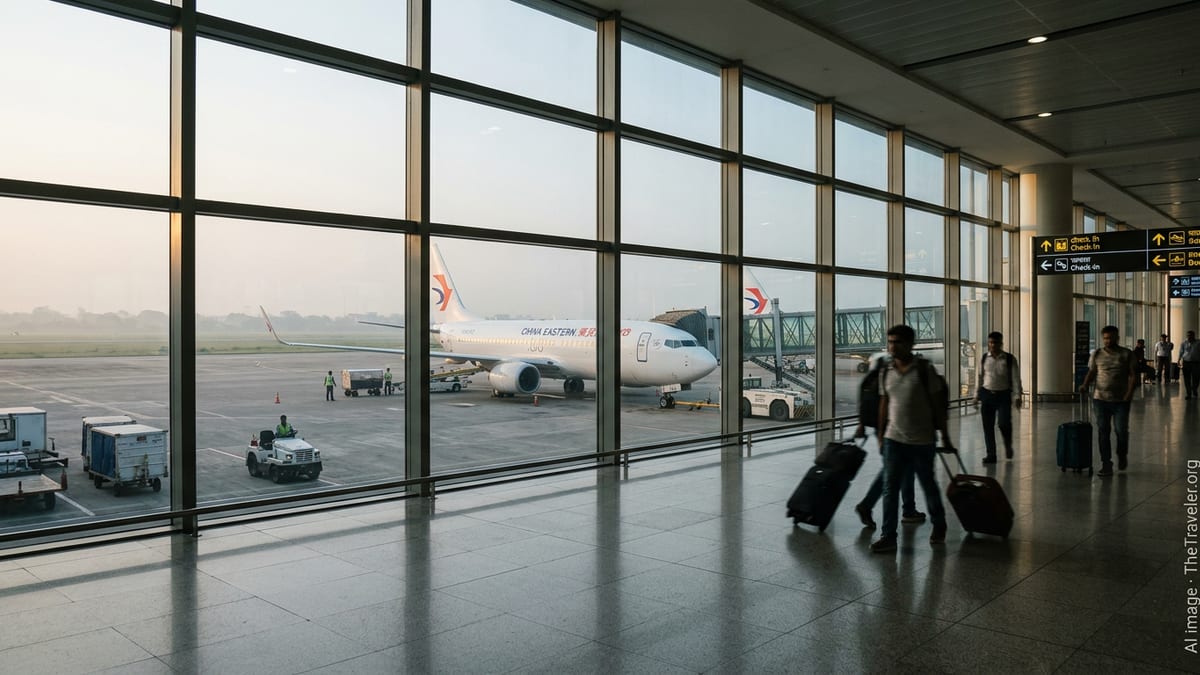
Travel and business links between eastern India and southwest China are set for a major boost as China Eastern Airlines prepares to resume its long-suspended Kolkata–Kunming service in April 2026, restoring a key regional corridor that has been grounded since the onset of the pandemic.
Route Returns After Six-Year Suspension
China Eastern has confirmed that direct flights between Kunming, capital of Yunnan province, and Kolkata, the largest city in eastern India, will restart from April 18, 2026. The airline halted the service in March 2020 when international schedules were slashed and border controls tightened, leaving a noticeable gap in connectivity for travelers and businesses on both sides.
The resumed service will operate six times a week, using Boeing 737 aircraft. Flight MU555 is scheduled to depart Kunming at 23:55 and land in Kolkata at 00:10 the following day on Mondays, Wednesdays, Thursdays, Fridays, Saturdays and Sundays. The return leg, MU556, will leave Kolkata at 01:10 and arrive in Kunming at 06:20 on Mondays, Tuesdays, Thursdays, Fridays, Saturdays and Sundays.
Before the pandemic, the Kunming–Kolkata route was regarded as a strategic short-haul link, offering one of the quickest gateways between eastern India and China’s vast southwest. Its suspension forced travelers to route via other hubs such as Guangzhou, Bangkok or Delhi, significantly increasing both journey time and cost.
Aviation analysts say the restoration of the route reflects both improving travel demand and a gradual normalization of air services between India and China. For China Eastern, it also marks another step in rebuilding its India network after the relaunch of Shanghai–Delhi services in late 2025.
New Options for Tourists and Business Travelers
The return of nonstop flights is expected to make a tangible difference for leisure travelers in both countries, particularly those keen to explore lesser-known destinations beyond the usual metropolises. Kunming is widely seen as the gateway to Yunnan’s landscapes, from the Stone Forest and Dianchi Lake to destinations such as Dali, Lijiang and Xishuangbanna, all popular with nature-focused visitors.
For Indian travelers from Kolkata and the wider eastern region, the overnight schedule could prove appealing. Passengers leaving Netaji Subhas Chandra Bose International Airport after midnight will arrive in Kunming early in the morning, in time to connect onward to domestic Chinese flights or begin sightseeing the same day. Conversely, Chinese tourists gain a direct link into Kolkata, with its colonial architecture, riverfront, vibrant food scene and relatively easy access to eastern India’s tea estates and heritage circuits.
Business travelers are also likely to benefit. Yunnan’s growing role in cross-border trade, logistics and manufacturing, combined with Kolkata’s status as a commercial hub for eastern and northeastern India, has created pent-up demand for faster connectivity. Travel consultants in both cities expect corporate bookings from sectors such as pharmaceuticals, engineering goods, tea, textiles and education services to rise once the route stabilizes.
Industry observers note that the timing of the relaunch, at the start of the northern summer schedule, allows China Eastern to test demand across peak holiday periods and major trade fairs. If load factors prove strong, the carrier could consider moving to daily operations in a subsequent season.
Strengthening India–China Regional Ties
Beyond point-to-point demand, the Kolkata–Kunming link has broader symbolic and practical importance. It effectively reopens an aerial chapter of the old overland corridors that historically connected eastern India with Yunnan and other parts of southwest China through trade and cultural exchange.
Diplomats and trade bodies see the resumption as a small but concrete step toward strengthening people-to-people contact at a time when political relations between the two countries remain complex. Easier travel for students, business delegations, cultural troupes and tourism groups could, they argue, help rebuild trust at the grassroots level.
Passenger traffic patterns before 2020 indicate that a significant portion of travelers on the route used Kunming as a transit point to other Chinese cities rather than as an end destination. With China Eastern’s network offering connections across the country, the restored service once again provides eastern India with a relatively direct entry point into China’s interior, complementing long-haul links from Delhi and other Indian cities.
On the Chinese side, the route also aligns with Yunnan’s ambitions to function as a bridge between China and South Asia. State and provincial initiatives to promote tourism, education exchanges and cross-border investment have highlighted Kolkata as a logical Indian partner city, given its geographic proximity and historic trading links.
Economic Boost for Kolkata and Kunming Gateways
For Netaji Subhas Chandra Bose International Airport in Kolkata, the return of China Eastern adds another much-needed international connection and diversifies long-haul options beyond Middle Eastern and Southeast Asian hubs. Airport officials and local tourism bodies have been lobbying for more direct links to East and Southeast Asia to support inbound tourism and export-oriented businesses.
Travel agents in Kolkata expect competitive fares on the route, particularly around the launch phase, as the airline seeks to stimulate demand and rebuild brand presence in the market. Packages combining Kunming with other Yunnan cities, as well as China-wide itineraries using Kunming as a first entry point, are likely to feature prominently in agency offerings over the coming months.
Kunming Changshui International Airport, one of China Eastern’s important regional hubs, stands to gain additional international feed from India at a time when Chinese carriers are progressively restoring global connectivity. Increased India-bound and India-origin traffic can help strengthen the hub’s role on routes linking China with Southeast Asia and beyond.
Local businesses in both cities, from hotels and tour operators to freight forwarders and conference venues, are preparing for a gradual rise in visitors and trade missions. While expectations remain cautious given the broader global economic environment, stakeholders view the route’s return as a clear signal of renewed confidence in cross-border travel.
Practical Details for Travelers Planning 2026 Trips
With services scheduled to begin on April 18, 2026, travelers are already able to book tickets through China Eastern’s channels and travel agencies. Given the overnight timings and the six-per-week frequency, passengers will have multiple options to coordinate onward connections or business appointments on both sides of the route.
Agents advise early planners to pay close attention to visa requirements and transit rules, which can vary depending on whether passengers use Kunming purely as a transit point or as their main destination. Health and entry regulations have eased significantly since the height of the pandemic, but travelers are still encouraged to check for any updated advisories or documentation requirements closer to their departure dates.
For those in eastern and northeastern India, the relaunch offers a chance to reconsider journey planning to East Asia and the Chinese mainland. Instead of flying west or south to larger hubs, Kolkata-based travelers can once again head directly east into Yunnan, potentially saving hours of travel time and simplifying itineraries.
As airlines across Asia continue to rebuild networks, the revival of the Kolkata–Kunming route exemplifies how targeted regional links can have an outsized impact on trade, tourism and interpersonal ties. For many travelers on both sides of the route, April 2026 will mark not only the return of a convenient flight number but the reopening of a long-awaited bridge between their cities.