

More news on this day
China Eastern Airlines has agreed to buy 101 Airbus A320neo family aircraft in a deal valued at about 15.8 billion dollars at list prices, marking one of the largest single-aisle jet commitments by a Chinese carrier since the pandemic and reinforcing Airbus’s growing lead in the world’s second-largest aviation market.
Get the latest news straight to your inbox!
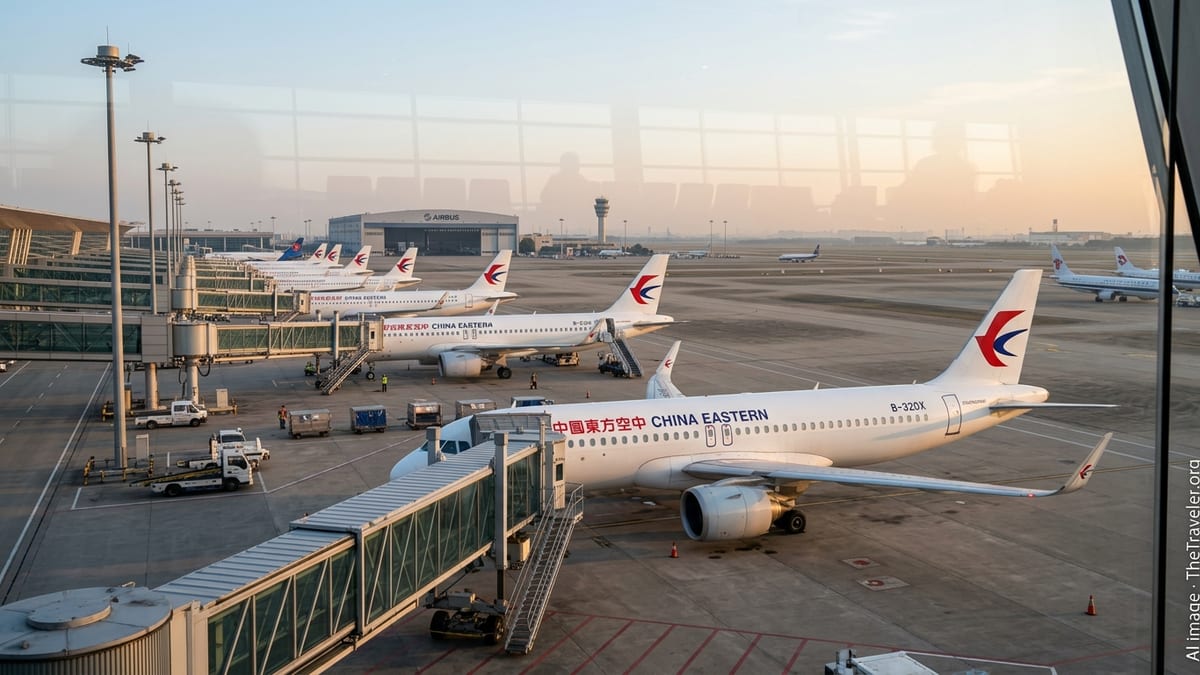
Major narrowbody refresh for China Eastern’s fleet
According to publicly available filings in China, the order covers 101 aircraft from Airbus’s A320neo family, with deliveries scheduled to run in batches between 2028 and 2032. The deal is structured around catalogue prices, translating into a notional value of about 15.8 billion dollars, although industry practice indicates that the ultimate amount paid after negotiated concessions will be significantly lower.
Reports indicate that China Eastern intends to use the new jets to support both replacement and growth. The airline operates a large fleet of earlier-generation A320ceo aircraft alongside Boeing 737s, many of which are expected to approach retirement during the next decade. The incoming A320neo aircraft are designed to deliver lower fuel burn and emissions compared with these older models, positioning the carrier to reduce operating costs on dense domestic and regional routes.
The long delivery window, stretching over four years, mirrors the tight production environment in the global single-aisle market. Airbus’s order book for the A320neo family is heavily backlogged, and airlines worldwide are competing for scarce production slots as travel demand continues to recover and fleets are renewed for efficiency and sustainability goals.
Public information from Chinese aviation regulators and exchange disclosures suggests that the order will be financed through a mix of internal funds and external borrowing, in line with previous large fleet transactions by China’s state-linked airlines. The jets are expected to be deployed primarily across the airline’s domestic network and high-frequency routes in East and Southeast Asia.
Boost for Airbus in China’s strategic aviation market
The China Eastern purchase further strengthens Airbus’s position in mainland China at a time when Boeing continues to face headwinds in the market. Recent years have seen a series of sizeable narrowbody commitments from Chinese carriers in favor of Airbus, including multi-airline packages and individual carrier deals that have tilted the country’s order balance toward the European manufacturer.
Industry coverage notes that Chinese carriers have increasingly turned to Airbus’s A320neo family as they modernize fleets and plan for sustained growth in domestic travel. China is projected to become the world’s largest aviation market over the coming decades, and narrowbody jets like the A320neo are the backbone of its point-to-point and hub networks. Winning repeat business from a major player such as China Eastern helps Airbus secure long-term industrial and political ties in the country.
The deal also dovetails with the manufacturer’s investment in China-based production and completion facilities. Airbus already assembles A320 family aircraft at its final assembly line in Tianjin, and additional Chinese orders are widely seen as supporting the case for higher output and deeper industrial cooperation with local partners. While specific allocation details for the 101 jets have not been disclosed, analysts expect at least a portion to be assembled in China to align with longstanding industrial offset patterns.
For European aerospace suppliers, the agreement adds further visibility to component demand and services work over the next decade. Engines, avionics and cabin interior providers tied into the A320neo program stand to benefit as Chinese fleets expand and increasingly rely on Airbus platforms for short and medium haul operations.
Competitive backdrop: Boeing and Comac under pressure
The order arrives against a complex competitive backdrop in which Boeing is still working to restore momentum in China while the country’s homegrown manufacturer, Comac, seeks to scale up its C919 program. Recent Chinese airline fleet decisions, including new A320neo family commitments by several state-controlled carriers, have been interpreted by analysts as a signal that Airbus remains the preferred option for many near term narrowbody requirements.
Publicly available commentary from aviation analysts suggests that Boeing’s limited recent order activity in China reflects a blend of regulatory issues, trade tensions, and concerns around production stability. Although Chinese airlines operate and continue to rely on Boeing aircraft, current large-scale single aisle commitments have tended to favor Airbus, and the China Eastern deal reinforces that pattern.
At the same time, China’s domestically produced C919 is slowly entering service, with China Eastern as the launch operator. However, the scale of the new Airbus order indicates that Chinese carriers still see Western designs as essential to meeting fleet needs over the next decade. Production ramp up challenges, certification timelines in overseas markets and supply chain constraints have all limited the C919’s immediate role as a substitute for established Western narrowbodies.
For global lessors and financiers, the ongoing dominance of Airbus and Boeing products in Chinese fleet plans provides clarity around residual values and secondary market prospects. Large, standardized fleets of A320neo family aircraft are generally viewed as easier to finance and remarket than smaller indigenous programs that are still building in-service histories and international support networks.
Implications for China’s post pandemic travel recovery
China Eastern’s order is also being read as a vote of confidence in the resilience of China’s air travel rebound. After a delayed reopening compared with many other major markets, China’s domestic air traffic has largely recovered to, and in some segments exceeded, pre pandemic levels, supported by strong demand on trunk routes linking major coastal and inland cities.
Forward looking capacity plans by China’s big three carriers, including new narrowbody and widebody orders, suggest expectations of steady growth in both leisure and business travel. The A320neo family’s range and economics make it suitable not only for dense domestic sectors such as Shanghai to Beijing or Guangzhou, but also for routes into Southeast Asia, Northeast Asia and parts of Central Asia that are expected to see increased frequencies.
Tourism observers note that the continued expansion of Chinese carrier fleets is likely to support outbound travel flows, which many destinations in Asia and beyond are counting on as a driver of hotel, retail and attraction revenues. Increased aircraft availability, coupled with competition between Chinese airlines and foreign carriers, could gradually put downward pressure on fares on some regional routes, further stimulating demand.
However, the relatively late delivery timeline means that the immediate capacity impact of the 101 aircraft will be limited. The bulk of the order will arrive after the end of this decade, corresponding with forecasts of a new phase of growth in Chinese middle class travel and additional liberalization of air service agreements with neighboring countries.
Long term fleet strategy and environmental commitments
The decision to prioritize A320neo family aircraft also aligns with China Eastern’s publicly stated goals around efficiency and environmental performance. New generation narrowbodies typically deliver double digit reductions in fuel burn and carbon emissions per seat compared with earlier models, helping airlines meet national and international climate targets while controlling costs.
China has set broad policy objectives for its aviation sector to improve energy efficiency and expand the use of sustainable aviation fuels over time. While aircraft orders alone cannot achieve those goals, transitioning fleets toward newer platforms is considered a foundational step. The A320neo family’s compatibility with higher blend sustainable fuels is an additional factor often highlighted in airline and manufacturer communications.
For passengers, the fleet renewal is likely to translate into quieter cabins and updated onboard products as new aircraft enter service. Airlines typically use major narrowbody orders as an opportunity to refresh interiors, in flight entertainment and connectivity, and to standardize layouts across large sub fleets to simplify operations.
In the broader market, China Eastern’s move signals that Chinese airlines are willing to make substantial long horizon bets on established Western technology while domestic programs mature. As the 2028 to 2032 delivery window approaches, the 101 additional A320neo family aircraft will help define the competitive landscape across China’s busiest corridors and shape how travelers move within and beyond the country.