

More news on this day
Travelers across China are facing a new wave of flight disruptions as China Eastern, Air China, China Southern, Sichuan Airlines and other major carriers cancel more than a dozen services on key routes linking Shanghai, Beijing, Chengdu, Xi’an and other high-traffic hubs, compounding an already strained winter travel season.
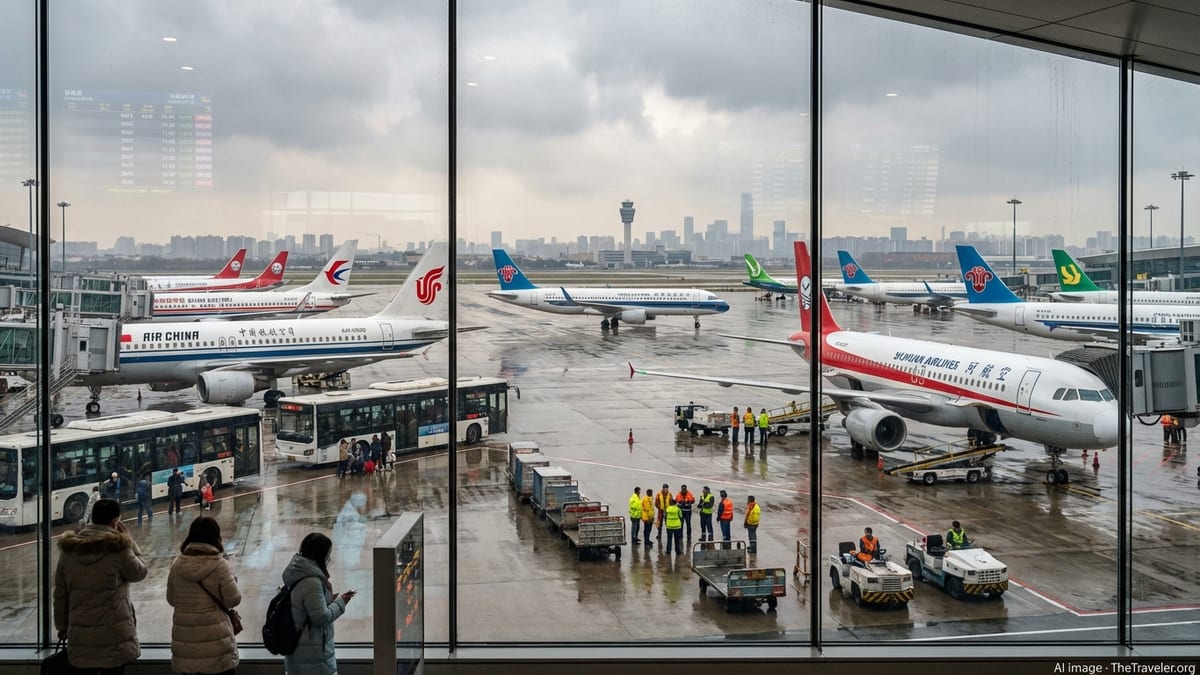
Fresh Cancellations Add To A Winter Of Disruptions
The latest round of cancellations, while numerically modest at just over a dozen flights, lands on top of weeks of turbulence for China’s domestic and regional air network. Recent operational data show repeated days in which Chinese airports have logged dozens of cancellations and hundreds or even thousands of delays, leaving terminals crowded and aircraft out of position across the country.
For travelers moving between economic powerhouses such as Shanghai and Beijing, or connecting through Chengdu and Xi’an to reach inland business centers and tourist destinations, even a relatively small number of cancelled services can trigger knock-on effects. Popular morning and evening bank departures are especially vulnerable, meaning stranded passengers can quickly outnumber the seats available on the remaining flights.
The cancellations span a mix of trunk and secondary routes, affecting not only flagship services operated by China Eastern, Air China and China Southern, but also flights marketed or operated by carriers such as Sichuan Airlines and Shanghai Airlines. With hub schedules tightly choreographed, those gaps are forcing last-minute rebooking, diversions and, in some cases, overnight stays for passengers mid-journey.
Airlines and airports have emphasized that the overall network remains operational, yet for individual travelers caught up in the latest wave of disruption, the impact is significant. Queues at ticket counters, congested customer-service hotlines and fast-changing departure boards have become a familiar feature of travel days in several of China’s busiest hubs this winter.
Shanghai, Beijing, Chengdu And Xi’an Bear The Brunt
Shanghai and Beijing, home to multiple large international airports and the core hubs of China’s leading state-owned carriers, continue to shoulder much of the disruption. Previous days this season have already seen scores of cancellations and hundreds of delays at Shanghai Pudong and Hongqiao, as well as at Beijing Capital and Daxing, and the latest scrubbed flights are again concentrated on these high-density corridors.
In Shanghai, China Eastern and its partners have trimmed services that feed passengers onto both domestic and international connections, forcing many travelers to reroute via alternative cities or wait for later departures. Business travelers commuting between Shanghai and other coastal centers have reported longer total journey times and increased reliance on high-speed rail as a backup when short-haul flights disappear from the schedule.
Beijing’s dual-airport system has allowed some flexibility, with carriers occasionally shifting capacity between Capital and Daxing, but this has not fully insulated passengers from disruption. Flights linking the capital to Xi’an, Chengdu and other inland hubs have been among those affected, complicating itineraries for both domestic tourists and international visitors connecting onward from long-haul services.
Chengdu and Xi’an, important gateways to western and northwestern China, have also seen cancellations on routes that connect them to coastal megacities. Sichuan Airlines and China Southern, both with strong presences in the southwest, have had to adjust timetables, limiting options for travelers heading to popular cultural and nature destinations beyond these cities. For tourists using Chengdu to access Sichuan’s mountain regions or Xi’an as the starting point for exploring the Silk Road corridor, the latest cancellations add a layer of uncertainty to carefully planned itineraries.
Weather, Congestion And Operational Strain Drive Uncertainty
Behind the flickering departure boards lies a familiar mix of causes. Seasonal weather has been a major factor, with fog, low cloud and winter storms disrupting operations at several major Chinese airports over recent weeks. Past episodes have seen airports cancel or delay hundreds of flights in a single day when conditions fell below operating minima, creating a backlog that can take days to clear even after skies improve.
Airspace congestion and tight turn times are also playing their part. China’s busiest airports operate close to capacity for large portions of the day, leaving little margin to absorb disruptions. When an inbound aircraft arrives late due to weather or flow control elsewhere in the system, the result can be a cascade of delays and the cancellation of later rotations to get operations back on track.
Operational resources remain under pressure as airlines ramp up capacity to meet resurgent demand in the post-pandemic era. Crews and maintenance teams are working to support more intensive schedules, particularly during the peak Lunar New Year travel period and the busy winter holiday season. A single aircraft going out of service or a crew reaching duty-time limits can lead to the cancellation of flights that might otherwise have operated with modest delays.
Industry analysts note that China’s carriers have made significant investments in on-time performance and irregular operations management in recent years, but they caution that the combination of complex hub-and-spoke networks, constrained airspace and volatile winter weather means periodic clusters of cancellations are all but inevitable. For passengers, that translates into a need for greater flexibility and awareness of backup options when flying at this time of year.
Airlines Roll Out Rebooking And Refund Options
In response to the series of disruptions, China Eastern, Air China, China Southern and several other carriers have extended or refreshed their policies on rebooking and refunds, particularly on routes known to be vulnerable to cancelations. Notices issued in recent weeks outline expanded options for travelers to change their travel dates or adjust routings without incurring additional fees when flights are affected by operational factors.
Some airlines have also broadened flexibility on certain international routes, especially those linking China to regional destinations where schedules have been repeatedly trimmed or adjusted. Travelers holding tickets issued before key cutoff dates may in some cases modify their itineraries, receive vouchers or request refunds if their planned flights are cancelled or substantially delayed.
On domestic sectors, carriers typically prioritize rebooking onto the next available service, though this can be challenging when multiple flights on a popular route are disrupted on the same day. Ground staff have been redeployed to customer-service desks at heavily impacted airports, and airlines encourage travelers to use mobile apps and official service channels to request changes, track new boarding passes and receive real-time notifications.
For passengers arriving from long-haul international flights into hubs like Shanghai and Beijing, the availability of flexible options is especially important. Missed domestic connections can mean losing hotel reservations, guided tours or rail tickets, and many airlines are working more closely with partner carriers and travel agencies to help cushion the impact on downstream travel plans.
Stranded Travelers Face Long Queues And Tight Alternatives
For those directly affected by the latest cancelled flights, the lived experience often begins with a notification on a phone or a sudden status change on the airport departure board. Travelers arriving at the airport to find their flight scrubbed have described long queues at check-in counters and rebooking desks, with wait times stretching as staff work through complex rerouting scenarios.
Seats on remaining services are quickly snapped up, leaving some passengers with few same-day alternatives, particularly in the evening peak when aircraft are already heavily booked. In some cases, travelers have been offered rerouting through secondary hubs, turning direct journeys into multi-stop odysseys that add hours to total travel time and increase the risk of further misconnects.
Airports in Shanghai, Beijing, Chengdu and Xi’an have bolstered staffing and information services to manage the crowds, deploying additional signage and public announcements to keep travelers updated. Nonetheless, the gap between the scale of demand and the limited remaining capacity can leave many stranded overnight, relying on airline-provided accommodation vouchers or scrambling to find hotel rooms in busy airport districts.
Families traveling with young children and older passengers have been among those most affected, as they contend with late-night schedule changes, disrupted meal times and the stress of navigating unfamiliar cities when plans suddenly shift. For business travelers, missed meetings and lost workdays remain a tangible cost of the ongoing operational volatility.
What Travelers Should Do If Their Flight Is Affected
With disruption now an intermittent feature of Chinese domestic and regional travel, experts recommend that passengers adopt a more proactive approach to managing their journeys. Checking flight status repeatedly in the 24 hours before departure and enabling notifications in airline apps can provide early warning when schedules change, buying valuable time to secure scarce seats on alternative flights.
Travelers are also advised to keep ticket information, passport details and contact numbers easily accessible to speed up rebooking, whether via an airline call center, airport desk or self-service option. When a cancellation is announced, acting quickly is often critical, as inventory on later flights is limited and may be shared among passengers from several cancelled services.
Where feasible, considering back-up options such as high-speed rail can provide a safety net, particularly on dense corridors like Shanghai to Beijing or links between major eastern cities and inland hubs. While trains are not immune to weather-related disruption, they can offer more frequency and capacity during peak seasons, reducing the risk of extended stranding.
Travel insurance with clear coverage for trip interruption and missed connections can also play an important role in cushioning financial losses from hotel no-shows, nonrefundable tours and last-minute ticket changes. Travelers should review policy terms carefully, ensuring that airline-caused disruptions and weather-related cancellations fall within the scope of coverage.
Implications For China’s Wider Travel And Tourism Recovery
The pattern of repeated cancellations and delays across major Chinese airports arrives at a sensitive time for the country’s wider travel and tourism recovery. Domestic air travel has rebounded strongly, and international connections are steadily returning as airlines restore capacity and reopen routes, yet operational resilience remains under close scrutiny by both regulators and consumers.
Tour operators and travel agencies report that while demand for trips to and within China is robust, recurring headlines about stranded passengers and long airport queues can influence traveler perceptions. Some visitors are opting for itineraries that build in additional buffer days or rely more heavily on rail, especially when traveling to regions with limited alternate flight options.
For airlines, the imperative is to balance aggressive capacity restoration with investments in reliability. That includes better integration of weather forecasting into operational planning, improved crew and fleet flexibility, and more transparent real-time communication with passengers when things go wrong. Carriers know that repeated disruptions risk eroding hard-won customer loyalty at a time when competition for travelers is intensifying across Asia.
Airports and local tourism boards, meanwhile, see the smooth functioning of air links as critical to sustaining growth in hotel occupancies, attraction visits and business events. Ensuring that visitors can move efficiently through hubs like Shanghai, Beijing, Chengdu and Xi’an is central to broader efforts to position Chinese cities as dependable gateways for both leisure and corporate travelers.
Outlook: More Stability Ahead, But Volatility Remains
Looking ahead, aviation analysts expect that the acute spikes in cancellations seen on some of the worst-affected days this winter will moderate as seasonal weather patterns ease and airlines work through temporary operational bottlenecks. Additional aircraft deliveries and the gradual expansion of crew rosters should provide carriers with more flexibility to recover from day-to-day disruptions.
However, the underlying realities of constrained airspace, dense hub schedules and increasingly volatile weather suggest that periodic clusters of cancellations will remain part of the travel landscape in China. Passengers on popular trunk routes linking Shanghai, Beijing, Chengdu and Xi’an may continue to see day-of-travel adjustments even as overall reliability trends in a more positive direction.
For now, the latest round of cancellations by China Eastern, Air China, China Southern, Sichuan Airlines and their peers serves as a reminder that travelers should build in margin for delay, stay closely connected to official airline channels and approach tight connections with caution. While the vast majority of flights will still depart roughly on time, those few that do not can have outsized impacts on complex, multi-stop itineraries.
As China’s air travel market continues to mature, the experience of this winter’s disruptions is likely to accelerate investments in everything from more robust scheduling systems to improved passenger-care protocols. For travelers watching departure boards in Shanghai, Beijing, Chengdu, Xi’an and beyond, the hope is that these efforts will translate into fewer last-minute cancellations and a smoother journey through one of the world’s busiest aviation networks.