

More news on this day
China and wider East Asia are confronting a fresh bout of aviation turmoil, with 41 flights cancelled and 1,181 additional services disrupted across key hubs including Beijing, Shanghai, Chengdu and airports in the Xinjiang region, leaving passengers across multiple carriers facing long queues, rolling delays and abrupt changes to their travel plans.
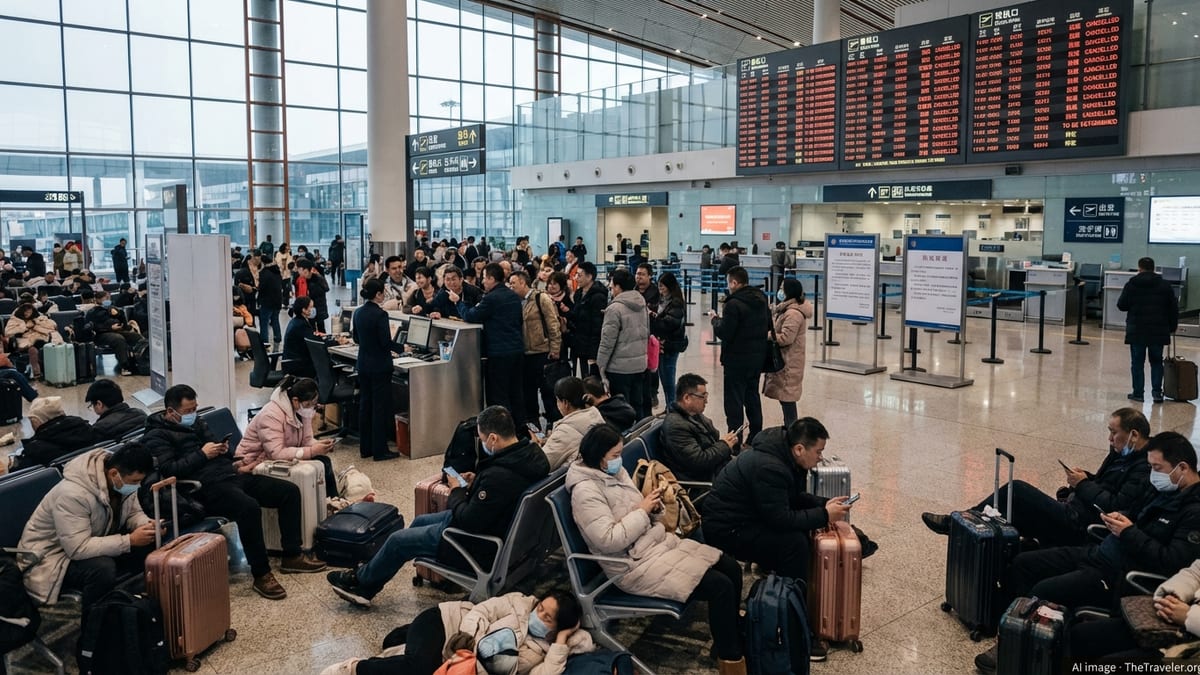
Severe Weather and System Strain Collide Across China’s Skies
The latest wave of disruption, unfolding on February 27, has been driven primarily by fast-changing weather systems sweeping across western and eastern China, combining with already stretched airline and airport operations. Heavy rain, low cloud ceilings, poor visibility and unstable winds in parts of Xinjiang and around major coastal hubs have forced airlines to scale back services or hold aircraft on the ground while conditions stabilise.
Operational data indicates that 41 flights have been scrubbed outright, while a further 1,181 services have been delayed, rerouted or otherwise disrupted across the region. The impact is being felt most sharply at major gateways around Beijing and Shanghai, as well as at Chengdu Shuangliu International Airport and a series of airports across the Xinjiang Uyghur Autonomous Region, which together form crucial nodes in China’s domestic network.
For carriers including Air China, China Express, Chengdu Airlines and Sichuan Airlines, the combination of weather-related constraints and tight aircraft and crew rotations has reduced their flexibility to recover quickly once schedules start to slip. That has translated into a familiar pattern for passengers: long lines at service desks, crowded departure halls and departure boards dominated by red delay markers.
Aviation analysts note that while the absolute number of cancellations remains limited compared with China’s typical daily flight volume, the geographic spread of today’s disruptions means knock-on effects are rippling far beyond the airports directly experiencing poor weather, extending into secondary cities and connecting hubs across East Asia.
Xinjiang and Western Corridors Bear the Brunt
Western China, and Xinjiang in particular, has emerged as a focal point of the latest turmoil. Chengdu Airlines and China Express operate dense networks linking smaller cities in Xinjiang to regional centres such as Yining, Hotan, Kashgar and Aksu, and several of those spokes have been among the most affected by cancellations and rolling delays.
With services curtailed between frontier cities and inland hubs, passengers who rely on these flights for essential travel have been left with limited options. In many cases, onward rail or long-distance coach alternatives add many hours, or even days, to journeys that are normally completed in a matter of hours by air. Business travellers, migrant workers and tourists heading toward desert and mountain destinations have all reported being stranded as weather windows closed.
The disruption in Xinjiang is also feeding into broader network instability. Many western routes connect into eastbound services that feed Beijing, Shanghai and Chengdu. When aircraft and crew are trapped out of position in the northwest, carriers must scramble to reshuffle resources elsewhere in order to maintain minimum frequencies on trunk routes, often leading to further delays rather than additional cancellations.
Industry observers say this pattern underscores the vulnerability of China’s fast-expanding regional aviation links, where thinner schedules and fewer back-up aircraft mean there is less redundancy when weather or operational snags appear. Once one or two rotations are lost in these markets, the recovery can take several days.
Pressure Mounts on Beijing, Shanghai and Chengdu Hubs
At the other end of the network, major hubs at Beijing and Shanghai have again become visible symbols of the strain as passengers pack into terminals waiting for updates. Even when these coastal airports are not experiencing the most severe weather themselves, they are deeply exposed to disruptions further inland because so many flights originate or connect through affected western and central provinces.
Short-haul corridors linking Beijing Capital and Shanghai Pudong with cities such as Chengdu, Hangzhou and other business centres have reported a series of delayed departures, tightened turnarounds and last-minute gate changes. For travellers, that has meant missed connections, truncated layovers and, in some cases, overnight stays when inbound flights arrive too late for onward services.
Chengdu, which serves as both a gateway to western China and a fast-growing hub in its own right, has been experiencing particular congestion as Sichuan Airlines and Chengdu Airlines re-time services and consolidate lightly booked flights. Passengers report long queues at transfer counters as staff work to rebook those stranded by missed onward links to domestic and regional destinations.
The strains in China are also intersecting with wider East Asian network pressures. Delays and aircraft repositioning on China Express and other regional carriers are feeding into schedules that touch neighbouring markets, contributing to a broader pattern of late-running services across parts of East Asia on a day when more than a thousand flights region-wide are registering some form of disruption.
What Today’s Disruptions Mean for Travellers on the Ground
For travellers currently in the system, the combination of limited cancellations and extensive delays presents a mixed picture. On one hand, many flights are still operating, albeit behind schedule, meaning that most passengers will eventually reach their destinations without needing complete itinerary overhauls. On the other, the sheer volume of altered departure and arrival times means that even modest delays can cascade into missed connections and unexpected overnight stops.
Passengers flying on Air China, China Express, Chengdu Airlines and Sichuan Airlines are being advised at airports to arrive earlier than usual, monitor departure boards closely and remain in regular contact with airline staff for rebooking and compensation information. Check-in agents are urging travellers with tight domestic connections in Beijing and Shanghai to consider requesting earlier flights where possible, as later rotations may be more exposed to rolling delays if weather conditions deteriorate again.
In crowded terminals from Beijing and Shanghai to Chengdu and Urumqi, travellers have been seen clustering around customer service counters and self-service kiosks, looking to switch to more resilient routes or secure seats on high-speed rail alternatives. Families and business groups with fixed arrival times have been particularly affected, with some opting to abandon same-day travel in favour of rebooking for later dates when conditions are expected to stabilise.
Airport authorities have increased public announcements in multiple languages, reminding passengers to keep boarding passes and receipts in case they qualify for hotel vouchers or meal support under airline policies. However, the patchwork of rules across carriers and ticket types continues to create confusion, particularly for international visitors unfamiliar with local regulations.
Key Lessons and Practical Steps for Future Flights
The latest round of flight disruptions in China and wider East Asia offers several practical takeaways for travellers planning journeys in and through the region in the coming weeks. With weather volatility showing little sign of easing in late winter, aviation experts recommend building additional buffer time into itineraries, especially when connecting between different airlines or separate tickets.
Booking earlier flights in the day, where feasible, can improve the chances of successful same-day travel. Morning departures are often less affected by accumulated delays, giving travellers more options to be rebooked if disruptions occur. Where routes permit, selecting nonstop services instead of itineraries with domestic connections through Beijing, Shanghai or Chengdu can also reduce exposure to network shocks.
Experts further urge passengers to use airline apps and airport information tools to track aircraft and gate changes in real time, rather than relying solely on printed boarding passes issued hours earlier. For those flying with carriers such as Air China, China Express, Chengdu Airlines and Sichuan Airlines, ensuring that contact details are updated in booking profiles can speed up notification of any schedule changes or automatic rebooking.
Finally, travellers are being reminded to review fare rules and travel insurance coverage before departure. Policies that include disruption benefits, such as reimbursement for missed connections, extended layovers or forced overnight stays, can provide a financial cushion when large-scale events like today’s 41 cancellations and 1,181 disruptions reverberate through China’s increasingly interconnected aviation system.