

More news on this day
Thousands of travelers across China are facing hours-long waits and missed connections as a fresh wave of flight disruption delays 1,439 services and cancels a further 164 at major hubs including Shanghai, Beijing, Chengdu, Guangzhou, Shenzhen, Xi’an and Wuhan, affecting China Eastern, Air China, China Southern and other carriers.
Get the latest news straight to your inbox!
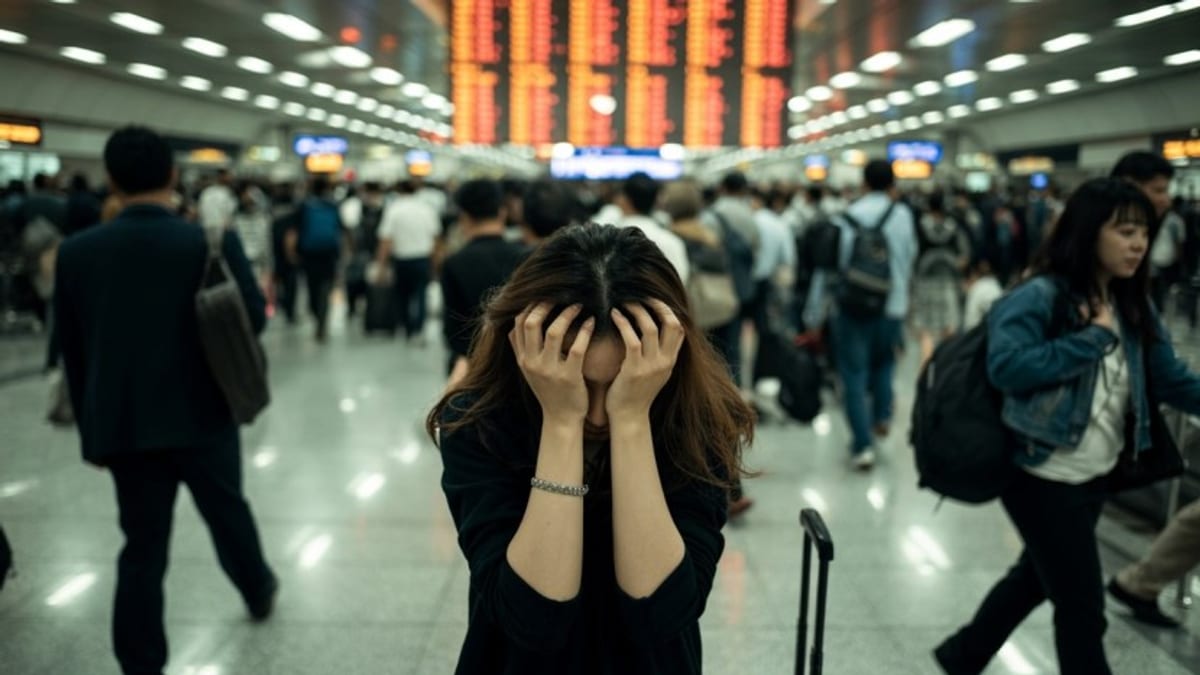
Major Chinese Hubs Struggle With Another Day of Disruption
Publicly available flight-tracking data for China’s busiest terminals indicates that the latest disruption is concentrated in large coastal and central hubs, with Shanghai, Beijing, Chengdu, Guangzhou, Shenzhen, Xi’an and Wuhan among the most affected. Together, these airports typically handle hundreds of domestic and regional departures per day, meaning that any spike in delays quickly ripples through the country’s wider aviation network.
The reported total of 1,439 delayed flights and 164 outright cancellations points to a severe, system-wide strain rather than a localized incident. Industry coverage in recent days has already highlighted elevated disruption levels at Chinese airports, with previous snapshots showing several thousand delays and more than 200 cancellations in a single day across key hubs such as Beijing, Shanghai, Guangzhou and Shenzhen. The latest figures suggest that those pressures are continuing rather than easing.
Travel industry summaries describe crowded terminals, long queues at rebooking counters and rolling knock-on delays as late-arriving aircraft struggle to turn around in time for their next scheduled sectors. As aircraft and crews fall out of position, even flights initially scheduled to operate during off‑peak hours risk sliding into delay as airlines work through accumulated backlogs.
China Eastern, Air China and China Southern Under Pressure
Among the airlines most exposed are China Eastern, Air China and China Southern, which dominate traffic flows at many of the affected airports and operate dense domestic networks built around tight connection windows. Recent aviation analytics reports have repeatedly identified these carriers among the most delay‑affected in the region, particularly on routes linking Shanghai, Beijing and Guangzhou with secondary Chinese cities.
China Eastern, headquartered in Shanghai, faces particular pressure when disruptions strike both of the city’s airports, as aircraft scheduled for multiple daily rotations can quickly fall behind schedule. Earlier coverage this month has already pointed to clusters of delays linked to the airline at Chinese hubs, illustrating how quickly operational challenges can cascade across its network.
Air China and China Southern, meanwhile, are dealing with simultaneous pressure at Beijing and Guangzhou, their primary bases, while also maintaining extensive services through Chengdu, Shenzhen and other large cities. When several of these hubs experience elevated delay levels at the same time, the carriers have limited flexibility to reposition aircraft or crews without further impacting schedules.
Other Chinese and regional airlines that rely on slots at these major airports are also being caught up in the disruption. Smaller operators with leaner fleets can be particularly vulnerable, as they have fewer spare aircraft available to step in when a single flight runs significantly late or is canceled outright.
Weather, Airspace Constraints and Holiday Crowds Combine
While precise causes vary by airport and time of day, recent reporting on China’s aviation performance in early April 2026 points to a combination of adverse or changeable weather, temporary airspace constraints and lingering structural pressures in airline operations. Analyses of earlier disruption events this spring describe how routine thunderstorms or low cloud can trigger holding patterns, diversions and ground stops, leading to rapid congestion on departure and arrival banks at large hubs.
At the same time, traffic levels remain elevated around the Qingming Festival holiday period, which in 2026 ran from early to mid‑April. Travel commentary notes that increased demand during this window leaves fewer spare seats and less slack in the system, meaning that passengers affected by cancellations or long delays may struggle to find same‑day alternatives on popular routes.
Regional aviation coverage also highlights broader airspace and routing issues across Asia, including detours around areas of geopolitical tension and weather systems that lengthen flight times and compress aircraft rotation schedules. When services into China arrive late from neighboring countries, departures from Chinese hubs can in turn be held back, amplifying delays throughout the day.
These overlapping factors help explain why delay and cancellation numbers have remained stubbornly high across multiple days, rather than dropping back quickly once the immediate trigger at a single airport has passed.
Knock-on Effects for Domestic and International Travelers
The disruption is being felt both by domestic passengers flying between Chinese cities and by international travelers using hubs such as Shanghai, Beijing and Guangzhou as gateways to the wider Asia Pacific region. Missed connections are a particular concern on itineraries that rely on short transfer times, with some travelers forced to wait for later services or reroute through alternative hubs.
Travel industry reports from earlier episodes this month describe scenes of crowded departure halls and improvised overnight stays as passengers wait for rebooked flights. Tourism‑dependent businesses in major Chinese cities are also feeling the effects, as delayed arrivals compress visitor itineraries and some travelers opt to shorten or cancel trips altogether when faced with prolonged uncertainty.
For airlines, the cost of disruption extends beyond immediate operational challenges. Rebooking passengers, providing meal vouchers or accommodation in severe cases and repositioning aircraft all add to expenses at a time when many carriers are still rebuilding balance sheets. The reputational impact is also significant, particularly for travelers who experience repeated delays on different trips within a short span.
Industry observers note that the recent sequence of high‑delay days across China and the broader Asia Pacific underscores the fragility of aviation schedules in a period of strong demand, complex airspace constraints and ongoing resource pressures, even as overall capacity has continued to climb back toward pre‑pandemic levels.
Practical Advice for Passengers Caught in the Gridlock
Travel analysts reviewing recent disruption data across China and Asia advise passengers to build extra time into itineraries that involve connections at major Chinese hubs, especially during peak travel weeks in April. Longer layovers reduce the risk that a single delayed sector will cause an onward flight to be missed, particularly when flying through heavily impacted airports such as Shanghai, Beijing, Guangzhou or Shenzhen.
Guidance published by travel and aviation commentators consistently recommends relying on official airline apps and airport departure boards for the most up‑to‑date information, as third‑party booking platforms can lag during fast‑moving disruption events. Enabling alerts within airline apps can provide early warning of schedule changes, giving travelers more time to adjust ground transport or lodging plans.
Passengers whose flights are significantly delayed or canceled are also encouraged to familiarize themselves with each airline’s specific rebooking and compensation policies. In recent disruption episodes across the region, some carriers have offered fee‑free changes, extended rebooking windows or limited care provisions such as meal vouchers and hotel rooms, typically for the most severely affected travelers.
With elevated delay and cancellation numbers likely to continue in the short term, travelers planning to pass through Chinese hubs in the coming days may wish to monitor news updates and flight‑tracking dashboards closely, and to consider flexible ticket options where possible to better navigate an increasingly volatile operating environment.