

More news on this day
Thousands of air travelers across Asia are facing missed connections, overnight airport stays and rapidly changing itineraries as major Chinese hubs report dozens of cancellations and hundreds of delays involving carriers such as Air China, Sichuan Airlines, Tianjin Airlines and Hainan Airlines.
Get the latest news straight to your inbox!
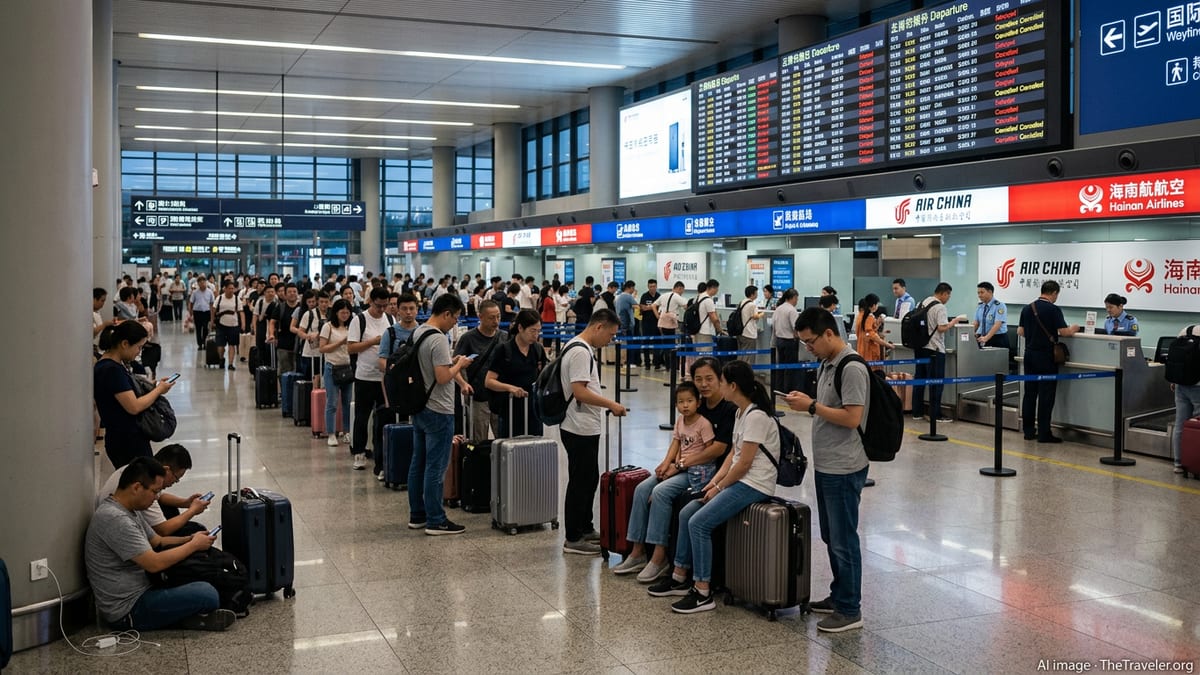
Heavy Disruption at China’s Major Air Hubs
Publicly available tracking data for mid-March shows a fresh wave of operational disruption at leading Chinese airports, with reports pointing to more than 80 cancellations and over 800 delays in a single day across key hubs. The heaviest impacts are concentrated at Beijing, Shanghai and Guangzhou, which together handle a large share of long haul and regional traffic linking East Asia with Europe, the Middle East and North America.
Beijing’s dual-airport system, Shanghai’s Pudong and Hongqiao gateways and Guangzhou’s Baiyun Airport rank among the busiest in China by passenger volume, meaning even modest schedule disruption can cascade quickly through regional networks. Recent data indicates mounting knock on effects across domestic links into Chengdu, Wuhan, Tianjin and other secondary hubs as aircraft and crews fall out of position.
Travel forums and social media posts from March 2026 describe passengers missing onward flights, re-routing via alternative Chinese cities and, in some cases, abandoning trips after multiple changes. The pattern underscores how concentrated flight banks at China’s largest airports can amplify delays, especially during already tight post-holiday and early spring travel periods.
Industry observers note that Chinese airports continue to operate near or above pre-pandemic traffic levels, while weather variability and airspace constraints periodically pressure on-time performance. The current spike in late departures and cancellations is the latest reminder of how thin the margin for error can be at Asia’s biggest hubs.
Air China, Hainan Group and Regional Carriers Under Strain
Among the carriers most visibly affected are Air China, China’s flag carrier, and airlines within the Hainan group, including Hainan Airlines and Tianjin Airlines. These operators maintain dense networks radiating from Beijing, Shanghai, Guangzhou and Hainan Island into both domestic and international markets, making them particularly exposed when disruption begins at major hubs.
Recent traveler accounts describe last minute cancellations on routes linking Japan, Southeast Asia and China, as well as schedule changes that move flights just below compensation thresholds in some jurisdictions. Passengers on Hainan Airlines and Tianjin Airlines have reported a series of short notice cancellations in early March, together with difficulties reaching customer service during peak rebooking periods.
Regional players such as Sichuan Airlines, based in Chengdu, have also been drawn into the turbulence. With Chengdu now an important alternative gateway for travelers connecting between Southeast Asia, Europe and secondary Chinese cities, delays at larger coastal hubs can quickly spill inland, complicating aircraft rotations and crew assignments.
Public timetables show that many of these carriers are still adjusting route networks that were expanded or reconfigured over the past two years to capture recovering international demand. This process can leave operations more vulnerable when adverse weather, congestion or sudden demand shifts appear.
Knock On Effects Across Asia’s Travel Corridors
The disruption in Chinese airspace is reverberating far beyond the mainland, affecting travelers throughout Asia attempting to reach Europe and North America. Reports from stranded passengers in Southeast Asia describe itineraries that now route through secondary Chinese cities such as Chengdu or Chongqing after original flights via Doha, Dubai or other Gulf hubs were cancelled or heavily reshuffled.
For many travelers, China’s extensive network still offers one of the most direct ways to bridge Southeast Asia and European destinations. When cancellations or long delays occur at Chinese hubs, however, options can quickly narrow, especially on short notice. Some travelers are finding that rebooked seats involve lengthy overnight connections, multiple airport changes within the same city or significant fare differences compared with their original tickets.
Complicating matters, visa and transit rules vary by nationality and by Chinese gateway. While certain passengers can take advantage of visa free transit windows through airports in Beijing, Shanghai, Guangzhou, Chengdu, Wuhan, Tianjin and Hainan, others face stricter requirements that limit their ability to leave secure areas or re-route via alternate cities. Confusion at check in over these rules has led to additional missed flights and boarding denials for some international travelers.
Across Asia, the result is a patchwork of disrupted journeys that add friction to what is already a complex travel landscape. While major airlines outside China have adjusted some schedules in response to broader geopolitical and economic pressures, China’s role as a central connector in the region means irregular operations there can still send shockwaves through multiple long haul corridors.
Travelers Confront Long Queues and Limited Support
On the ground, travelers dealing with cancellations and delays at Chinese hubs are frequently encountering long queues at service desks and busy telephone hotlines. Passengers posting on travel and aviation forums in recent weeks describe waiting extended periods to speak with airline representatives, particularly during evening hours when multiple flight banks depart.
Some travelers report being offered rebookings one or two days later, often via different airports from those originally booked. In other cases, airlines have proposed partial refunds or vouchers when suitable alternatives are not available. The experience varies significantly depending on whether tickets were purchased directly or through third party agencies, with indirect bookings sometimes slowing the re-accommodation process.
Accommodation and meal support also differ by carrier and by the cause of disruption. While some travelers recount being provided with hotel stays near airports such as Beijing Capital or Shanghai Pudong, others have resorted to sleeping in terminal seating overnight while awaiting new flights. Limited late night ground transport options into city centers further complicate plans for those unexpectedly stranded after midnight.
Consumer advocates note that international passengers often arrive in China with limited knowledge of their rights under local and international aviation regulations, leaving them uncertain about what compensation or assistance they can reasonably request in the event of long delays or cancellations.
What Passengers Can Do Now
In the face of ongoing irregular operations, travelers planning to connect through major Chinese hubs in the coming days are being urged by travel advisers and online communities to build additional buffers into their itineraries. That can include longer minimum connection times, especially when changing between terminals or between different airlines within the same city.
Checking flight status repeatedly in the 24 hours before departure, and again before heading to the airport, has become essential. Many carriers serving China continue to adjust departure times within relatively short windows, and travelers who monitor changes early have a better chance of rebooking onto remaining seats.
Experienced Asia bound travelers are also recommending that those with complex, multi leg trips avoid the tightest same day connections where possible, opting instead for overnight stops in major hubs or simpler one stop itineraries. While such choices can increase overall travel time and cost, they can reduce the risk of becoming stranded mid-journey if a single critical leg is cancelled.
For those already affected by the current wave of disruption, keeping detailed records of delay times, receipts for out of pocket expenses and written communication with airlines can be important for any later claims. As China’s airports continue to manage heavy traffic and evolving operational pressures, passengers across Asia are likely to face an extended period of heightened uncertainty whenever their journeys depend on smooth connections through Beijing, Shanghai, Guangzhou, Chengdu, Wuhan, Tianjin and other Chinese gateways.