

More news on this day
Travel across China was thrown into fresh disarray on Friday as a new round of cancellations and delays hit major carriers including Air China, China Eastern and Hainan Airlines, disrupting busy corridors to Beijing, Shanghai, Chengdu, Chongqing and other key cities.
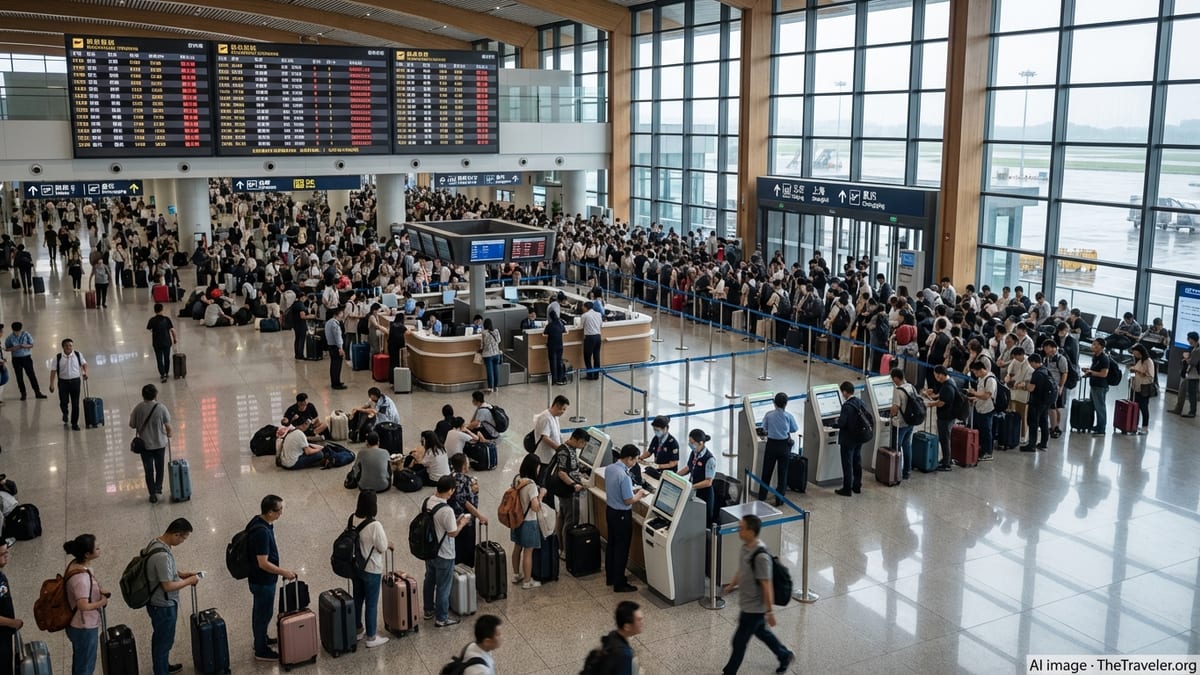
Fresh Wave of Cancellations Across Chinese Carriers
Flight operations at some of China’s busiest airports deteriorated again on February 27, with aviation data and airport reports indicating that more than eight scheduled services were cancelled across multiple domestic routes. The latest disruptions come on top of a winter marked by repeated operational snags, compounding frustration for passengers who rely on trunk routes linking Beijing, Shanghai, Chengdu and emerging hubs such as Chongqing.
While the headline numbers from the current episode appear modest compared with larger meltdowns earlier in the season, the impact is magnified by where and when the cancellations are occurring. Several services on peak business and transfer corridors were pulled at short notice, forcing travelers to scramble for alternatives in a network that is already stretched by weather-related congestion and tight aircraft rotations.
Industry observers note that China’s vast domestic market leaves little slack when multiple airlines trim schedules simultaneously. Even a cluster of single-digit cancellations on popular city pairs can trigger rolling disruption, as missed connections, crew reassignments and aircraft repositioning ripple across the system through the rest of the day.
For affected passengers, the result has been long lines at rebooking counters, crowded departure halls and an increased risk of overnight stays near airports, especially where later departures are already operating close to capacity.
Beijing, Shanghai and Chengdu Bear the Brunt
China’s primary hubs have once again absorbed the heaviest shock. Beijing Capital International and Shanghai’s Hongqiao and Pudong airports saw a disproportionate share of cancellations and knock-on delays, particularly on high-frequency routes that serve as the backbone of the country’s domestic aviation network.
Chengdu, which has rapidly grown as a western hub with links into Xinjiang and other inland regions, has also experienced intermittent disruption as services to and from Beijing and Shanghai are adjusted. When flights into these core hubs are cancelled or significantly delayed, regional routes that depend on them for onward connections quickly become vulnerable to schedule changes or consolidation.
Chongqing and several second-tier cities have reported passengers arriving hours later than planned as they are rerouted through alternative airports or shifted to later departures. For travelers on tight itineraries, especially domestic business passengers, even a two to three hour delay can mean missed meetings and additional accommodation costs.
Airlines have attempted to prioritize trunk routes during the worst of the disruption, but that has at times meant trimming thinner regional flights instead. This strategy can help stabilize traffic flows through the largest hubs, but it leaves passengers in smaller markets facing longer gaps between available services.
Air China, China Eastern and Hainan Under Pressure
National flag carrier Air China and major state-owned rival China Eastern remain at the center of the turbulence, as their extensive domestic networks make them especially exposed when bad weather or congestion strikes key hubs. Both carriers operate dense schedules on the Beijing to Shanghai corridor, as well as multiple daily flights to Chengdu, Chongqing and other western gateways.
Hainan Airlines, which has been rebuilding its network and shifting some operations between terminals at Sanya and other airports this month, has also faced mounting pressure to keep schedules intact as conditions deteriorate. Any last-minute cancellations on Hainan’s popular leisure routes can quickly spill over into the broader domestic network when aircraft and crews are redeployed.
Regional players such as Chengdu Airlines, Sichuan Airlines, China Express and Shenzhen Airlines have likewise reported cancellations or significant delays on selected services feeding into the major hubs. Although these carriers may operate fewer flights per route, every disrupted departure can strand passengers in smaller cities that have limited alternative options later in the day.
For airline operations teams, the challenge is balancing safety-focused decisions driven by weather and airspace constraints with the commercial and reputational cost of cutting flights. With Chinese carriers still working to rebuild international traffic, maintaining confidence in the reliability of domestic services remains a strategic priority.
Weather and Network Strain Combine to Snarl Schedules
Meteorological advisories on Friday pointed to fast-changing conditions across parts of western and eastern China, with reduced visibility, low cloud and unstable winds affecting approaches into several airports. These weather patterns, while not unprecedented for the late winter period, have collided with already busy schedules at key hubs.
Controllers and airline dispatchers have been forced to juggle slot restrictions, holding patterns and occasional runway flow reductions, all of which eat into the buffer time built into daily operations. Once those buffers are exhausted, carriers often have little choice but to cancel selected flights outright rather than risk cascading delays across their fleets.
Analysts say the situation underscores how sensitive China’s domestic network is to bouts of severe weather, particularly when multiple hubs are hit within the same operational window. Even as airlines invest in more fuel-efficient aircraft and advanced navigation systems, capacity constraints in terminal airspace can still lead to ground stops and cancellations when safety margins are threatened.
The current wave of disruption follows a broader pattern seen across Asia in recent months, with several reports documenting days in which dozens of flights were cancelled and hundreds more delayed across major carriers. For many travelers, Friday’s cancellations feel less like an isolated incident and more like the latest chapter in an unsettled travel season.
What Travelers Should Do if Their China Flight Is Affected
Passengers booked on flights to or within China in the coming days are being urged to monitor their bookings closely and build extra time into their itineraries. Airline apps and airport information screens remain the fastest way to confirm whether a departure is running on schedule, has been retimed or has been cancelled altogether.
Where flights are cancelled, most major airlines are offering free rebooking on the next available service within a limited time window, subject to seat availability. Travelers with tight connections, especially those linking domestic Chinese flights with long-haul international services, may wish to contact their airline or travel agent proactively to discuss alternative routings.
At the airport, early arrival remains essential. Check-in counters and customer service desks at Beijing, Shanghai, Chengdu and Chongqing have experienced heavy queues as passengers seek new options. Bringing printed or digital copies of booking confirmations and being prepared with flexible dates or alternative nearby airports can speed up the rebooking process.
For those planning future trips, experts recommend avoiding the last flight of the day on key domestic routes during periods of unsettled weather, as these departures offer fewer fallback options if schedules unravel. While the latest disruptions are a reminder of the vulnerabilities in China’s high-volume aviation system, they also highlight the importance of informed and flexible trip planning for anyone flying through the country’s major hubs this season.