

More news on this day
Hundreds of air travellers across China were left scrambling for alternative routes this week as major airports from Shanghai and Beijing to Guangzhou, Shenzhen and Changsha reported more than 200 delays and dozens of cancellations involving China’s largest carriers.
Get the latest news straight to your inbox!
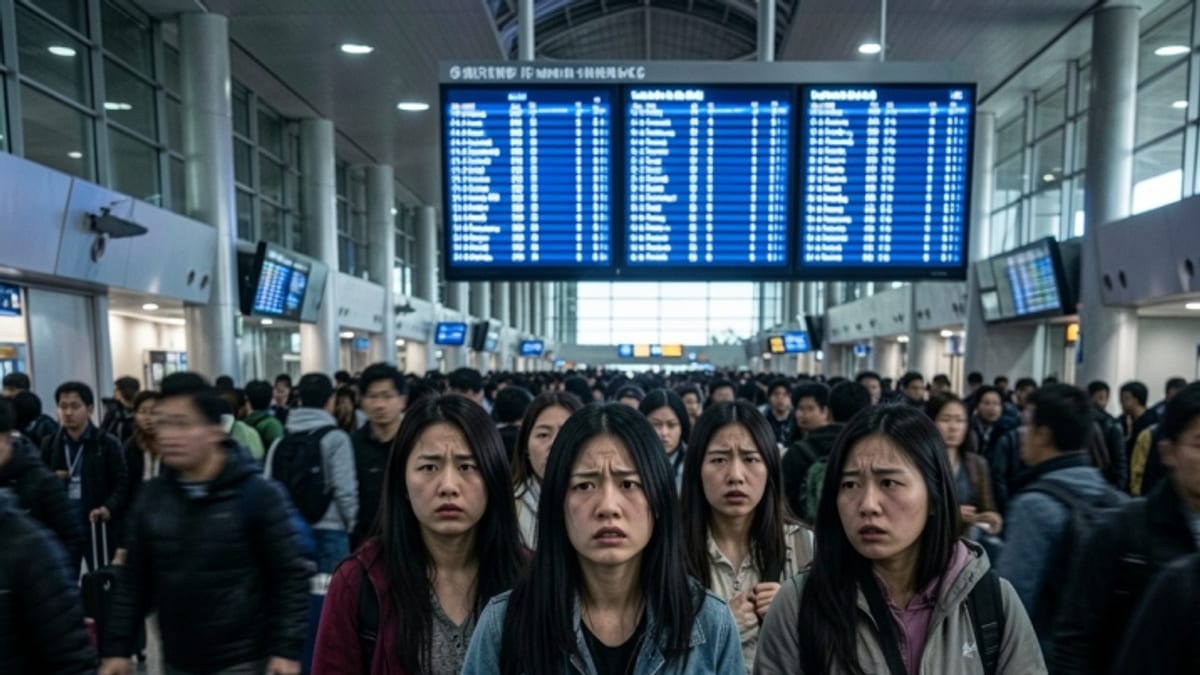
Image by Travel And Tour World
Major Hubs Struggle With Wave of Disruptions
Flight status dashboards at some of China’s busiest airports showed an unusual concentration of delayed and cancelled services, with more than 220 departures reportedly running late and at least 45 flights scrapped across multiple hubs. The impact was most visible at major gateways such as Shanghai Pudong and Hongqiao, Beijing Capital and Daxing, Guangzhou Baiyun, Shenzhen Bao’an and Changsha Huanghua, where passengers described hours-long waits and repeated gate changes.
Publicly available tracking data and media coverage indicate that the disruption was spread across both domestic and international routes. Services linking coastal megacities with inland provincial capitals appeared particularly affected, creating a domino effect for connecting passengers heading onward to destinations in Europe, Southeast Asia and the Middle East.
While isolated delays and cancellations are routine in any large aviation market, the scale and clustering of the latest disruptions stood out in a country whose major airports collectively handle some of the highest passenger volumes worldwide. Reports from travellers on social platforms highlighted crowded terminals, overnight stays and missed onward connections as operations struggled to stabilize.
Industry observers noted that China’s aviation system has been under sustained pressure in recent months, as carriers rebuild long-haul networks and ramp up regional flying amid volatile demand and shifting international conditions.
Flagship Carriers Hit: China Eastern, China Southern, Hainan and Air China
The disruptions affected a broad cross-section of China’s airline industry, including state-backed giants and private operators. China Eastern, based in Shanghai, was among the hardest hit in the country’s financial hub, where passengers reported cancellations on busy trunk routes and extended delays on evening departures.
China Southern, which operates extensive networks from Guangzhou and Shenzhen, also saw schedules heavily impacted, with several medium-haul routes to Southeast Asia and domestic connections in southern China facing rolling delays. Travellers recounted rebookings, overnight layovers and the need to re-route via secondary cities to complete their journeys.
Hainan Airlines, which has already been navigating a period of restructuring and route adjustments, faced renewed scrutiny from passengers after additional cancellations were reported on services linking mainland hubs with regional gateways. In online travel forums, some affected customers described securing involuntary refunds and then booking high-speed rail as a substitute on domestic sectors where airline options had thinned.
Air China, the flag carrier with primary hubs in Beijing, also appeared across multiple accounts of disrupted journeys, particularly on flights connecting Beijing with other Asian cities. Reports of late-notice schedule changes, cancelled segments within multi-leg itineraries and complex rebooking processes underscored the challenges travellers encountered when disruptions hit tightly timed connections.
Travellers Stranded and Scrambling for Alternatives
The immediate human impact of the operational turmoil was visible in images and first-hand accounts from terminals across the country, where rows of passengers queued at service counters and crowded around departure boards waiting for updates. Travellers described being “abandoned” in transit cities overnight, with limited information on when replacement flights would be available.
Some passengers with cancelled or heavily delayed flights reported being redirected to high-speed rail as the fastest way to continue their journeys between major urban centres. China’s dense rail network, which links cities such as Shanghai, Beijing, Guangzhou, Shenzhen and Changsha with frequent services, became an essential fallback option for those able to secure last-minute seats.
Others opted to purchase entirely new tickets on competing airlines or via different routings, hoping to recoup costs later through refund or compensation processes. Discussions on travel and aviation forums referenced experiences of partial refunds, schedule changes communicated via text messages, and uncertainty over how various carriers would handle out-of-pocket expenses for hotels and meals.
Families, elderly travellers and those on tight international connections appeared particularly vulnerable. Some accounts described parents juggling restless children in crowded waiting areas, while overseas tourists expressed concern about missed tours, hotel bookings and visa-related timelines after being forced to extend their stays.
Complex Mix of Causes Behind the Disruptions
Publicly available information points to a combination of factors behind the wave of delays and cancellations rather than a single trigger. Seasonal weather variations, ongoing airspace management constraints and heavy traffic at key hubs frequently contribute to knock-on effects across interconnected domestic networks.
In addition, airlines are still fine-tuning schedules after several years of fluctuating demand and evolving international route permissions. Recent coverage of Chinese carriers’ operations in the Middle East, Europe and Northeast Asia has highlighted how geopolitical tensions, shifting overflight patterns and rapidly changing travel advisories can force last-minute schedule changes that reverberate across global networks.
Capacity constraints also play a role. When flights are already operating close to full and backup aircraft are limited, mechanical issues or operational delays on a handful of services can cascade, affecting dozens of subsequent departures. Tight turnarounds at busy hubs leave limited buffer to absorb even minor disruptions.
Analysts note that robust recovery in outbound and inbound tourism, while welcome for carriers’ balance sheets, has in some cases outpaced the speed at which staffing, ground handling capacity and maintenance operations can be scaled up smoothly, increasing the risk of bottlenecks during peak travel days.
What Travellers Can Do if Their Flight Is Disrupted
For passengers facing delays or cancellations in China, consumer advocates recommend confirming the latest status of a flight through both the airline’s official channels and independent tracking tools before heading to the airport. Many recent cases involved travellers discovering schedule changes only after arriving at the terminal or when attempting to check in.
Flexible ticket policies adopted by a number of Chinese carriers in response to recent regional disruptions may provide options to change travel dates or routes without additional fees in specific circumstances. Travellers are encouraged to review the conditions attached to their tickets, including provisions related to involuntary changes, to understand whether they may be eligible for refunds or complimentary rebooking.
Those with complex itineraries that include international segments often benefit from contacting the original issuing agent or booking platform, which can sometimes access alternative routings on partner airlines more quickly than airport counters. Keeping detailed records of delays, cancellation notices, receipts for accommodation and meals, and any alternative transport costs can support later claims.
For now, the recent wave of disruptions serves as a reminder that even in one of the world’s most extensive and sophisticated domestic aviation markets, travellers may still need backup plans, extra time for connections and a clear understanding of their rights when flights fail to operate as scheduled.