

More news on this day
Passenger train services between China and North Korea are set to resume this week for the first time since early 2020, restoring a historic rail link and stirring fresh anticipation among overland travel enthusiasts watching for the eventual return of tourism to one of the world’s most closed countries.
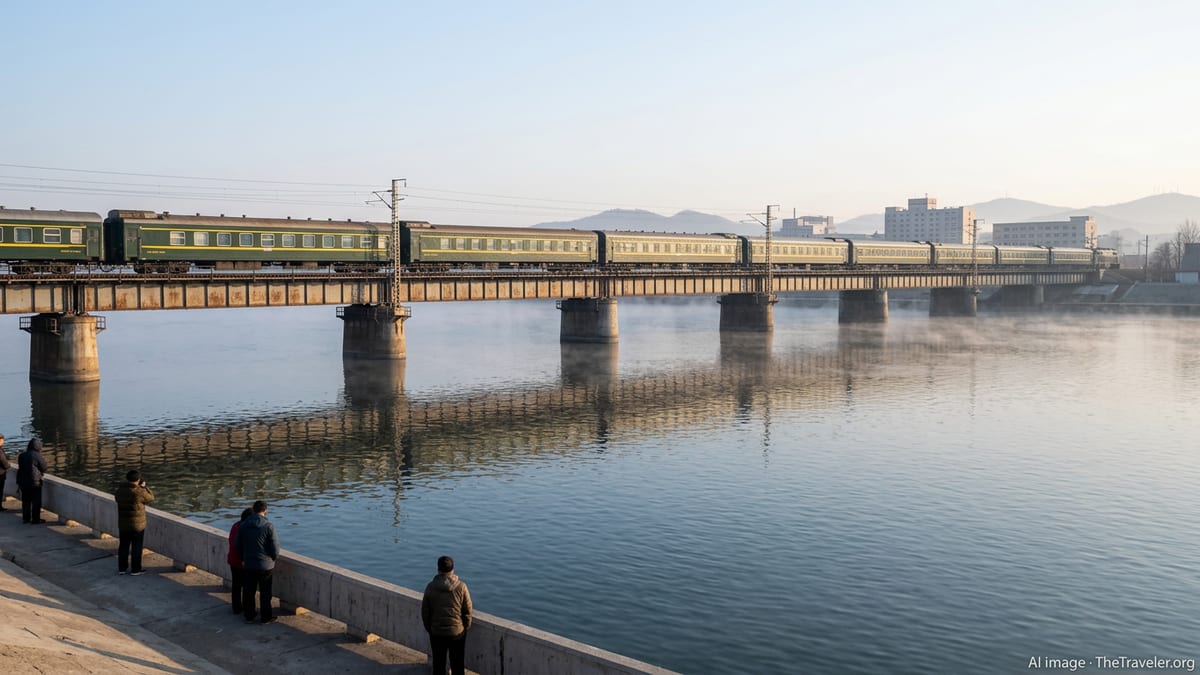
Historic Cross-Border Route Reopens Between Dandong and Pyongyang
China’s railway authorities announced that international passenger trains will again connect the border city of Dandong with Pyongyang from March 12, operating in both directions after a six-year suspension triggered by the Covid-19 pandemic. The move restores a key rail artery across the Yalu River bridge, a crossing that for decades has symbolized both the separation and the tightly managed connection between the two neighbors.
Before the pandemic, the Dandong–Pyongyang and Beijing–Pyongyang trains were a lifeline for diplomats, workers, students and the small but steady flow of foreign tourists entering North Korea under tightly controlled itineraries. Services were halted in January 2020 as Pyongyang sealed its borders in one of the world’s most rigid public health lockdowns, cutting nearly all passenger traffic in and out of the country.
The reopening of trains marks one of the clearest signs yet that North Korea is cautiously reactivating its overland links, following earlier steps such as the partial resumption of freight and postal routes. For China, the restart also reinforces Dandong’s role as the primary gateway to North Korea, with local authorities and businesses hoping to see renewed economic activity along the frontier.
Details released by state railway officials indicate that the revived cross-border trains will run on a regular schedule, mirroring pre-pandemic patterns where services often operated multiple times per week and, on some stretches, daily. For rail fans and overland travelers tracking timetables, the restoration of familiar train numbers and routes is a powerful sign that a once-routine connection is returning to the map.
Who Can Ride Now, and What It Means for Future Tourists
For now, the newly resumed services are not being marketed as tourist trains. Travel operators in China say ticketing is limited primarily to Chinese citizens working or studying in North Korea, as well as North Koreans who have official permission to work, study or visit family across the border. This reflects Pyongyang’s broader approach to reopening: prioritizing essential travel and controlled mobility while mass tourism remains suspended.
Specialist North Korea tour companies, many of them based in China, describe the rail restart as an important precursor rather than an immediate gateway for leisure travelers. They note that once organized tourism is formally allowed again, having functioning cross-border trains will give foreign visitors another option alongside charter flights, and could particularly appeal to rail-focused travelers looking to stitch North Korea into longer trans-Asian routes.
Industry insiders stress that there is still no confirmed date for the full return of international tourism to North Korea. Entry remains tightly regulated, and any eventual reopening is expected to be gradual, likely starting with group tours from China before expanding to a wider mix of nationalities. Nevertheless, the symbolism of passenger trains rolling across the Yalu River again is hard to miss for a destination whose mystique has long been tied to the drama of arriving by rail in Pyongyang.
For prospective visitors, the practical takeaway is to watch developments closely rather than pack bags just yet. The train resumption suggests that when tourism does return, overland access will once again be at the heart of the North Korea experience, making this an early moment to study routes, seasons and the evolving rules of entry.
Revived Rail Links Reshape the Map for Overland Asia Travel
The return of China–North Korea passenger trains comes at a time when rail-based travel across Asia is enjoying renewed attention, from China–Laos high-speed services to international links in Southeast Asia and the Russian Far East. The Dandong–Pyongyang route, often extended via Beijing, slots back into this broader network as a rare and intriguing connection that edges travelers to the threshold of an otherwise isolated state.
Historically, the Beijing–Pyongyang train, which runs via Dandong and the Yalu River crossing, was one of the classic overland journeys in East Asia, connecting the Chinese capital with the North Korean capital in a single continuous itinerary. Even if current permissions restrict who can ride, the physical restoration of this line revives the possibility that future transcontinental trips could again include a North Korean leg, whether as a dedicated visit or as part of longer loops linking China, Russia and the Korean Peninsula.
Rail experts note that the resumption also fits a pattern of North Korea selectively restoring international ground links, including passenger services to Russia’s Far East that restarted earlier. Together, these moves hint at a strategy of cautiously broadening controlled access points, using rail infrastructure that pre-dates the pandemic but now carries new geopolitical and tourism significance.
For overland travelers planning far ahead, the message is that the map is changing in ways that were difficult to imagine in the depths of the global shutdown. The presence of active passenger trains between China and North Korea, even in a limited capacity, is a reminder that routes once written off as indefinitely closed may re-emerge, rewarding those who track developments over years, not months.
Dandong and the Yalu River: A Border City Poised for a Second Act
On the Chinese side of the Yalu River, Dandong has long lived with a dual identity: a bustling northeastern city and a vantage point onto North Korea. The resumption of cross-border passenger trains arrives as local stakeholders seek to revive the city’s pre-pandemic role as a staging ground for North Korea-focused travel, from river cruises skirting the border to rail itineraries that once carried tourists into Pyongyang.
Before 2020, Dandong’s station platforms were a familiar starting point for foreign visitors boarding international trains into North Korea, often under the guidance of specialist tour leaders. The sight of green-and-cream carriages bound for Pyongyang, framed by the steel trusses of the rail bridge, was part of the city’s everyday landscape and a potent draw for curious travelers exploring China’s northeastern frontier.
Local businesses are now watching closely to see whether the revived trains will gradually translate into renewed tourism flows. Even while leisure travel into North Korea remains suspended, the simple fact of regular passenger traffic crossing the river can buoy hotels, restaurants and travel services that cater to officials, workers and students transiting the route.
For future travelers, Dandong’s familiar vantage points over the Yalu River and the silhouettes of North Korean towns across the water are likely to regain their status as a prelude to deeper exploration once organized tours restart. The city’s position at the junction of domestic Chinese rail lines and the international route to Pyongyang ensures it will remain central to any rail-based itineraries that emerge in the coming years.
How Travelers Should Prepare for a Still-Restricted but Evolving Route
Even with trains running again, travel to and through North Korea remains among the most regulated in the world. Prospective visitors will need to rely on licensed tour operators and closely monitor both Chinese and North Korean entry rules, which can change with little notice and may vary by nationality. For the time being, independent travel is not an option, and only a narrow group of eligible passengers can board the newly resumed services.
That said, experienced tour companies are already analyzing timetables, testing booking channels and assessing how the restored trains could be integrated into future itineraries as soon as regulations permit. When tourism reopens, travelers can expect tightly choreographed journeys, but the romance of entering North Korea by rail, passing riverbank watchtowers and forested hills, is likely to be a core selling point.
Planning ahead will mean thinking in longer time frames. Overland enthusiasts considering a future trip should start by understanding regional rail networks in northeast China, including connections from Beijing and other major cities to Dandong, as well as seasonal factors such as winter cold snaps that can affect schedules and visibility along the border.
For now, the revival of China–North Korea passenger trains is best seen as a signal rather than an open invitation. Yet for travelers fascinated by closed borders, historic rail routes and the slow, uneven process of reopening after a global shutdown, it is a powerful sign that one of Asia’s most intriguing overland journeys is inching back into reach.