


More news on this day
China Southern Airlines has extended the suspension of most of its direct passenger services to key Middle East destinations into 2027, signaling a cautious stance by one of Asia’s largest carriers as regional security concerns and complex airspace restrictions continue to disrupt long-haul travel patterns.
Get the latest news straight to your inbox!
Extension of Suspensions Reflects Prolonged Volatility
Publicly available scheduling information and industry route databases indicate that China Southern has removed or frozen most nonstop services from its main hubs in Guangzhou and Shenzhen to major Middle Eastern gateways across the 2026 to 2027 winter season and into parts of the following summer. The extended cuts affect markets such as Dubai, Doha and Riyadh, which previously formed part of the airline’s broader network linking southern China with the Gulf.
Timetables monitored by aviation analysts show that, instead of reinstating a regular pattern of passenger flights as regional airspace gradually reopens, the carrier has opted to keep these routes off sale or operated only on an ad hoc basis for repatriation or crew movements. This approach places China Southern among a group of international airlines that are treating the Middle East as a structurally higher-risk market for at least another year.
According to published coverage on global flight disruptions, many carriers have been slowly restoring flights to parts of the region after the conflict that followed strikes on Iran earlier in 2026, while others continue to extend suspensions or operate sharply reduced schedules. In that context, China Southern’s decision to prolong gaps on its Gulf routes into 2027 stands out as one of the more conservative responses among large Asian airlines.
Security Concerns and Airspace Constraints Remain Central
The extension of suspended services is closely linked to wider instability affecting Middle East airspace since late February 2026, when military action involving the United States, Israel and Iran led to temporary closures at key hubs and the diversion or cancellation of thousands of flights. Reports from multiple outlets describe how airports in Dubai, Abu Dhabi and Kuwait were among those forced to halt or drastically scale back operations as governments restricted air traffic for safety reasons.
Although many airports in the Gulf have since resumed operations, airlines continue to navigate a patchwork of overflight limitations and rapidly changing risk assessments. Industry briefings on the situation point to longer routings, congestion in alternative corridors and elevated insurance and operating costs for flights passing near conflict zones. For a carrier like China Southern, which relies heavily on connecting traffic between Asia, Europe and the Middle East, these factors complicate the economics of bringing back point to point services to affected cities.
China focused media and official aviation updates have noted that Chinese airlines initially suspended a significant number of services to the region when airspace closures began, before selectively resuming some routes as conditions allowed. However, the same coverage shows that resumptions have been uneven, with carriers prioritizing a limited number of strategic links while leaving other routes dormant, suggesting that operational risk management continues to outweigh the benefits of a rapid return to pre disruption capacity.
Limited Resumptions Highlight a Cautious Strategy
Notwithstanding the broader suspension of regular Middle East flying, China Southern has operated a small number of targeted services into the region during 2026, particularly to support stranded passengers and reposition crews. Official notices and airline statements cited in regional media describe instances where the carrier mounted one off flights between Guangzhou and Riyadh or coordinated with partners on codeshare services into Dubai.
In March 2026, for example, China Southern publicized plans to operate selected flights on its Guangzhou and Shenzhen links with Dubai over a short window as airspace conditions temporarily improved. These flights were framed as part of a phased resumption tied to operational capacity and security assessments rather than a full restoration of the pre conflict schedule. Passengers were urged to monitor the airline’s own channels for the latest information, underlining the fluid nature of planning in the corridor.
Subsequent timetable snapshots show that beyond these limited resumptions, wide scale reinstatement of Middle East routes has not materialized. Instead, China Southern appears to be relying more heavily on partnerships and interline agreements to carry Middle East bound travelers via third country hubs where services remain more stable. This strategy allows the airline to maintain a degree of market presence while keeping its own aircraft out of the most sensitive airspace for the time being.
Impact on Travelers and Global Connectivity
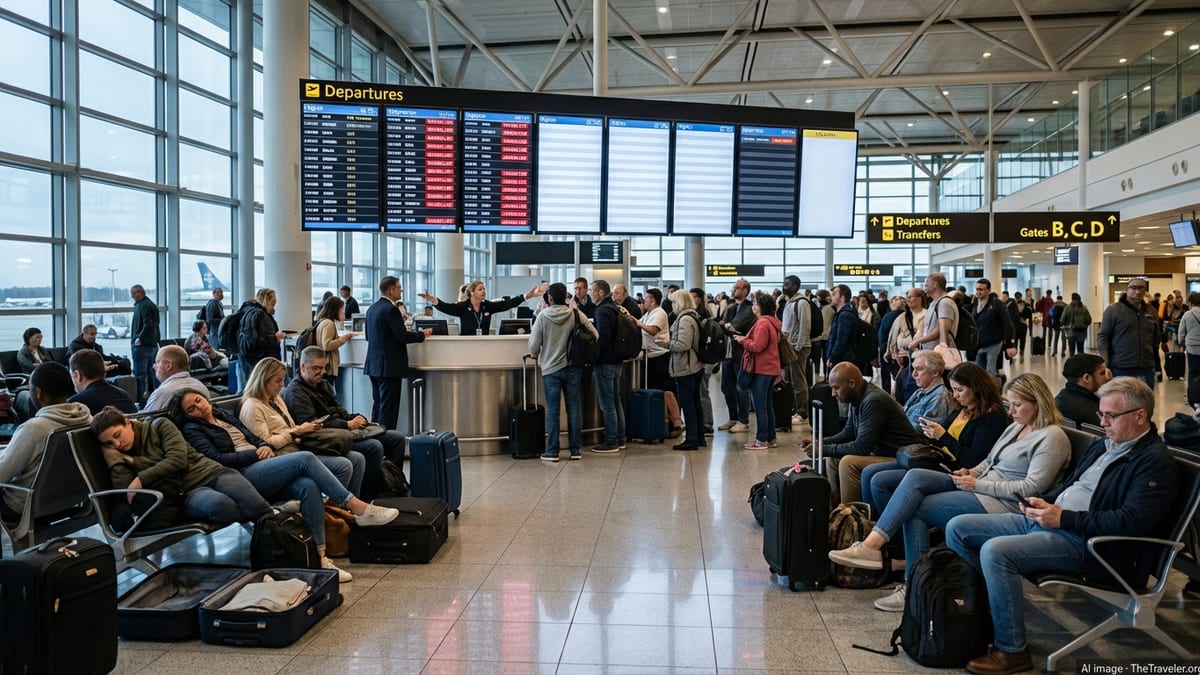
For passengers in China and across Asia, the extension of suspensions into 2027 means fewer nonstop options to major Gulf cities and onward connections to the wider Middle East and Africa. Travelers who once depended on China Southern for direct access to Dubai or Doha now face longer itineraries involving connections through alternative hubs in East Asia, Europe or the remaining Gulf carriers that continue to operate.
Travel industry reports highlight that many airlines with suspended Middle East routes have adopted relatively flexible rebooking and refund policies, allowing customers to shift dates, change routings or opt for travel vouchers. While China Southern’s specific policies for each affected route may vary, the broad trend across the sector is toward offering additional flexibility in recognition of the unpredictable security outlook and frequent short notice schedule changes.
The prolonged disruption also has implications for trade and investment ties. Direct air links between southern China and Gulf economies support flows of business travelers, tourism, education and high value cargo. With capacity constrained on several of these corridors, some companies may consolidate their travel through alternative hubs or defer non essential trips, further dampening demand and reinforcing airlines’ cautious stance on redeploying aircraft.
China Southern’s Decision in a Wider Airline Context
China Southern’s extended suspensions fit into a broader global pattern in which airlines are calibrating their Middle East exposure according to individual risk tolerance, fleet flexibility and network priorities. Factboxes and route summaries from international news agencies show a patchwork of approaches, from carriers that have already restored multiple daily flights to Dubai and Riyadh to those that have pushed suspensions into late 2026 or beyond while keeping options open for gradual returns.
Some European and Asian airlines have announced plans to resume selected Middle Eastern destinations for the upcoming winter season but at reduced frequency, sometimes cutting secondary cities or consolidating services into a single daily operation. Others have shifted capacity to alternative markets in response to changing demand and higher operating costs on routes that now require longer detours to avoid closed or high risk airspace.
Against this backdrop, China Southern’s choice to keep most of its Middle East network largely dormant into 2027 illustrates how long lasting the current disruption may prove to be. For now, published information suggests that travelers will continue to see a fragmented map of options across the region, with China Southern focusing on stability in its core markets while monitoring conditions for any opportunity to safely rebuild its presence between China and the Gulf.