

More news on this day
China’s fast growing domestic aviation market is running into fresh turbulence in early April 2026, with Beijing Daxing International Airport emerging as a high profile flashpoint for cancellations and cascading delays across the country’s tightly interconnected route network.
Get the latest news straight to your inbox!
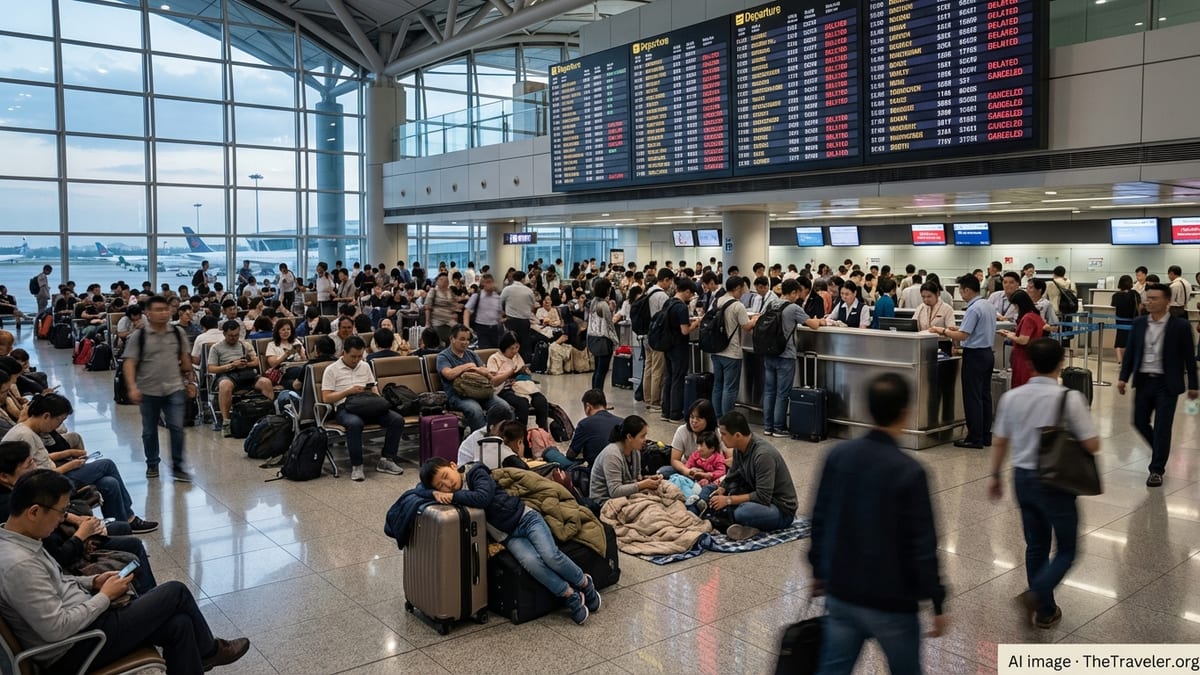
Beijing Daxing Under Pressure as Disruptions Spike
Publicly available flight tracking tallies from the opening days of April indicate that Beijing Daxing International Airport has been grappling with an elevated wave of disruption, including more than 200 delayed services and double digit cancellations in a single day across China’s network of major hubs. The figures place Daxing among the most affected airports in the country, alongside Guangzhou, Shenzhen, Shanghai and Chengdu, underscoring how quickly operational problems at one node can spread through the wider system.
Although the headline number of outright cancellations at Daxing remains lower than at some southern coastal hubs, the volume of late departures and arrivals is exerting heavy pressure on aircraft rotations and crew schedules. Aviation analysts note that Daxing has rapidly grown into a key domestic connector since opening in 2019, so any loss of capacity there is felt quickly on trunk routes linking Beijing with major provincial capitals.
Recent coverage tracking Asia wide disruption highlights that Beijing’s twin airports have repeatedly appeared on lists of delay and cancellation hotspots. With Daxing designed as a primary base for China Southern and an important node for other domestic carriers, schedule slippages at the airport can ripple out to second and third tier cities that rely on high frequency links to the capital region.
The timing of the latest disruption amplifies its impact. Carriers are in the midst of ramping up their summer and autumn schedules, and Daxing has been earmarked for a larger role in both domestic and international connectivity. The current operational strain risks dulling some of that planned expansion just as demand is surging.
Holiday Demand Collides With Fragile Operations
The spike in cancellations at Daxing and other Chinese airports is coinciding with the Qingming Festival window from April 4 to 6, traditionally one of the most intense domestic travel periods of the spring. Reports tracking conditions at Shenzhen, Guangzhou and other major hubs describe thousands of passengers facing missed connections, overnight delays and crowded rebooking desks, conditions that are being mirrored to varying degrees in Beijing.
Domestic demand has recovered strongly into 2026, with several industry summaries indicating passenger volumes at or above pre pandemic levels on key routes. Airlines have responded by restoring frequencies and opening additional city pairs, but the resulting tight schedules leave limited slack when weather disturbances, air traffic flow controls or technical issues occur. Once early morning services slip, later rotations can be thrown off for the remainder of the day.
Qingming related patterns deepen the challenge. Many trips involve short visits to family in smaller cities, often booked on popular morning and evening departures that are already close to full. When a Daxing departure is cancelled or heavily delayed, passengers may find alternative same day options extremely limited, especially on routes toward coastal manufacturing centers and provincial capitals where load factors are high.
As a result, the current wave of disruption is being framed by travel and aviation observers as part of a broader “domestic travel crunch” rather than a one off event. Repeated pockets of strain from late March into early April suggest that China’s domestic aviation system remains highly sensitive to shocks during peak travel windows.
Network Knock On Effects Across China’s Hubs
The difficulties at Beijing Daxing are tightly interwoven with a wider pattern of disruption across mainland China and the broader Asia region. Flight tracking analyses published in recent days show sizeable clusters of cancellations and thousands of delays at major Chinese airports including Guangzhou Baiyun, Shenzhen Bao’an, Shanghai Pudong and Hongqiao, Chengdu’s twin airports, and other provincial hubs such as Nanjing, Kunming and Wuhan.
In this environment, Daxing’s role as both an origin and a through hub means operational issues can quickly cascade. A delayed arrival from Shenzhen or Guangzhou does not simply inconvenience travelers on that particular leg; it often represents the aircraft and crew scheduled to operate a subsequent departure from Daxing to another city. When multiple inbound flights arrive late, airlines are forced into a difficult triage of which outbound services to protect and which to delay or cancel.
Observers point out that the pattern is not confined to any single carrier. Large state owned airlines and smaller regional operators alike have appeared in disruption tallies, suggesting that shared structural factors such as congested airspace, tight turnaround times and evolving weather patterns are at play. The result is a network in which a local storm cell over southern China or flow control measures near a coastal hub may ultimately translate into cancellations at Daxing several hours later.
Travel focused outlets note that these dynamics have been unfolding against a backdrop of broader Asia wide volatility, with airports in Japan, Thailand, South Korea and other countries also reporting large numbers of delayed and cancelled flights through late March and early April. This wider context adds an extra layer of complexity for passengers using Daxing as part of longer multi segment itineraries that connect domestic Chinese legs with regional services.
Airlines Struggle to Balance Expansion and Resilience
The current operational stress at Beijing Daxing is emerging just as carriers were moving to deepen their presence at the airport for the 2026 summer autumn schedule. Publicly available statements and schedules show that major airlines based at Daxing have been adding destinations and frequencies, particularly on domestic routes connecting to western and central China, while also rebuilding selected international links.
Industry reporting suggests that this growth push is meeting the hard reality of constrained infrastructure and limited operational buffers. Additional flights can boost revenue and connectivity, but they also tighten margins for error if crew, maintenance capacity or air traffic management do not expand at the same pace. When disruption strikes, airlines with heavily optimized schedules may find it difficult to recover before the next day’s wave of departures begins.
Aviation analysts following China’s market note parallels with congestion episodes in other high growth regions, where rapid schedule expansion has at times outpaced investments in staffing, training and systems. While China’s large carriers and airport operators have experience handling peak periods, the combination of resurgent demand, evolving route structures and external shocks such as regional weather events or international conflict related airspace changes can still push the system to its limits.
For Daxing specifically, the pressure is particularly acute because the airport has been positioned as a showcase for modern Chinese aviation, with advanced terminal design and ambitious connectivity goals. Continued bouts of disruption risk tarnishing that image if passengers begin to associate the airport with unpredictable departures and arrivals.
What Domestic Travelers Through Daxing Can Expect Now
For travelers booked to fly through Beijing Daxing in the coming days, the emerging pattern points to an environment where schedules may remain volatile, especially around peak holiday and weekend periods. Operational data and travel sector reporting suggest that while most flights are still operating, the likelihood of significant delays or time of day specific cancellations is elevated compared with more stable periods.
Consumer focused guidance from travel portals and aviation commentators emphasizes the importance of building additional buffer time into itineraries, particularly for passengers with onward connections within China. Longer layovers through Beijing and other major hubs can help reduce the risk of missed onward segments when upstream flights from secondary cities arrive late.
Passengers are also being encouraged by public information campaigns and independent travel coverage to monitor flight status frequently in the 24 hours before departure, using a combination of airline channels and third party tracking tools. During large scale disruption events, schedule changes can appear with relatively short notice, and rebooking options may be more numerous for travelers who move quickly once a cancellation is confirmed.
Looking ahead, analysts expect that Chinese carriers and airport operators will continue refining schedules and operational practices through the remainder of the spring travel period. Whether those adjustments are sufficient to ease the current domestic travel crunch at Beijing Daxing and beyond will likely become clearer as the country moves toward the next major demand peak in the summer months.