

More news on this day
Germany’s decision to introduce a visitor fee at Cologne Cathedral in the second half of 2026 is reverberating far beyond the Rhine, becoming the latest flashpoint in a worldwide trend of new taxes, levies and access rules that are reshaping how and where people travel.
Get the latest news straight to your inbox!
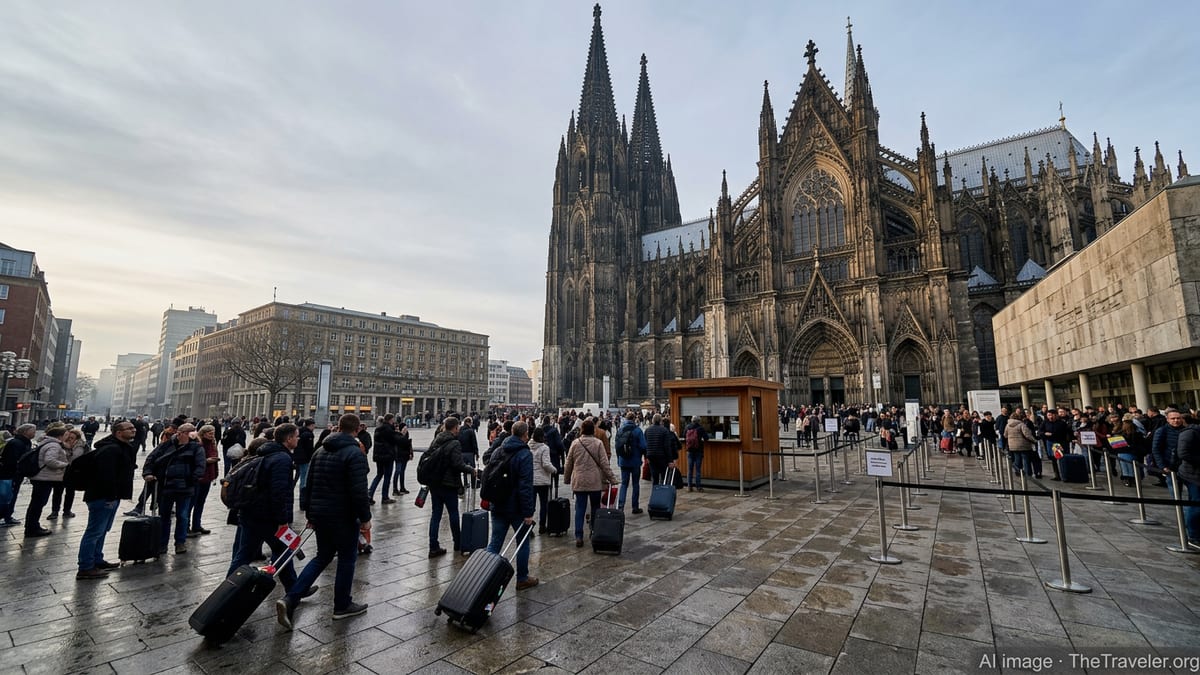
Germany’s Most Visited Cathedral Joins the Paywall Era
Cologne Cathedral, a UNESCO World Heritage site and Germany’s most visited landmark, will begin charging general tourists for entry in late 2026, church officials confirmed this month. The exact amount has not yet been announced, but the fee will apply to the millions of sightseers who file through its vast Gothic nave each year, while worshippers attending services or entering designated prayer areas are expected to remain exempt.
Cathedral authorities say the move is driven by a mounting funding gap as inflation, personnel costs and complex conservation work push annual upkeep to around 16 million euros. Reserves built up over previous decades have largely been exhausted, and pandemic-era disruptions to existing paid attractions such as tower climbs and the treasury further eroded revenue. Officials argue that a dedicated admission fee for visitors is now the only realistic way to preserve the fabric of the 13th century structure.
The new policy ends Cologne Cathedral’s long tradition of free general access and has prompted a national debate in Germany over whether iconic sacred spaces should remain open at no cost. Critics warn that the charge risks turning a living place of worship into a museum experience restricted by income, while supporters counter that without a sustainable revenue stream, the building’s future would be at risk.
For international travelers, the shift introduces another line item in European trip budgets already shaped by hotel taxes, transit surcharges and reservation systems at overcrowded attractions from Venice to Spain’s Alhambra.
Canada and the Americas Confront a Patchwork of Tourism Fees
As Germany prepares to charge at one of its most famous religious sites, travelers in North and South America are already navigating a maze of rising costs that rarely appear in headline airfares. Canada, which has no single nationwide tourism tax, has seen a proliferation of local and provincial levies layered onto hotel bills, restaurant checks and transportation corridors popular with visitors.
Cities such as Vancouver have temporarily increased hotel room taxes to help finance major events, while resort hubs including Niagara Falls have introduced new nightly fees that vary by property type. These charges sit atop long-standing federal add-ons such as security surcharges and aviation fuel excise taxes embedded in ticket prices, making it difficult for visitors to gauge the full cost of a trip until the final booking stages.
Across the border in the United States, travelers are confronting a different kind of complexity. A new “visa integrity” fee for certain foreign nationals, higher state and local lodging taxes in major cities, and destination-specific environmental surcharges are steadily raising the price floor for international travel. Mexico, a perennial favorite for North American sun-seekers, continues to expand state-level visitor fees and online departure taxes that must be paid separately from airfare, occasionally catching unprepared tourists at airport kiosks.
Farther south, governments in Brazil, Guatemala, Chile and Peru are weighing or implementing measures that include higher airport charges, heritage-site ticket restructuring and new conservation-linked levies. While each is modest in isolation, together they represent a steady shift toward asking tourists to shoulder more of the financial burden for maintaining infrastructure and fragile cultural assets.
From Cathedrals to Coastlines, a New Rationale for Visitor Charges
Behind the proliferation of travel-related fees lies a common set of pressures: overtourism in marquee destinations, inflation in construction and labor, and tightening public budgets. In Germany, Cologne Cathedral’s chapter points to years of underfunded restoration work and soaring materials costs as justification for charging sightseers who come primarily for the architecture and views, rather than religious observance.
Canada and the United States face similar budgetary strains in different guises. Airports and border facilities require constant upgrades, while national and provincial parks increasingly struggle to balance booming visitation with conservation mandates. Governments have often chosen targeted user fees over broad-based tax hikes, arguing that those who benefit directly from tourism infrastructure should help pay to sustain it.
In Latin America, popular archaeological and natural sites from Machu Picchu to Mayan ruins are testing new pricing models and capacity limits. Officials frame these not merely as revenue tools but as instruments to protect fragile ecosystems and monuments from damage. The Cologne Cathedral fee is being cast in the same light: a necessary corrective to decades of underpricing access to a site that is both a place of worship and a magnet for mass tourism.
Critics of the trend counter that such measures risk creating a two-tiered system in which only wealthier travelers can fully experience the world’s most celebrated landmarks. They argue that overreliance on visitor charges can dampen demand, hitting local economies that depend on tourism while failing to tackle root issues such as underinvestment and poor crowd management.
Travelers Face a Growing Web of Hidden Costs and Complex Rules
For travelers stitching together multi-country itineraries that might include Canada, the United States, Mexico, Brazil and a stopover in Europe, the cumulative impact of these measures is becoming harder to ignore. Airline base fares may have fallen in some markets, but final prices are increasingly shaped by surcharges, municipal levies and attraction-specific fees like the one planned at Cologne Cathedral.
Industry analysts note that even experienced travelers can be caught off guard by additional payments due after arrival, whether in the form of mandatory online tourism contributions, separate heritage-site tickets, or steep markups on accommodation linked to event funding. Budget planning that once focused on airfare and hotel rates now requires close attention to destination fine print, especially for families and group tours.
Travel companies are responding by reworking package pricing and marketing language. Some tour operators have begun highlighting which iconic sites remain free to enter, while others are building new fees into all-inclusive products to shield clients from surprise charges on the ground. In Canada and parts of Latin America, hotel consortia and tourism boards are lobbying for clearer disclosure rules and more predictable fee structures to safeguard demand.
The Cologne Cathedral announcement could accelerate that shift. As one of Europe’s best-known religious monuments moves to a paid-access model, travelers may become more attuned to the question of what is, and is not, included in an advertised price, from spiritual landmarks in Germany to national parks in North and South America.
A Test Case for Balancing Preservation and Access
Germany’s decision at Cologne Cathedral is likely to be closely watched by tourism officials and religious authorities worldwide, particularly in countries already grappling with similar dilemmas. If the fee successfully stabilizes the cathedral’s finances without sharply reducing visitor numbers or prompting major backlash, other heritage churches and sites may see it as a template for their own revenue challenges.
For Canada, the United States, Mexico, Brazil, Guatemala, Chile, Peru and other nations experimenting with new travel charges, the development feeds into a larger debate over how to fund tourism infrastructure without undermining the industry on which so many jobs depend. As global visitor numbers continue to rise after the disruptions of the early 2020s, the question is less whether tourists will pay more, and more how, where and for what they will be charged.
Cologne’s new policy crystallizes that tension in a single, high-profile monument, where the cost of entry will soon be as much a part of the visitor experience as its soaring stained-glass windows. For travelers planning transcontinental journeys that thread through Canada and the Americas to Europe’s cultural capitals, it is another reminder that the era of frictionless, fee-light tourism is giving way to a more complicated, and more costly, reality.