

Small towns like Wolseley in South Africa’s Breede River Valley offer visitors tranquil scenery, outdoor adventure and close-knit community life. Yet what makes them so appealing can also trip up unprepared travelers. Misreading local norms, underestimating logistics or treating a rural town like a big city can lead to awkward encounters and missed experiences. Understanding a few common mistakes will help you connect more thoughtfully with residents and get the best from your time in places like Wolseley and similar small communities around the world.
Assuming Small Towns Are Just Slower Versions of Cities
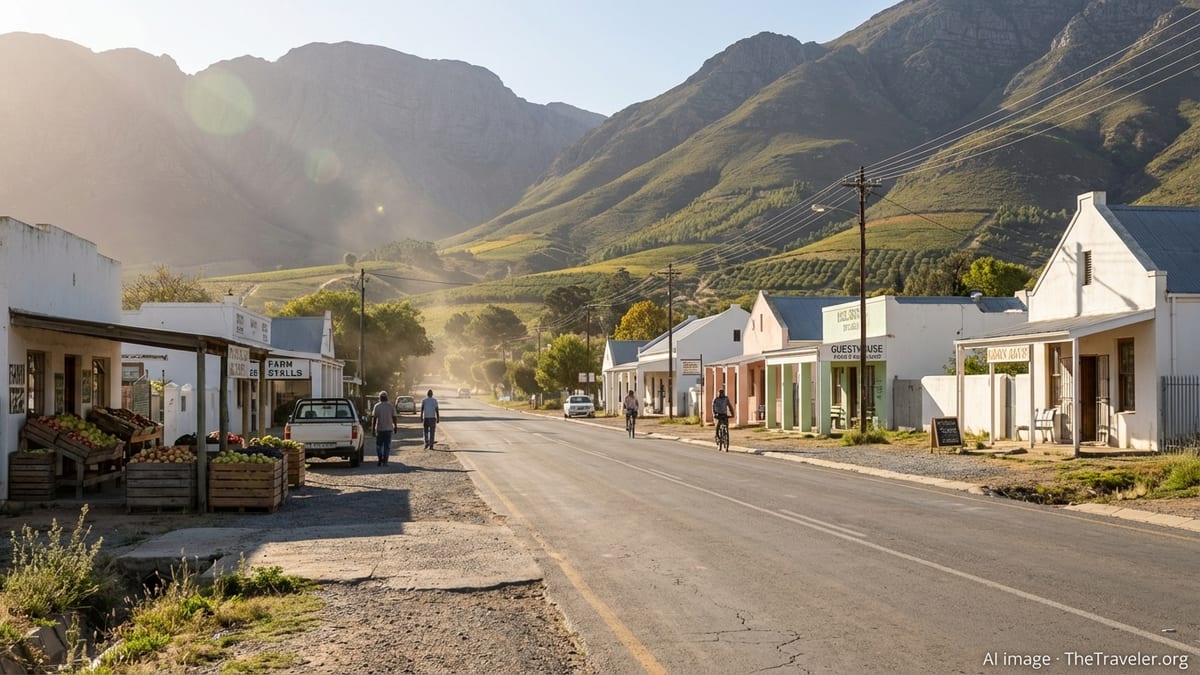
One of the most common mistakes travelers make in small towns like Wolseley is assuming that they operate like miniature versions of major cities. Wolseley sits in the Breede River Valley in South Africa’s Western Cape, surrounded by vineyards, orchards and mountains, and it functions primarily as a farming and rural service community rather than an urban center. Shops may close earlier, weekday rhythms can follow agricultural schedules, and evenings are often quiet. Travelers who expect late-night dining or around-the-clock services may be frustrated if they do not adjust their expectations to match local reality.
Visitors also sometimes underestimate how much community relationships shape everyday life. In a town of a few thousand people or fewer, residents tend to know one another across families, farms and businesses. That closeness can feel unfamiliar to travelers from large cities, where anonymity is normal. In Wolseley, where many households are connected directly or indirectly to agriculture, hospitality and small enterprises, regular interaction builds trust and shared values that shape how visitors are perceived and welcomed.
Assuming things will “work like home” can cause friction. Rather than demanding instant service or expecting a constant buzz of activity, travelers do better when they lean into the slower pace: allowing extra time for conversations, accepting that some tasks might take longer and recognizing that personal relationships matter more than rigid schedules. Seeing the town on its own terms, rather than through a big-city lens, is the first step to a more rewarding stay.
Overlooking Local Culture, History and Landscape
Another frequent misstep is treating small towns as generic stopovers instead of distinctive places with their own histories and landscapes. Wolseley developed as a railway and farming town and today sits on a natural watershed between the Berg and Breede rivers, in the heart of the Cape winelands. Its setting among the Waaihoek, Witzenberg and Waterval mountain ranges and its position on a long wine route mean that the town has strong ties to both agricultural production and regional conservation. Ignoring these roots can lead visitors to miss the stories that make the town unique.
Some travelers rush in for a quick photo of vineyards or mountain passes, then move on without learning about the seasons, the people who work the land or the way water, climate and soil shape life in the valley. In a place like Wolseley, where the surrounding farmlands support fruit, vegetables, olives, wheat, dairy and grapes, understanding agriculture deepens appreciation. Simple gestures such as asking a farm stall owner about harvest times, learning the names of nearby passes, or reading the information boards about the local watershed can transform a generic drive-through into an engaging visit.
It is also easy to overlook heritage sites in smaller communities because they may not have large visitor centers or heavy signage. Around Wolseley, for example, blockhouses dating from the Anglo-Boer War still stand as reminders of conflict and colonial infrastructure, and the broader Breede River Valley reflects layered histories of Indigenous communities, settlers and modern agricultural development. Travelers who assume that meaningful history is found only in big museums may miss these subtler but equally important places.
Ignoring Practical Realities of Rural Infrastructure
Travelers often underestimate the practical challenges of visiting a rural town. Wolseley can be reached via several scenic passes and regional roads, and it lies roughly 90 minutes by car from Cape Town, but public transport options and service frequencies are far more limited than in major cities. Some regional rail services exist, yet schedules can be infrequent and subject to change. Assuming that one can simply “grab a taxi” at any hour or rely on ride-hailing services may lead to long waits or stranded evenings, especially if accommodation is located outside the town center.
Another common issue is poor planning around fuel, food and cash. In small towns, petrol stations may close earlier in the evening, or there may be only one or two in the wider region. Certain family-run restaurants and farm stalls have limited opening hours or close on specific weekdays, and smaller businesses may prefer cash or card systems that occasionally go offline during power or network interruptions. Arriving with an almost empty tank, no local currency and no reservations can turn a relaxed rural holiday into a stressful scramble.
It is wise to check ahead with accommodation providers or the local tourism office to confirm road conditions, seasonal opening hours and recommended routes, particularly when passes cross mountainous terrain that can be affected by heavy rain, wind or fire risk. While the surrounding Breede River Valley is well-traveled, driving after dark on unfamiliar rural roads, possibly shared with farm vehicles or wildlife, carries higher risk than city streets. Respecting the limits of the infrastructure and planning accordingly is an important sign of consideration for both your own safety and local emergency services.
Underestimating Outdoor Conditions and Environmental Impact
Wolseley’s appeal rests heavily on its outdoor opportunities. Mountain biking routes pass through plantation forests and mountain slopes, hiking tracks cross veld and foothills, and rivers and dams create possibilities for paddling, fishing or simply relaxing at the water’s edge. Yet many visitors assume that these experiences are inherently gentle because the town itself feels tranquil and accessible from Cape Town. Underestimating the physical demands of a trail, the strength of sun and wind, or the remoteness of certain sections can quickly lead to trouble.
A common mistake is starting hikes or rides too late in the day without enough water, shade or knowledge of the route. In summer months, valley temperatures can climb significantly, and reflected heat from rock or road surfaces can make conditions harsher than they appear from a car window. Some routes involve steep climbs and technical descents, even if shorter family-friendly options also exist. Visitors unfamiliar with local weather patterns may be surprised by quick shifts between heat and sudden mountain winds or showers.
Equally important is avoiding a casual attitude toward the environment. The region around Wolseley forms part of a broader Cape winelands landscape noted for its plant biodiversity and working farmlands. Straying off marked paths, picking flowers, leaving gates open on farm roads or discarding litter can have real consequences for crops, livestock and fragile plant communities. Rural communities often rely directly on the surrounding land for their livelihoods, so behavior that might be treated with mild irritation in a city park can be taken much more seriously in an agricultural valley.
Responsible visitors stay on designated routes, observe signage on farm boundaries, carry their waste out with them and follow local guidance on water safety and fire risk. They also recognize that scenes that look “wild” may in fact be carefully managed private land. Treating the landscape as a shared resource rather than a backdrop for social media photographs shows respect for both residents and the environment.
Misreading Local Etiquette and Social Dynamics
Small-town etiquette can differ in subtle but meaningful ways from behavior that feels normal in anonymous cities. In a place like Wolseley, where residents are likely to see one another daily at schools, churches, farm cooperatives and markets, courtesy and reputation carry particular weight. Visitors sometimes mistake this for reserve or insularity, when in fact it is simply a different rhythm of social interaction. Failing to greet shopkeepers, speaking loudly about locals within earshot, or photographing people without asking are examples of behavior that can quickly damage goodwill.
Basic greetings are powerful in small communities. A simple “good morning” or “afternoon” when entering a café, guesthouse or farm stall helps signal that you recognize and value the person serving you. Likewise, taking a moment to ask for permission before photographing farmers, craft markets or private homes respects people’s privacy, especially in areas where not everyone chooses or can afford to be part of tourism promotions. Assuming that any picturesque scene is available for public consumption overlooks the fact that you are visiting someone’s home region, not an open-air studio.
Conversation topics can also require sensitivity. In many rural towns, including those in South Africa’s winelands, questions about land, wages, labor and local politics may touch directly on people’s lives and complex histories. Visitors who approach these issues with sweeping stereotypes or jokes risk causing offense. Listening more than speaking, asking open-ended questions and acknowledging that you may not grasp all the context are safer, more respectful approaches.
At the same time, travelers should not assume that small-town residents are automatically conservative or uninterested in global issues. People living in the Breede River Valley follow national debates, navigate multilingual and multicultural realities, and often have family working or studying in major cities. Entering conversations with humility, curiosity and an awareness of your own assumptions can help you avoid reducing a rich community to a single story.
Failing to Support Locally Owned Businesses
Another mistake visitors frequently make is treating small towns purely as convenient fuel or rest stops along a longer journey, rather than as destinations whose economies can benefit from thoughtful spending. In Wolseley and nearby villages, many accommodation providers, restaurants, farm stalls and outdoor operators are locally owned or family run. Choosing to buy fruit from a roadside stand, taste wine at a small cellar or book a guided ride rather than bypassing the town altogether helps ensure that tourism income remains in the community.
Some travelers arrive with their own groceries and rush out again, using accommodation only as a place to sleep before heading on to larger centers. While self-catering is common and entirely acceptable, failing to explore local offerings can deprive both visitors and residents of enriching exchanges. A meal at a neighborhood restaurant, a stop at a bakery or butcher, or a visit to a craft studio can provide insight into regional flavors and traditions that chain outlets on main highways will never capture.
There is also value in diversifying where you spend money during your stay. Instead of concentrating all purchases with a single large operator, consider including smaller businesses that may not appear at the top of national booking platforms. Ask guesthouse hosts, tourism offices or market vendors for recommendations, especially for seasonal products such as fruit, flowers or preserves. In agricultural towns, harvest periods can shape what is available, from fresh cherries and stone fruit to olive oils and specialty wines. Exploring these offerings not only creates memorable meals but reinforces the link between the land, the people and your experience as a guest.
Treating the town as a living community rather than a backdrop often leads to unexpected generosity, whether in the form of local tips, informal tastings or invitations to return for future events such as markets or harvest festivals. These connections are less likely when visitors keep to national chains, rush straight through or treat the town as an interchangeable fuel stop.
Planning Poorly Around Seasonality and Events
Seasonality has an outsized influence on small towns, and ignoring it is a frequent source of traveler disappointment. In the Breede River Valley, agricultural cycles shape everything from traffic patterns to accommodation demand. Harvest seasons, long-weekend getaways from Cape Town and school holidays can fill guesthouses and campsites quickly, while quieter weeks in shoulder seasons may see reduced opening hours at some attractions. Arriving without reservations during a popular long weekend or harvest event can mean limited options or higher prices than expected.
Conversely, assuming that “nothing will be happening” outside peak periods overlooks the way small towns often schedule community events throughout the year. Farmers’ markets, church fêtes, outdoor races and wine-related gatherings may not have nationwide publicity, yet they add color and depth to a visit. In Wolseley and its neighboring towns, mountain bike races, zipline excursions from nearby centers and seasonal markets have become recurring fixtures on the local calendar. Checking with tourism offices or accommodation hosts before your trip can help you align your visit with experiences that match your interests.
Weather must also be factored into planning. While the region enjoys many clear, sunny days, mountain passes and outdoor routes are subject to seasonal rain, wind and temperature shifts. Planning high mountain activities or long rides without considering local forecasts or recent conditions can lead to last-minute cancellations or unsafe situations. In summer, wildfire risk in surrounding ranges sometimes results in road closures or activity restrictions, while winter storms can bring heavy rain and slippery passes.
Flexibility combined with preparation is key. Build extra time into your itinerary so that unexpected closures or weather delays do not ruin your entire experience. Have alternative activities in mind, such as visiting local cellars, galleries or historical sites, in case outdoor options are temporarily off-limits. By acknowledging that small towns are responsive to seasonal and environmental realities, you can better appreciate their resilience and adaptability.
The Takeaway
Visiting small towns like Wolseley offers travelers a chance to slow down, connect with landscapes and meet people whose lives are closely tied to the land and regional history. Yet those rewards depend on approaching the town with respect, curiosity and realistic expectations. Mistakes such as assuming big-city services, overlooking local stories, disregarding outdoor conditions, misreading social cues, neglecting local businesses or ignoring seasonality can turn a promising visit into a frustrating one.
By planning thoughtfully, greeting people warmly, prioritizing locally rooted experiences and treating both the built environment and the surrounding countryside with care, you help sustain the very character that drew you to a town like Wolseley in the first place. Small communities may not always be as convenient as large cities, but they offer something far more rare: a sense of place that rewards every traveler willing to meet them on their own terms.
FAQ
Q1. Is it necessary to rent a car when visiting small towns like Wolseley?
Renting a car is highly advisable, as public transport and ride-hailing services are limited and many attractions, farms and trails are spread out across the valley.
Q2. How many days should I plan to stay in a town such as Wolseley?
Plan at least two to three days so you can explore outdoor activities, nearby passes and neighboring towns without feeling rushed or spending all your time driving.
Q3. What is considered polite behavior when interacting with locals in small towns?
Simple greetings, speaking respectfully, asking before taking photos of people or private property and listening more than you speak are all viewed as courteous.
Q4. Are restaurants and shops open late at night in towns like Wolseley?
Many businesses close earlier than in big cities, especially on Sundays and some weekdays, so it is wise to eat dinner earlier and check hours in advance.
Q5. How can I support the local economy during my visit?
Choose locally owned guesthouses, eat at neighborhood cafés, buy regional produce and wines, and book activities with small operators instead of bypassing the town.
Q6. What should I know about outdoor safety around small rural towns?
Check weather and trail conditions, carry enough water and sun protection, stay on marked routes, and let someone know where you are going and when you expect to return.
Q7. Is it acceptable to walk or drive onto farm roads without asking permission?
You should not enter private farms or side roads without clear signage allowing access or explicit permission, as these areas may contain livestock, crops or machinery.
Q8. How do I find out about local events and markets in a town like Wolseley?
Contact the local tourism office, ask your accommodation host, and look at notice boards in supermarkets, churches and community halls for current event information.
Q9. What is the best time of year to visit small winelands towns?
Shoulder seasons around spring and autumn often combine pleasant weather with active farms and fewer crowds, but each season has different outdoor and harvest experiences.
Q10. How can I avoid offending locals when discussing sensitive topics?
Avoid broad judgments about land, politics or social issues, ask questions with humility, and recognize that residents have lived experience that may differ from your assumptions.