

Connecticut is a compact state, but its transportation network is surprisingly varied. From local buses and regional shuttles to rail connections and airport transfers, you can reach most cities and towns without relying on a private car. Understanding how these systems fit together is the key to moving smoothly between airports, train stations, downtown districts, and smaller communities. This guide focuses on buses and transfers, helping visitors and residents make confident choices as they travel across the state.
Understanding Connecticut’s Transit Landscape
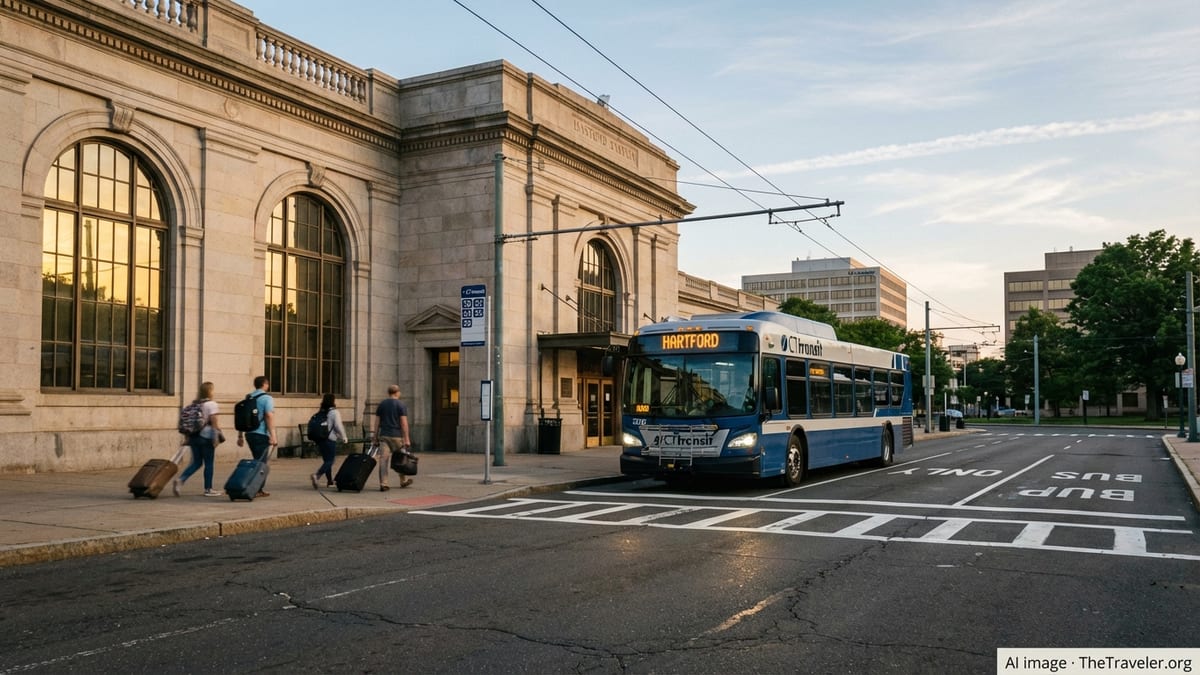
Connecticut’s ground transportation is built around a mix of local bus networks, express commuter routes, dedicated airport services, and rail connections that link to neighboring states. The system is anchored by CTtransit, the statewide bus operator serving major cities such as Hartford, New Haven, Stamford, New Britain, Bristol, and Waterbury, along with a number of regional partners. Around these core services, you will find specialized routes that connect to Bradley International Airport, free downtown shuttles, and buses timed to meet commuter rail lines.
Rail plays an important supporting role in how passengers plan bus and transfer journeys. CTrail’s Hartford Line connects New Haven, Hartford, and Springfield, while Shore Line East links communities along the shoreline between New London and New Haven. These services intersect with Metro-North’s New Haven Line toward New York City and with Amtrak’s regional and long-distance trains, making it possible to combine rail and bus legs in a single trip. Most major hubs, including Hartford Union Station, New Haven Union Station, and Stamford Transportation Center, have multiple bus operators on site.
For travelers focused on cost and convenience, it helps to think of the state in corridors. The Interstate 91 spine from New Haven through Hartford to Springfield is well served by a blend of rail and bus options, while Interstate 95 ties together the coastal cities. Beyond those corridors, local transit agencies and dial-a-ride services fill in gaps for smaller towns and suburban park and ride lots. Planning ahead, especially if you will need to make a timed transfer between modes, remains important because schedules can vary significantly by time of day and day of week.
While the system is comprehensive, it is not fully integrated in the way of a single big-city network. Different agencies may use separate fare structures, mobile apps, and passes. Riders who are comfortable switching between CTtransit buses, CTrail trains, and regional shuttles will have the greatest flexibility. As you plan, verify the latest timetables and be prepared for occasional construction-related detours or temporary bus substitutions on certain rail lines.
CTtransit Buses and Local Networks
CTtransit is the backbone of bus travel in much of Connecticut, operating local, limited-stop, and express services under contract with the Connecticut Department of Transportation. In and around Hartford, buses fan out from downtown to neighborhoods, suburban employment centers, and shopping areas. New Haven, Stamford, and other divisions provide similar coverage in their own regions. Most routes operate seven days a week, with more frequent service at weekday peak times and somewhat reduced service in evenings and on Sundays.
For many visitors, CTtransit is the primary way to connect from a major train station into hotels, campuses, or attractions that are not within walking distance. In New Haven, for example, buses from the Green and from Union Station reach Yale University, Westville, East Rock, and shoreline neighborhoods. In Hartford, buses link Union Station with the Capitol district, the Connecticut Convention Center, and residential areas such as West Hartford and Wethersfield. These local routes complement specialized services like the free DASH Shuttle in Hartford and the free Union Station Shuttle in New Haven, which give passengers a simple way to bridge the final mile between trains and downtown streets.
Fares on CTtransit are designed to be affordable, with a standard local fare that remains relatively low by national standards. Riders can typically pay with exact change, use ticket vending machines at select rail stations, or pay through mobile apps depending on the region and products offered at the time of travel. Passes valid for multiple rides or days are a good value for visitors planning to use buses heavily over several days. Senior citizens, people with disabilities, and in some cases students may qualify for discounted fares on most routes, though eligibility rules and proof of ID requirements should be checked in advance.
Beyond CTtransit, several regional operators handle local bus routes in areas that are not directly served by the statewide system. Middletown Area Transit covers Middletown and nearby towns, while agencies in places such as Norwalk and the lower Naugatuck Valley provide their own local networks that often connect with mainline rail stations. If you are traveling to smaller communities, you may need to combine a CTtransit bus or CTrail train with one of these local agencies for the last leg of your journey.
Express Buses, Bus Rapid Transit, and Commuter Options
Express buses are a key part of Connecticut’s strategy for moving commuters efficiently into major employment centers, particularly Hartford and New Haven. These routes typically start from suburban park and ride lots where parking is free, then travel directly along highways with limited stops before reaching downtown. For riders who live outside the reach of rail corridors, the express bus network offers a fast and relatively predictable alternative to solo driving, especially during the peak travel hours on weekday mornings and afternoons.
In the Hartford area, the CTfastrak bus rapid transit corridor adds another layer of service. Using a dedicated busway for much of its route, CTfastrak links New Britain, Newington, West Hartford, and downtown Hartford, with some branches continuing beyond the busway to neighboring communities. Because buses run in their own right of way for long stretches, they avoid highway congestion that affects general traffic. The CTfastrak system is integrated with CTtransit, sharing fares and allowing riders to transfer easily between local, express, and busway services.
On the coastal corridor and in southwestern Connecticut, commuter express routes supplement rail lines by serving employment centers not directly on the tracks or by providing additional capacity from large park and ride locations. Some express services connect across state lines, such as the I-Bus between Stamford and White Plains, which helps link Connecticut residents with jobs in New York’s Westchester County. Other express routes feed into downtown New Haven from communities such as Middletown and Hartford, offering commuters a through bus option if rail is not convenient.
Because express buses and dedicated commuter routes tend to be tailored to workday patterns, their schedules outside peak hours can be limited. Riders should pay particular attention to last-return times in the afternoon and early evening. In many cases, the same monthly pass product covers all express trips within a given service area, which can represent significant savings for daily commuters. Some employers participate in programs that offer pre-tax transit benefits or emergency ride home options for regular bus users, giving an extra measure of reassurance to passengers who are leaving their cars behind.
Airport Buses and Transfers at Bradley International
Bradley International Airport, located in Windsor Locks north of Hartford, is the primary air gateway for Connecticut and much of western New England. For passengers who prefer not to drive, a mix of public buses, private shuttles, taxis, and rideshare services provides ground transportation to and from the terminal. The airport has invested in a new ground transportation center near Terminal A, consolidating rental cars and parking to simplify onward travel for arriving passengers.
Among the most important public options is a CTtransit route commonly known as the Bradley Flyer, which operates between downtown Hartford and the airport. This semi-express bus runs seven days a week and typically takes about half an hour between Hartford Union Station and the terminal, stopping at select locations such as the Connecticut Convention Center. It charges the regular local bus fare level, making it one of the most economical ways to reach the airport, particularly for solo travelers and airport employees. Recent schedule updates have expanded early morning and late evening service on many days to better match flight times.
Passengers arriving at Bradley who need to connect to the wider rail network have several options. They can take the Bradley Flyer or other local CTtransit routes into Hartford and then transfer to CTrail Hartford Line trains, Amtrak services, or intercity buses at Hartford Union Station. There are also local buses that operate between the airport, Windsor, and Windsor Locks rail stations on weekdays, giving riders a shorter hop to connect directly with the Hartford Line. These routes are especially useful for travelers heading north toward Springfield or south toward New Haven without wanting to detour through downtown Hartford.
For those who prioritize door-to-door service or are traveling in groups, taxis, app-based ride services, and prearranged car services are readily available at the airport. Official taxi stands on the lower level and designated areas for rideshare pickups allow passengers to depart quickly after collecting luggage. Prices for these options vary based on distance and demand, with rides to Hartford or Springfield typically costing significantly more than a bus fare but often less than renting a car for a short stay. When weighing options, consider the time of day, the size of your group, and how comfortable you are navigating bus stops with luggage.
Rail Connections and Station Shuttles
Rail and bus connections work hand in hand throughout Connecticut, and understanding a few key hubs can make transfers much easier. New Haven Union Station is one of the state’s most important interchanges, serving CTrail’s Hartford Line and Shore Line East, Metro-North’s New Haven Line, and Amtrak services along the Northeast Corridor. From this station, passengers can board a free Union Station Shuttle that runs roughly every 20 minutes between the station, additional parking sites, and the New Haven Green, which is the hub for local CTtransit routes. This shuttle is particularly useful for travelers with luggage who prefer to avoid the fifteen- to twenty-minute walk into downtown.
Hartford Union Station is another central node where buses and trains meet. Here, passengers can transfer between CTrail Hartford Line trains, Amtrak services, CTtransit local buses, CTfastrak, and the free DASH Shuttle that circulates through downtown and the Capitol area. The station also serves several intercity bus companies offering trips to Boston, New York City, Springfield, and beyond. Because the station is located near major highways, it functions as a natural gathering point for taxis and rideshare pickups, making it easy to finish your journey by car if your destination lies outside the bus network.
North of Hartford, Windsor and Windsor Locks stations provide alternate access points to the Hartford Line, with connecting local buses that can reach Bradley International Airport and nearby communities. To the south, stations such as Meriden, Wallingford, and Berlin are served by CTtransit buses that carry passengers into local downtowns, residential areas, and shopping centers. At many of these stops, parking is available for travelers who wish to leave a car and continue by rail or bus, though rules and availability differ by station.
For travelers unfamiliar with the region, it is worth building a buffer of extra time into any itinerary that involves a transfer between rail and bus, especially at busy stations or during peak commuting periods. While many connections are reasonably reliable, factors such as construction, heavy traffic, and weather can cause delays. When possible, consult trip planners or mobile apps that show both bus and rail options, and check for service alerts related to your station. Being flexible about which bus route or shuttle you use can often help salvage a connection if your train arrives later than planned.
Planning Your Trip, Fares, and Accessibility
Effective planning is the difference between a smooth, seamless transfer and a stressful scramble. In Connecticut, trip planning tools have improved in recent years, with many agencies offering online planners that integrate buses and trains on major corridors. Riders can usually enter their origin, destination, and preferred departure or arrival time to see suggested routes, transfer points, and estimated travel times. Some tools will even highlight planned bus substitutions on rail lines or show icons when a leg of the trip is operated by bus instead of train.
Fares and ticketing remain somewhat fragmented, so it is important to understand which products apply to which modes. CTrail offers its own tickets and passes for the Hartford Line and Shore Line East, while Metro-North and Amtrak maintain separate fare structures. CTtransit bus fares are distinct from rail fares, although discounted combined products and mobile ticketing options sometimes make it easier to switch between modes. Before you travel, consider whether you will be using a single mode for a quick point-to-point journey or relying on multiple transfers over several days, then choose passes or tickets that best match that pattern.
Accessibility has been an increasing priority across Connecticut’s transportation system. Many rail stations on the Hartford Line and Shore Line East feature high-level platforms, elevators, and wheelchair-accessible ramps. Buses operated by CTtransit and CTfastrak are generally equipped with ramps or lifts and designated spaces for mobility devices. At Bradley International Airport, wheelchair assistance is available through airlines to the ground transportation center and rental car facilities. If you have specific mobility needs, it remains wise to confirm details with your carrier in advance, particularly for smaller local bus systems where fleet equipment may vary.
Travelers who require additional assistance beyond standard accessibility features can look into paratransit services, which provide door-to-door transportation for eligible riders who cannot use regular fixed-route buses. These services typically operate within a certain distance of regular routes and require advance reservations and eligibility certification. For long-distance trips, coordinating paratransit on both ends of a rail journey can be complex, so consider involving local mobility managers or travel training programs if you are new to the system.
Practical Tips for Smooth Transfers
Connecting between buses, shuttles, and trains in Connecticut is generally straightforward, but a few practical strategies can help your trip go more smoothly. First, build in extra time when you need to move between different modes, especially at busy hubs such as New Haven Union Station, Hartford Union Station, and Stamford. A cushion of fifteen to thirty minutes can protect you from minor delays, crowded platforms, or needing a moment to orient yourself in an unfamiliar station.
Second, pay attention to service patterns by time of day. Many local buses reduce frequency in the late evening, and some express commuter routes may not run at all outside peak weekday hours. Airport buses often maintain later schedules, but even these may be less frequent after midnight or on weekends. If you are arriving on a late flight or departing very early, double-check that your planned bus or shuttle is operating and consider having a backup option such as a taxi or rideshare in case of missed connections or flight delays.
Third, think carefully about luggage and weather when choosing where to transfer. In some cities, transferring at a central stop like the New Haven Green or Hartford’s Main Street may require a short outdoor walk between bus stops. During winter or in heavy rain, you might prefer to switch at an indoor station such as Union Station in Hartford or New Haven, where you can wait inside and access restrooms and food options. Many hubs also have digital displays with real-time bus and train information, reducing uncertainty during tight transfers.
Finally, stay informed about construction and service changes. The Hartford Line, for example, occasionally substitutes buses for trains over certain weekends or days when track work is underway, and bus operators may adjust routes or stop locations as new facilities like the Bradley ground transportation center evolve. Agencies typically post service alerts online and through mobile apps, and major changes are sometimes covered by regional news outlets. Checking these sources a day or two before you travel can help avoid surprises.
The Takeaway
Connecticut’s network of buses, shuttles, and rail-linked transfers gives travelers a flexible toolkit for getting around the state and reaching nearby destinations in New England and New York. While the system is not completely unified, understanding how CTtransit, regional bus operators, CTrail trains, and airport services interconnect allows you to travel efficiently without a car. The key is planning: know your hubs, verify schedules, and allow enough time for transfers.
Whether you are shuttling between Bradley International Airport and Hartford, exploring New Haven from Union Station, or commuting along the I-91 corridor, buses and transfers can be both affordable and reliable. With new investments in ground transportation facilities and ongoing improvements to accessibility and service information, navigating Connecticut by public transit continues to become easier. For visitors and residents willing to learn the basics of the network, the reward is a less stressful, more sustainable way to move around the state.
FAQ
Q1. Can I reach Bradley International Airport by public bus from Hartford?
Yes. A CTtransit route commonly known as the Bradley Flyer runs between downtown Hartford, including Union Station, and Bradley International Airport for a regular local bus fare.
Q2. How do I transfer between trains and local buses in New Haven?
From New Haven Union Station, you can take the free Union Station Shuttle to the New Haven Green, where most CTtransit routes connect, or walk if you prefer a short street-level transfer.
Q3. Are there buses from rail stations to Bradley International Airport?
Yes. In addition to the Hartford to airport service, local buses link Bradley with nearby rail stations such as Windsor and Windsor Locks on weekdays, allowing connections to the Hartford Line.
Q4. Is CTtransit the only bus operator in Connecticut?
No. CTtransit is the largest operator, but several regional agencies and private companies provide local, commuter, and intercity services in areas not directly served by CTtransit.
Q5. Do express buses run on weekends?
Some express routes offer limited weekend service, but many are focused on weekday commuter peaks. Always review the specific timetable for your route before planning a weekend trip.
Q6. How accessible are Connecticut’s buses and trains for passengers with mobility impairments?
Most CTtransit and CTfastrak buses are low-floor and equipped with ramps, and many CTrail stations offer high-level platforms, elevators, and accessible paths, although details vary by location.
Q7. Can I use the same ticket on buses and trains?
In general, bus and rail systems have separate fare structures, so you should expect to buy different tickets or passes, although some combined or discounted products may be available.
Q8. What is the best way to plan a multileg trip using buses and trains?
Use online trip planners from the relevant agencies, checking both bus and rail options, and leave extra time for transfers in case of traffic, weather, or construction delays.
Q9. Are there free shuttles in Connecticut’s cities?
Yes. Notable examples include the free Union Station Shuttle in New Haven and the free DASH Shuttle in downtown Hartford, both of which help riders connect between rail stations and central districts.
Q10. How should I handle late-night arrivals when buses are less frequent?
For very late or early travel, verify bus schedules in advance and consider taxis or rideshare services as backups if your flight or train is delayed beyond the last scheduled bus.