

Connecticut rarely tops anyone’s list of “budget” destinations, but with a little planning it can be a comfortable and predictable place to manage your money on the road. From navigating sales and hotel taxes to knowing how much to tip in restaurants or what to expect when paying for trains and tolls, understanding how money works in the state will help you avoid surprises and focus on enjoying your time in New England.
Understanding Currency and Payment Culture in Connecticut
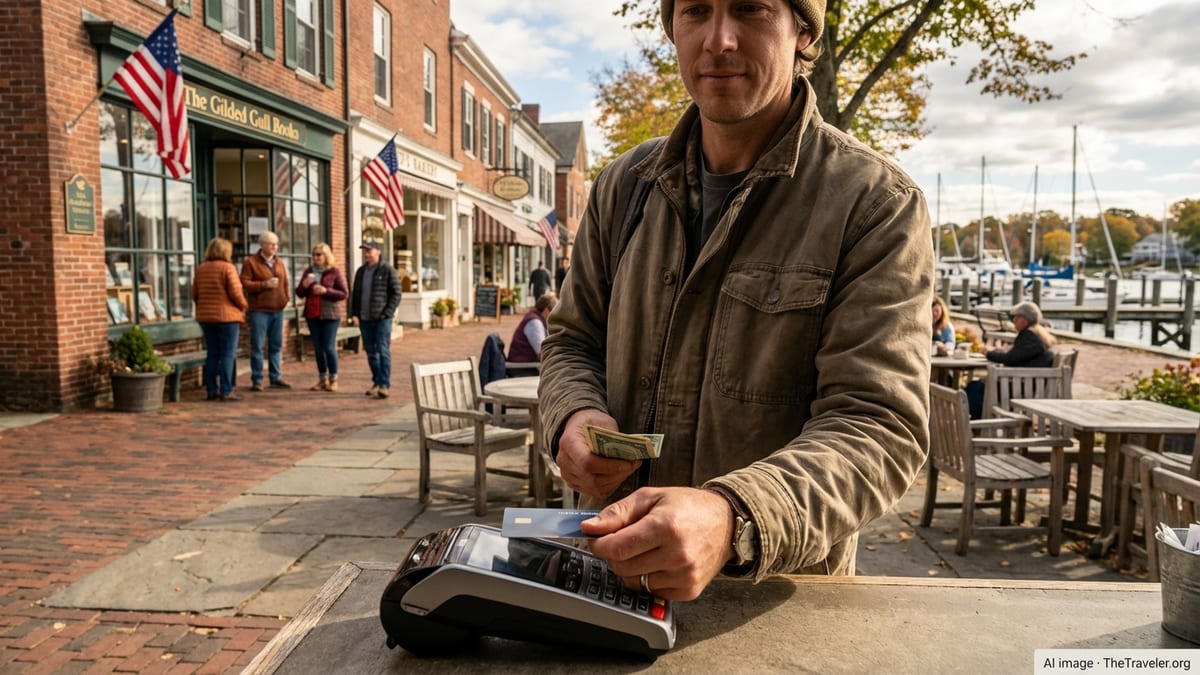
Connecticut uses the United States dollar, and visitors will find an overwhelmingly card-friendly culture. Credit and debit cards are widely accepted at hotels, restaurants, gas stations, supermarkets, museums, and most attractions. Major payment networks are standard, and contactless payments through digital wallets are increasingly common, especially in urban and commuter corridors such as around New Haven, Stamford, and along the Metro-North rail line into New York City.
Cash is still useful, but you can generally expect to get through most days with only minimal bills in your wallet. Small, independent businesses in coastal towns and rural areas may prefer cash for low-value purchases like coffee or ice cream, and some parking meters or local festivals still operate more smoothly with dollar bills and coins. It is sensible to keep a small reserve of cash for tips, farmers markets, road toll issues, or emergencies when card systems are down.
Currency exchange facilities are limited outside major airports and large cities, so visitors arriving from abroad are better off using ATMs to withdraw dollars rather than bringing large amounts of foreign cash. Connecticut’s banks and ATMs charge typical United States fees, so it is worth checking with your home bank for partner institutions to reduce withdrawal charges. ATMs can be found at most supermarkets, chain pharmacies, and gasoline stations, even in smaller communities.
Connecticut law currently restricts the practice of adding extra fees at the register just for paying by credit card. Businesses are not allowed to charge a higher price solely because you choose a card instead of cash, although they can legally offer a small discount to customers who pay in cash. In practice, visitors sometimes encounter confusing “processing” or “non-cash adjustment” fees, so it is wise to glance at posted pricing and receipts and ask politely if something does not look right.
Sales Tax, Hotel Taxes, and Everyday Costs
Connecticut applies a statewide sales tax to most retail purchases and some services, which increases the final price you pay at the register. The current base rate is in the mid six percent range, with no additional city or county sales taxes layered on top, so shoppers benefit from relative simplicity compared to some other United States states. While the percentage may look modest, the extra cost adds up quickly on larger purchases, and visitors should remember that the price on the shelf is usually lower than the total on the receipt.
Not every item is taxed at exactly the same rate. Some everyday essentials, such as many grocery items, can be taxed differently or exempted depending on how they are classified. Prepared foods, restaurant meals, and certain beverages are generally taxed, which matters for anyone relying on takeout or café dining rather than self-catering. Because the rules can be nuanced and subject to change, it is safest to assume that discretionary spending on shopping and dining will include sales tax and to treat any untaxed item as a bonus.
Accommodation taxes are particularly important for visitors. Connecticut levies a room occupancy tax that applies to hotel and motel stays of 30 days or fewer, with a rate around 15 percent on most hotels and short-term rentals and a somewhat lower rate on traditional bed and breakfast properties. This tax is charged on top of the nightly room rate before you arrive at your final bill. For example, a hotel room that costs 200 dollars per night before tax can end up closer to 230 dollars or more after state room tax and any applicable sales tax or facility fees.
Short-term rentals booked through large home-sharing platforms are generally subject to the same room occupancy taxes as hotels, and the platform may collect and remit those taxes automatically on your behalf. This means a listing’s headline nightly rate is not the whole story, and you should always click through to see the full price breakdown before finalizing a booking. In popular destinations such as Mystic, coastal beach towns, and city centers, lodging taxes can be a significant portion of your accommodation budget.
Using Cards, Cash, and ATMs Safely
Bank cards are typically the most convenient way to pay for travel expenses in Connecticut. Chip-and-signature and chip-and-PIN credit cards both work at standard terminals, and most major chains accept contactless tap to pay. Visitors from abroad should inform their banks of travel dates to minimize the chances of fraud blocks, and it is wise to travel with at least two different cards in case one is lost, damaged, or declined. Many hotels, rental car agencies, and some attractions place temporary holds on your credit line for incidentals, so factor this into your spending limits.
ATMs are widely distributed and generally reliable, but fees can accumulate quickly. Standard bank machines typically charge a local withdrawal fee, and your home bank may add its own foreign or out-of-network charge. To keep costs manageable, make fewer, larger withdrawals rather than multiple small ones, and favor ATMs inside banks, major pharmacies, or supermarkets where machines are better maintained and monitored. Avoid portable or stand-alone ATMs in bars or late-night venues, which tend to carry higher fees and slightly greater security risk.
Card fraud precautions are similar to those elsewhere in the United States. Shield the keypad when entering your PIN, review restaurant and bar bills before signing, and keep an eye on open tabs to ensure only authorized items are added. When paying at fuel pumps, using a credit card rather than a debit card can offer stronger protections if your card details are compromised. Many pumps ask for a ZIP code; visitors from abroad can often enter the three digits of their postal code plus two zeros as a workaround, although acceptance may vary by network.
Carrying some cash is still prudent. Small towns, seasonal beach concessions, independent craft markets, or roadside farm stands may be cash only or may charge extra for card transactions at very low totals. Ten and twenty dollar bills are the most practical denominations; very large bills can be harder to break in rural areas or at small businesses. If you find yourself short on cash in a remote area, gas stations are often the most reliable places to find an ATM.
Transport, Tolls, and Local Transit Payments
Connecticut’s highways, rail lines, and local transit systems present a patchwork of payment options that are largely straightforward once you know what to expect. Most visitors who rent a car will spend time on the interstates that cross the state, including I-95 along the shoreline and I-84 and I-91 into the interior. Some regional toll facilities and neighboring states increasingly rely on all-electronic tolling rather than staffed booths, so you may not be able to pay in cash even if you want to. Rental car companies typically offer an electronic toll device for a daily fee, or they will bill tolls to you after the trip, often with an added service charge.
The Metro-North Railroad, which connects parts of southwestern Connecticut, including Stamford, Norwalk, and New Haven, with New York City, is a key link for many visitors. As of early 2026, standard fares on Connecticut branches have remained relatively stable, but the ticketing structure has shifted. Traditional paper round-trip tickets are being replaced by day passes that are valid until the early hours of the next morning and generally cost slightly less than buying two single peak tickets. Mobile ticketing via the official app is increasingly promoted and can unlock small promotions such as a free ride after a certain number of trips within a set period.
Local buses and city transit systems in places such as Hartford, New Haven, and Stamford tend to accept both cash and card-based payments, although exact practices differ by operator. In some cases you will need exact change for on-board cash fares, while others support reloadable smart cards or mobile payments that can be tapped against readers. It is worth checking current local transit policies when planning day trips, but carrying a modest amount of small bills and coins is a good backup.
When traveling into nearby New York City, you will increasingly encounter contactless tap-to-pay systems on subways and buses, reflecting a broader shift away from older magnetic stripe fare cards. International visitors may be able to use their own contactless-enabled credit or debit cards directly, which can simplify transfers between Connecticut and New York. However, if your bank charges steep foreign transaction fees or currency conversion surcharges, consider loading a local transit card or using a no-fee payment method for frequent commuting.
Tipping, Service Charges, and Cultural Expectations
Tipping practices in Connecticut generally align with broader United States norms. In sit-down restaurants, a tip in the range of 15 to 20 percent of the pre-tax bill is customary for standard service, with higher tips common for outstanding experiences. Many payment terminals will suggest tip percentages, which can serve as a guide but sometimes start at higher levels. If a restaurant adds an automatic service charge for larger groups, which is common for tables of six or more, you can treat that as the main service tip and add only a small additional amount if you feel service was exceptional.
In casual settings such as cafes, bars, and coffee shops, a tip jar or on-screen tipping prompt is typical. For counter service, rounding up or leaving a dollar or two is appreciated but not as obligatory as restaurant tipping. Bartenders usually receive one to two dollars per drink or around 15 to 20 percent of the tab. At hotel bars inside higher-end properties, bartenders and servers may expect tipping closer to restaurant levels, especially when providing table service or mixing complex cocktails.
Other service workers also rely on tips. Housekeeping staff at full-service hotels commonly receive a few dollars per night, left in a clearly marked envelope or note. Bell staff often get one or two dollars per bag, and valet parking attendants receive a few dollars when your car is returned. Taxi and ride-hail drivers are usually tipped 15 to 20 percent of the fare, with rounding up for short trips. For hairdressers, spa staff, and tour guides, tipping norms vary but frequently fall in the 15 to 20 percent range where tipping is customary.
Visitors sometimes experience “tipping fatigue” in the United States, especially where payment screens prompt for tips at nearly every purchase. In Connecticut, you are not required to tip for every transaction. It is perfectly acceptable to skip tipping for purely retail purchases, self-service kiosks, or minimal interaction sales. When in doubt, consider whether a worker has provided a personal service beyond just processing a payment; if so, a modest tip is usually appreciated.
Budgeting for Food, Activities, and Seasonal Variations
Connecticut’s cost of living is relatively high by national standards, and visitors will feel this most strongly in accommodation, restaurant prices, and certain attractions. Coastal towns with popular beaches, picturesque villages, and proximity to New York and Boston can command premium summer rates, while business hubs such as Stamford and Hartford may be more expensive midweek than on weekends due to corporate demand. Building a realistic budget begins with understanding that pre-tax prices for many travel essentials will climb once sales and lodging taxes are included.
Food costs span a broad range. Upscale restaurants in city centers or along the coast can be on par with major metropolitan areas, especially for seafood, steaks, and tasting menus. At the same time, diners, family-owned pizza places, and casual pubs offer more affordable meals throughout the state. To manage your budget, consider mixing sit-down meals with supermarket prepared foods and quick-service spots. Many grocery stores have extensive hot bars, salad counters, and bakery sections, which can provide good value when you factor in the savings on tips and drinks.
Admission fees to museums, historic sites, aquariums, and family attractions vary widely. Some smaller museums operate on suggested donations, while major institutions and aquariums in coastal cities can be relatively expensive for families. When planning your days, it is helpful to group several free or low-cost activities, such as state parks, beaches with modest parking fees, or self-guided walking tours, alongside one marquee paid attraction. Season passes or combined tickets can sometimes reduce the per-day cost if you are staying for a week or traveling with children.
Seasonality plays a large role in pricing. Summer and early fall foliage season are peak periods, especially in coastal destinations and scenic inland areas. During these times, hotel rates and short-term rental prices can rise sharply, and you should factor higher costs and stricter cancellation policies into your planning. Conversely, winter and early spring often bring lower accommodation prices outside ski-focused getaways and special event weekends, making these shoulder seasons attractive for budget-conscious travelers who do not mind cooler weather.
Money Safety, Scams, and Practical Protections
Connecticut is broadly considered a safe destination, but travelers should still treat money and valuables with the same care they would in any urbanized region. Pickpocketing and petty theft are more likely in crowded city centers, transit hubs, and large events. Carry only what you need for the day, keep wallets and phones in front pockets or zipped bags, and avoid displaying large amounts of cash when paying for small purchases. Hotel safes provide a secure place to store backup cards, passports, and extra cash when not in use.
Card skimming and fraudulent charges remain occasional risks. To reduce exposure, favor ATMs in bank branches and bright, staffed locations rather than isolated machines. Check card readers at gas pumps and small shops for loose components or unusual attachments, and pay inside the station if something does not feel right. Monitor your card transactions through banking apps during your trip; most banks offer instant alerts for charges, which can help you react quickly if your card is compromised.
Common scams are similar to those found elsewhere in the region. Be wary of unsolicited “helpers” at ATMs, overly aggressive street vendors, or people asking for donations without clear identification. When renting vacation homes or apartments, using established platforms or reputable local agencies offers better protection than wiring money to an unknown private individual. If a deal on a property or guided tour looks dramatically cheaper than comparable options, it is sensible to approach it with caution.
Travel insurance with trip interruption and medical coverage can be a sensible investment, particularly for international visitors or anyone booking nonrefundable stays and activities. Policies may also include limited protection for stolen or lost cash, cards, and personal belongings, though coverage caps tend to be modest. Keep digital copies of important documents, such as your passport, driver’s license, and policy numbers, stored securely in cloud storage so you can access them quickly in an emergency.
The Takeaway
Managing money while traveling in Connecticut is largely a matter of understanding a few key patterns: an almost universal acceptance of cards, statewide sales and lodging taxes that materially increase listed prices, and tipping norms consistent with the wider United States. Once you account for these fundamentals, day-to-day spending becomes more predictable, even in a relatively high-cost state.
Advance planning around accommodation taxes, transit payment options, and restaurant tipping can help you build a realistic budget and avoid unwelcome surprises at checkout. Carrying a backup card and a small cushion of cash, using ATMs strategically, and keeping an eye on your bills will go a long way toward keeping your finances secure.
Whether you are visiting coastal towns, college cities, or rural corners of the state, a clear understanding of how money works in Connecticut will free you to focus less on receipts and more on the maritime villages, fall foliage, and historic landmarks that brought you here in the first place.
FAQ
Q1. Do I need to carry a lot of cash when visiting Connecticut?
Most visitors can rely primarily on credit and debit cards in Connecticut, keeping a small amount of cash on hand for tips, small purchases, markets, and occasional cash-only businesses.
Q2. How much sales tax should I expect to pay on purchases?
Connecticut has a single statewide sales tax rate a little over six percent on most taxable goods and some services, added at the register on top of listed prices.
Q3. What hotel taxes apply to my stay in Connecticut?
Short stays in Connecticut hotels, motels, and many short-term rentals are generally subject to a state room occupancy tax around 15 percent, while traditional bed and breakfasts are taxed at a slightly lower rate.
Q4. Are tips included in restaurant bills, or do I add them myself?
In most restaurants tips are not automatically included, so diners add a gratuity of about 15 to 20 percent. Some venues add a service charge for large groups, which is usually noted on the bill.
Q5. Can I use foreign credit cards and contactless payments easily?
Yes, most businesses accept major international credit cards, and contactless tap-to-pay is increasingly common, especially in larger cities, chain stores, and transit systems.
Q6. Are there any extra fees for paying with a credit card?
Connecticut law restricts additional surcharges solely for card payments, though businesses may legally offer cash discounts. You should still review receipts in case of confusing processing fees.
Q7. How should I tip taxi or ride-hail drivers in Connecticut?
Taxi and ride-hail drivers are typically tipped around 15 to 20 percent of the fare, with rounding up for short journeys or particularly helpful service.
Q8. What is the best way to get cash without paying high fees?
Use ATMs connected to major banks, withdraw larger amounts less frequently, and check whether your home bank has fee-free or reduced-fee partnerships with United States banks.
Q9. Are short-term rentals taxed the same as hotels?
In most cases short-term rentals are subject to the same state room occupancy taxes as hotels, and large booking platforms often collect and remit these taxes automatically as part of your bill.
Q10. Is it safe to use bank cards at gas stations and small shops?
Yes, card use is generally safe, but you should favor well-lit, busy locations, check for signs of tampering at pumps or terminals, and monitor your account for any suspicious activity.