

More news on this day
The United Kingdom has issued an updated 2026 travel advisory for Croatia, warning British visitors to prepare for tighter EU border controls, closer passport scrutiny and higher on-the-spot fines for safety and public-order offences during the peak holiday season.
Get the latest news straight to your inbox!
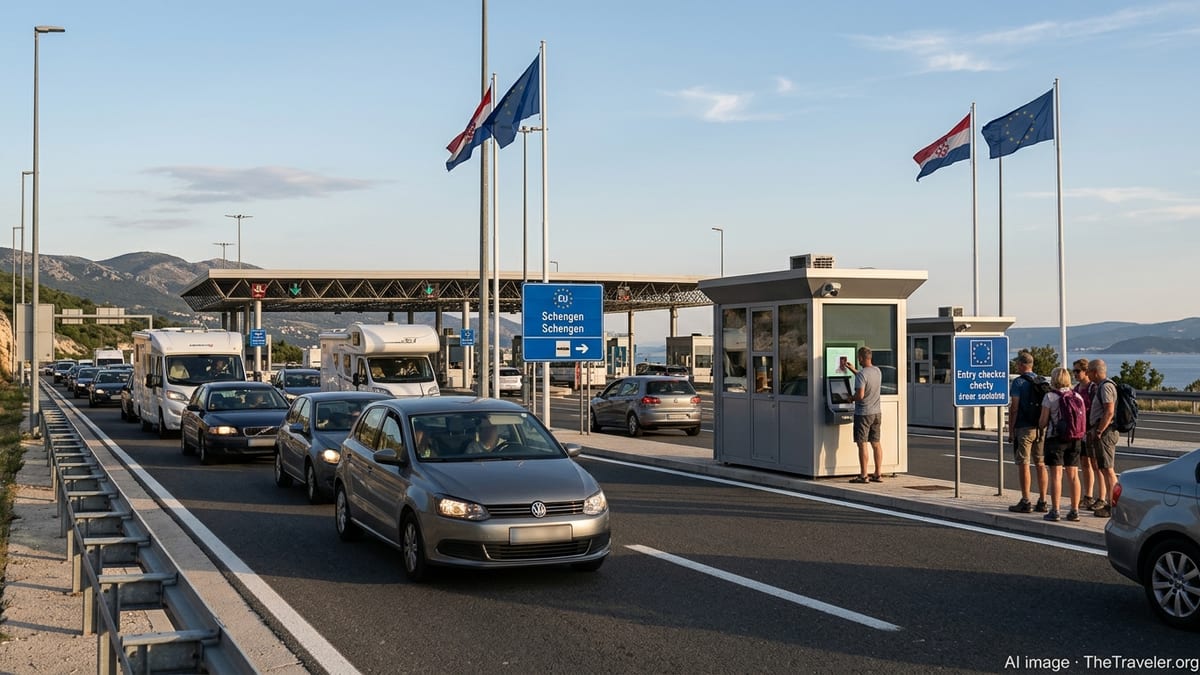
Updated UK Guidance Puts Croatia Under Sharper Spotlight
Recent changes on the UK government’s Croatia travel advice page highlight a more precautionary tone for trips to the Adriatic destination in 2026. The official guidance now places stronger emphasis on security awareness in busy tourist areas, compliance with local regulations and preparation for new technology-driven checks at the EU’s external borders. Publicly available information describes Croatia as broadly safe but stresses that visitors should expect more systematic enforcement of existing rules around documentation, driving and conduct in historic centres and resort towns.
The shift in tone aligns with wider UK messaging on travel to several European partners, where the Foreign, Commonwealth and Development Office is underscoring a high global terrorism threat, the potential for large public gatherings and the importance of following local laws. Croatia is grouped with other popular destinations where travellers are urged to remain alert in crowded spaces such as transport hubs, waterfront promenades and major cultural events, particularly during the busy summer period.
The guidance also reiterates that travel advice can change at short notice. Travellers are encouraged to review the latest country page close to departure and again while abroad, paying special attention to any changes in entry rules, local security assessments or transport disruption that could affect cross-border movement in the Schengen area.
Schengen Border Checks Tighten Ahead of EU Entry/Exit System
The most significant structural change shaping the 2026 update is the continued rollout of the European Union’s Entry/Exit System, a biometric border control framework that will record non-EU nationals’ movements in and out of the Schengen zone. Commentary from legal and travel analysis outlets indicates that 2026 has been set as a key year for formalising biometric controls, with Croatia participating alongside other Schengen members. This system will automate enforcement of the 90-days-in-180 rule, reducing the scope for lenient interpretation by individual border officers.
For UK passport holders travelling to Croatia, this means previous visits to any Schengen country will count toward their stay limit, and any overstay is more likely to be detected and registered. Travellers who have made multiple trips for work, digital nomad stays or extended holidays in the region are being urged to calculate their days carefully before departure. Public information notes that overstaying can result in fines, entry bans or difficulties re-entering the Schengen area in future.
Border procedures are also expected to take longer at land crossings and busy airports as the new technology beds in. Consumer travel reports have warned of potential queues during the first seasons of full implementation. UK guidance advises arriving well in advance for flights or cross-border coach journeys, carrying supporting documents such as proof of accommodation, onward travel and travel insurance, in case additional questions are asked at Croatian or other Schengen border points.
Looking ahead, travellers are also being reminded that the separate European Travel Information and Authorisation System, a pre-travel authorisation comparable to a visa waiver, is scheduled to start in late 2026. Once in operation, it will add another mandatory step for most UK nationals planning short stays in Croatia and other Schengen states.
Stricter Local Enforcement and Costly On-the-Spot Fines
Alongside border changes, the renewed focus of the UK advisory is on everyday conduct rules that have become stricter in many Croatian destinations. Coastal cities and islands that attract high numbers of summer visitors, such as Split, Dubrovnik and Hvar, have in recent years expanded local ordinances on public drinking, inappropriate clothing in historic centres, noise and behaviour deemed to disturb public order. These measures are intended to manage the impact of mass tourism on residents and heritage areas.
Reports from travellers and regional media point to substantial on-the-spot fines for breaches, with penalties reaching several hundred euros in some municipalities. Common issues include drinking alcohol in areas where it is prohibited, ignoring bans on glass bottles in public spaces, and failing to observe dress codes in old towns or near religious sites. In some cases, visitors have described being escorted to cashpoints to settle fines immediately, with the possibility of additional administrative fees or police reports if payment is refused.
UK guidance now draws greater attention to these local regulations, advising visitors to check signage carefully, follow instructions from municipal officers and avoid behaviour that could be interpreted as disruptive or disrespectful. The advice also highlights that contesting fines after the event can be complicated and time-consuming, especially once travellers have left Croatia, meaning that prevention and awareness are essential to avoid unexpected costs.
Drivers are another focus of Croatian enforcement activity. Traffic police frequently monitor speed limits on coastal roads and motorways, and fines for speeding, drink-driving and mobile phone use at the wheel can be substantial. British motorists using hire cars are urged to familiarise themselves with local road rules, ensure they carry all required documents in the vehicle and budget for potential roadside checks as they move between Croatia and neighbouring Schengen states.
Insurance, Health Cover and Documentation Expectations
The reinforced travel warning also reflects a wider UK push to ensure that holidaymakers are properly insured and medically prepared when visiting EU destinations. Guidance for Croatia reminds travellers that the UK Global Health Insurance Card or its predecessor the European Health Insurance Card provides access to necessary state healthcare in many circumstances, but does not replace comprehensive travel insurance. British visitors are urged to obtain a policy that covers medical treatment, repatriation, cancellation and high excesses that could arise from accidents linked to water sports, hiking or driving.
Advisers note that some European commentators have called for stricter checks on proof of insurance at borders, though this is not yet a uniform requirement. The UK travel advice therefore frames robust insurance as a practical safeguard rather than a bureaucratic formality, particularly given reports of rising medical costs and the potential for longer stays if travellers are injured or fall ill abroad.
Documentation expectations at Croatian borders have also tightened in line with Schengen practice. UK visitors may be asked to show a passport valid for at least three months beyond the intended departure date, proof of sufficient funds and evidence of accommodation bookings. Although many travellers continue to pass through with only brief questioning, the Foreign Office guidance advises being ready to answer detailed queries about travel plans and to show printed or offline copies of reservations in case mobile connectivity is poor.
Those planning to work remotely or stay near the 90-day limit are encouraged to consider whether a different visa route might be appropriate and to seek information from Croatian government sources. Publicly available material notes that relying on informal arrangements or verbal assurances at the border carries increased risk now that movements are recorded and cross-checked in shared databases.
Practical Steps for UK Travellers Heading to Croatia in 2026
Against this backdrop, the latest travel advisory encourages a more structured approach to trip planning. Travellers are advised to check their passport validity, review their recent time spent in the Schengen area and make sure they remain comfortably within the 90-day allowance. Keeping a simple record of previous entry and exit dates for any Schengen country can help avoid miscalculations once biometric systems start applying the rules automatically.
British visitors are also urged to research local regulations in specific destinations, as rules can differ between municipalities and islands. Information published by Croatian tourist boards and local councils typically outlines expectations on noise, alcohol consumption, waste disposal and dress codes. Taking note of these details before arrival can reduce the chances of misunderstandings with local police or wardens, particularly in historic quarters where behaviour is closely monitored.
On the practical side, observers recommend carrying a mixture of payment cards and some cash in euros or kuna-equivalent local currency where applicable, as on-the-spot fines and smaller services may not always accept contactless payments. Saving important documents offline, including copies of travel insurance, passport identity pages and booking confirmations, can also help if devices are lost or connectivity is disrupted during cross-border journeys.
Overall, the 2026 warning does not discourage travel to Croatia but reframes it within a more regulated European border environment and a firmer local approach to public order. For most UK holidaymakers who prepare their documents, respect local rules and allow extra time for border checks, the country remains a popular and accessible destination on the Adriatic, albeit one where complacency over formalities can now carry a higher financial and administrative cost.