

More news on this day
New research from global tourism bodies indicates that cruise tourism is now one of the fastest‑growing segments of travel, channeling billions into local economies and supporting millions of jobs, even as communities from Alaska to the Mediterranean confront the pressures of congestion, housing strain and environmental risk tied to the industry’s rapid expansion.
Get the latest news straight to your inbox!
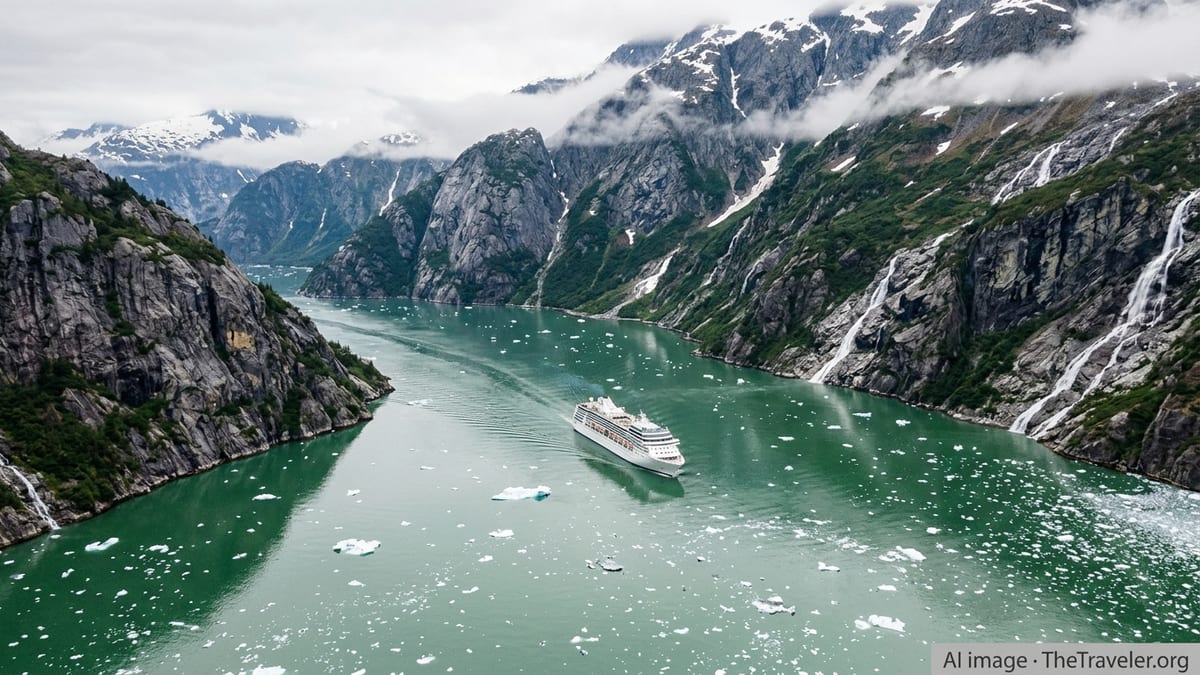
A Record-Breaking Industry With Outsized Economic Reach
Recent industry and economic studies point to a cruise sector that has not only rebounded from the pandemic shock but is now surpassing previous peaks. Cruise Lines International Association and tourism economists report that nearly 35 million passengers took a cruise in 2024, with global passenger volumes continuing to climb in 2025 as new ships enter service and emerging markets join traditional North American and European source markets.
New analysis released this month by the World Travel & Tourism Council on cruise tourism’s contribution estimates that in 2024 the segment generated close to 100 billion dollars in direct and indirect gross domestic product and supported close to 2 million jobs worldwide. Publicly available summaries of CLIA’s most recent State of the Cruise Industry material indicate a similar scale, with cruise activities contributing well over 150 billion dollars to the wider travel economy and sustaining more than 1.5 million positions across ports, shipyards, suppliers and tourism businesses.
Although cruising still represents a small share of global tourism volumes, its economic footprint is disproportionately large. Cruise spending flows through ship construction and refit yards, fuel and provisioning contracts, port services and a vast array of tour operators and hospitality businesses in port communities. Tourism economists note that this layered supply chain means each cruise dollar can cycle multiple times through local and regional economies, amplifying the employment effect beyond the ships themselves.
Forecasts suggest that the industry’s growth trajectory is far from over. CLIA and Oxford Economics projections cited in recent trade reports indicate that global cruise capacity could increase by roughly 25 to 30 percent by 2035, adding more than 200,000 berths worldwide as new vessels and itineraries are introduced. For destination planners, that signals a need to prepare for steadily rising passenger volumes and associated infrastructure demands.
Port Cities Turn Cruise Calls Into Jobs and Urban Investment
The impact of cruise tourism is particularly visible in leading homeport and transit destinations, where ship calls translate into year‑round employment. In Europe, industry associations report that cruise activity now supports around 445,000 jobs and generates approximately 16 billion euros in wages across the continent, with direct cruise spending in 2024 estimated at more than 30 billion euros. Port authorities and regional governments credit cruise itineraries with helping sustain maritime services, logistics firms and visitor economies that might otherwise be highly seasonal.
Fresh figures from Mediterranean and Atlantic ports underscore how this plays out on the ground. Data published in early 2026 by the Ports of Genoa and Savona, for example, show that their cruise sector generated about 346 million euros in economic impact in 2025 alone, with nearly three‑quarters of that linked to turnaround operations such as passenger embarkation, hotels, airport transfers and local provisioning. Port analyses characterize cruise as a key link between tourism, shipbuilding and innovation clusters that provide skilled employment in and around the harbor.
In the Caribbean and surrounding regions, market research compilations for 2023 and 2024 suggest that cruise tourism sustained hundreds of thousands of jobs, from tour guides and taxi drivers to dock workers and hospitality staff. Individual country assessments referenced in those summaries indicate that nations such as the Bahamas receive several billion dollars in annual economic benefit from cruise calls, with tens of thousands of direct and indirect jobs tied to the sector. Policymakers there often frame cruising as a critical pillar of diversification strategies where few other industries can scale as quickly.
In the United States, updated economic impact studies for 2023 and 2024 describe cruise tourism as a major employer and taxpayer in key coastal states including Florida, Texas, California and Alaska. Analysts highlight that the United States accounts for close to half of global cruise deployment, with knock‑on benefits flowing to airports, hotels, entertainment venues and supply chains spread well beyond the pier. As new terminals open and older facilities are upgraded to handle larger vessels, local authorities are leveraging cruise‑related revenues to invest in waterfront regeneration and climate‑resilient infrastructure.
Remote and Small Communities Navigate Cruise Dependency
While megacities capture headlines, smaller destinations may feel cruise tourism’s labor market and social effects most intensely. In Alaska’s capital Juneau, municipal data for the 2024 and 2025 summer seasons show record or near‑record cruise visitor numbers, with more than 1.6 million passengers from large ships recorded in each recent year. Local reports indicate that this volume underpins hundreds of jobs in guiding, retail, transportation and port services in a community of around 30,000 residents.
Research teams studying tourism‑dependent regions such as Juneau and parts of Iceland have begun to model how rising visitor numbers intersect with environmental indicators, public finances and social satisfaction. A recent academic systems analysis covering the period from 2008 to 2024 for these case studies suggests that while cruise spending bolsters government revenues and supports local entrepreneurs, it can also strain infrastructure, contribute to carbon emissions and generate resident unease if growth outpaces planning.
Survey work in Alaska’s capital illustrates this balancing act. A 2024 community survey of Juneau residents, summarized by local media in early 2025, found that support for cruise tourism remained significant but had edged down over time, with a growing minority expressing concern about impacts on quality of life, congestion and access to nature. City officials have responded with arrival caps, time‑of‑day management and collaborative agreements with cruise lines and tour operators, aiming to preserve economic benefits while limiting overtourism.
Similar dynamics are evident in small European and North American ports that receive large ships for only a few hours at a time. Local business associations in these communities often report strong sales on ship days, coupled with worries about housing affordability, crowded public spaces and the resilience of economies that rely heavily on a single visitor segment. As a result, more destinations are experimenting with passenger limits, head taxes and investment in shoulder‑season activities to even out employment and income flows.
Big Numbers, Real Jobs: From Shipyards to Shore Excursions
Behind the headline figures sit a wide range of job types tied directly or indirectly to cruise tourism. Sector analyses released in late 2025 and early 2026 emphasize that global cruise activity supports maritime officers and crew, shipyard engineers and tradespeople, port agents, travel advisors, tour guides, entertainers, hotel workers, food suppliers and many more roles. Some reports estimate that roughly 900,000 to 1 million jobs are linked to onshore activities alone, including everything from baggage handling to accounting and digital marketing for cruise‑focused businesses.
In Europe’s major shipbuilding centers, long orderbooks for new vessels and retrofits are helping sustain high‑skilled employment in naval architecture, engineering and advanced manufacturing. Environmental technology providers supplying exhaust gas cleaning systems, shore power connections and waste treatment solutions are also benefiting as cruise lines invest in cleaner operations. CLIA’s latest environmental technologies overview notes that more than 90 percent of the global cruise fleet is now covered by formal environmental monitoring and reporting programs, with a large share of new capacity designed to run on lower‑emission fuels.
On shore, cruise tourism has become a significant source of entrepreneurial opportunity, particularly for small and medium enterprises in tours, transportation and experiences. Industry case studies highlight locally owned operators leading everything from culinary walks and craft markets to adventure excursions and cultural performances, often with training and certification support from tourism boards or development agencies. These businesses can scale quickly when ship calls rise, creating seasonal or permanent roles that are especially important in regions with limited alternative employment.
However, the cruise labor market also raises questions about job quality and security. Academic and civil society assessments of working conditions on some vessels and in certain subcontracted services point to low wages relative to developed‑country standards, long contracts and complex jurisdictional issues around labor protections. This has prompted growing interest in environmental, social and governance performance indicators for cruise companies, with recent research examining how stronger ESG practices relate to financial performance and long‑term resilience in the sector.
Destinations Seek a More Sustainable Cruise Future
The very growth that makes cruise tourism an engine of job creation is prompting destinations to rethink how they manage the flow of ships and passengers. In Europe, public discussions intensified through 2024 and 2025 as residents in major cities raised concerns about overtourism, housing pressures and air quality in port neighborhoods. In Spain, widely reported anti‑tourism demonstrations focused attention on visitor caps and taxation, while in Barcelona municipal leaders announced plans to tighten rules on short‑term rentals and raise levies on short‑stay cruise visitors.
Elsewhere, communities have moved to establish hard limits on daily disembarkations, as seen in Bar Harbor, Maine, where new rules restricting cruise passenger numbers began to take effect in 2024. Environmental advocates in several European ports continue to highlight ship emissions, particularly sulfur oxides and particulates, as a health concern for residents living near busy terminals. These debates are encouraging faster adoption of shore power connections, cleaner fuels and routing adjustments that keep the largest vessels farther from sensitive historic centers.
Industry bodies argue that cruise tourism can be part of destination sustainability strategies rather than a threat to them, citing recent investments in emissions‑reducing technologies, waste management and community partnerships. The World Travel & Tourism Council’s latest cruise‑focused report frames the sector’s contribution around seven pillars including skills development, cultural preservation and infrastructure financing, positioning cruise lines as long‑term partners for coastal regions.
For local leaders, the challenge is to convert cruising’s undeniable economic and employment clout into durable, broadly shared benefits while managing social and environmental limits. With forecasts pointing to continued expansion through the next decade, decisions taken now on port capacity, environmental standards and revenue sharing will shape how cruise tourism’s “unstoppable” impact is felt in communities across the globe.