

More news on this day
One of south London’s most recognisable sporting landmarks is on the brink of a major transformation, as Crystal Palace National Sports Centre advances plans for a comprehensive revamp that aims to turn the 1960s complex into a cutting-edge sports and leisure destination for the capital and beyond.
Get the latest news straight to your inbox!
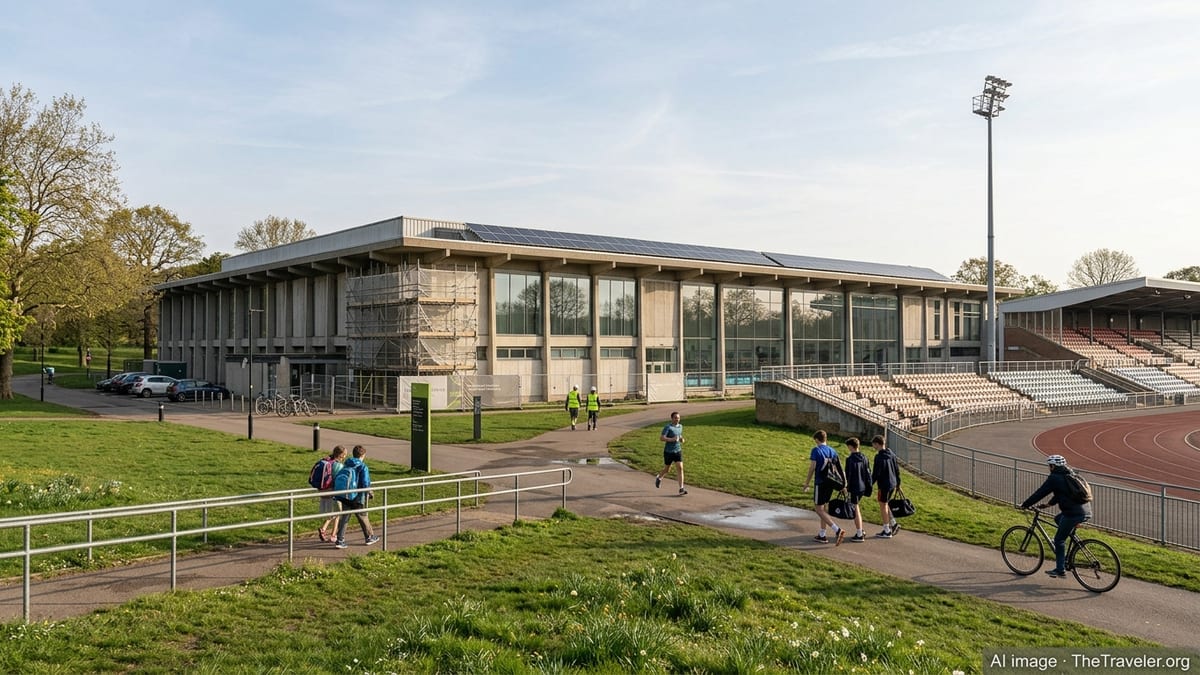
A Landmark Venue Enters a New Era
The Crystal Palace National Sports Centre has long held a special place in British sporting history, but publicly available information shows that the venue is now poised for the most significant overhaul in its lifetime. Recent planning submissions outline an ambitious programme of works to modernise the entire complex, while respecting its Grade II* listed status and unique parkland setting in south London.
Reports indicate that detailed proposals were lodged in March 2026, marking what has been described in local coverage as a key milestone in the project. The submission follows earlier concept work led by the Greater London Authority and delivery partner Morgan Sindall Construction, working with architects FaulknerBrowns on a design that balances heritage conservation with modern performance and community use.
The revamp is intended to support both elite and grassroots sport, while also enhancing Crystal Palace’s appeal as a wider leisure and visitor destination. For travelers and Londoners alike, the plans signal that the hilltop complex overlooking Crystal Palace Park is set to evolve from a tired but beloved relic into a revitalised hub for training, recreation and events.
Recent budget documents published by the GLA show stepped-up capital allocations for the centre over the coming financial years, underlining City Hall’s intention to deliver a long-term solution for the site after decades of piecemeal repairs and stalled schemes.
£30 Million Investment in Pools, Pitches and Arena
According to recent regional news coverage, the current phase of the Crystal Palace National Sports Centre upgrade is backed by around £30 million of investment, with funding identified from the Greater London Authority, leisure operator GLL and national sports bodies. That money is targeted at the most heavily used elements of the complex, including the aquatics facilities, indoor arena and outdoor pitches.
The 50 metre competition pool and separate diving pool, once among the premier aquatics venues in the country, are earmarked for a thorough refurbishment. Plans described in design summaries include modernising the pool tanks and plant, improving spectator areas and upgrading changing facilities to meet contemporary accessibility and safeguarding standards. The aim is to restore the venue’s capacity to host high-level training camps and events, while also serving local swim clubs, schools and casual visitors.
Beyond the water, proposals cover improvements to the indoor sports hall, strength and conditioning spaces and ancillary facilities, making them more flexible for multi-sport use. Outdoor football and rugby pitches are also due for renewal, with lighting, surfaces and circulation routes redesigned to support intensive year-round community use and easier access for teams arriving from across London and the wider region.
Information from construction industry reports indicates that the athletics stadium forms part of the broader masterplan, with an eye on maintaining Crystal Palace’s historic role in track and field. While some elements of the stadium work will be sequenced over several years, early design images point to enhanced seating, improved athlete support areas and upgraded broadcast and event operations infrastructure.
Designing a Greener, More Welcoming Destination
Alongside bricks and mortar upgrades, the Crystal Palace project is being positioned as a flagship for more sustainable, visitor-friendly sports infrastructure in London. According to design statements submitted with the planning application, the scheme seeks to phase out on-site gas systems and introduce low-carbon technologies such as air source heat pumps and rooftop solar panels to cut the centre’s operational emissions.
Landscape and public realm changes are another major focus. The sports centre sits within Crystal Palace Park, itself undergoing a separate regeneration led by Bromley Council and the Crystal Palace Park Trust. The latest documents stress the need to better stitch the complex into its green surroundings, with clearer arrival points, improved lighting and wayfinding, step-free routes and rationalised parking.
For visitors, that is expected to translate into a campus that feels less like an isolated 1960s megastructure and more like an open, navigable destination. Proposals highlight new or upgraded pedestrian connections between the arena, pools, stadium and wider park attractions, which could make it easier for families to combine a swim session or football match with time in the playgrounds, dinosaur trail or café spaces nearby.
Architects’ visuals shared in recent coverage show a careful approach to the listed main building, retaining its distinctive roofline and structural rhythm while refreshing façades, glazing and internal layouts. The intention is to conserve the mid-century character that earned the complex its protected status, but reinterpret it for contemporary expectations of comfort, safety and inclusivity.
Timelines, Phases and What Visitors Can Expect
While the exact construction timetable will depend on planning and listed building approvals, publicly available budget information from City Hall points to a multi-year delivery programme stretching through the late 2020s. Capital allocations ramp up significantly from the 2025 to 2028 financial years, suggesting that major on-site works are planned to follow the current preconstruction and design phase.
The project team has indicated through published materials that a phased approach will be required to keep parts of the centre operating while others are refurbished. For users, that is likely to mean temporary closures or relocations of certain facilities at different points, but also the possibility of new amenities opening in stages as work progresses.
Travelers planning trips to London in the next few years may find that Crystal Palace offers a changing mix of facilities, with some legacy areas still visible alongside newly completed spaces. Once the main works are finished, however, the venue is expected to present a far more coherent offer, with upgraded booking systems, refreshed interiors and expanded programming for everything from swim schools and five-a-side leagues to athletics meets and community festivals.
Transport links are not expected to change significantly in the short term, with the centre remaining accessible via Crystal Palace and Penge West rail and Overground stations, along with a network of bus routes. However, the emphasis on better pedestrian and cycle connections within the park could encourage more visitors to arrive on foot or bike, particularly from nearby south London neighbourhoods.
A New Anchor for South London Sport and Leisure
For more than half a century, Crystal Palace National Sports Centre has been synonymous with athletics showpieces, swimming galas and school sports days. After years of uncertainty about its long-term future, the current revamp signals a renewed commitment to its role as a major hub for sport in south London and for the city as a whole.
Regeneration updates for the wider park describe parallel efforts to restore historic landscapes and improve visitor facilities, meaning that the sports centre’s transformation is likely to sit within a broader uplift of Crystal Palace as a day-out destination. Together, the park and the upgraded complex are positioned to attract a blend of elite athletes, local residents and tourists seeking an alternative to central London’s more familiar sights.
By combining heritage conservation, modern training and competition facilities, and a stronger focus on sustainability, the project aims to deliver a sports and leisure environment that feels both international in ambition and firmly rooted in its south London context. If the plans progress on schedule, the Crystal Palace plateau could soon re-emerge as one of the capital’s most distinctive places to watch, play and experience sport.