

More news on this day
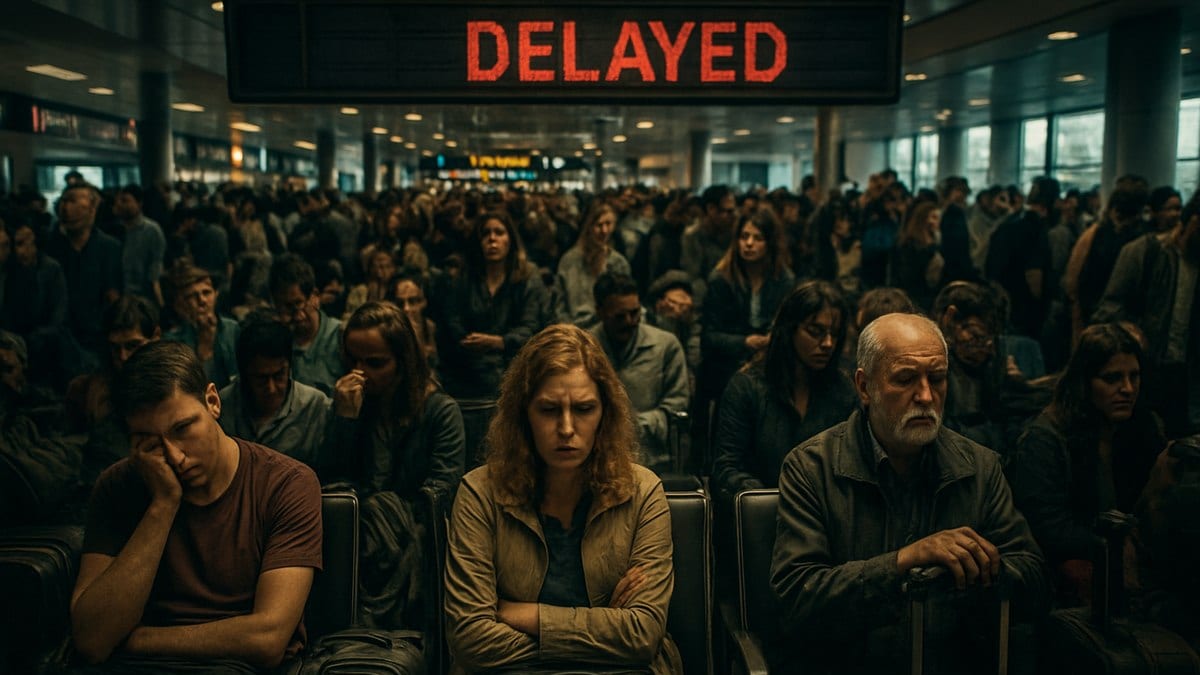
Hundreds of air passengers have been left stranded across Europe in April 2026 as a combination of a major aviation cyber incident, labour unrest and knock-on congestion has triggered widespread delays and cancellations at some of the continent’s busiest airports.
Get the latest news straight to your inbox!
Cyberattack Fallout Hits Key European Hubs
Published coverage in early April indicates that a cyberattack on systems used by multiple airlines and airports has been a central trigger for the latest wave of disruption across Europe. A report from a U.S.-based news outlet describes an attack targeting technology supplied by Collins Aerospace, affecting check in and baggage handling at major hubs including London Heathrow, Brussels and Berlin. As systems were taken offline or operated in degraded mode, airlines reverted to manual processing, slowing passenger flows and restricting aircraft turnarounds.
According to these accounts, the operational impact quickly became visible on departure boards, with cancelled flights, rolling delays and long queues at check in counters. At Heathrow, at least a dozen flights were reportedly cancelled by the afternoon of 4 April, while other services left significantly behind schedule. Similar scenes were described at Berlin and Brussels, where the cyber incident intersected with already tight schedules during a busy spring travel period.
The disruption has not been confined to individual airports. Because many of the affected hubs serve as major connecting points for intra European and long haul traffic, irregular operations in London, Brussels and Berlin have rippled into secondary airports. Passengers connecting onwards to destinations in Southern and Eastern Europe have faced missed connections, unplanned overnight stays and lengthy rebooking queues as airlines attempted to realign aircraft and crew.
Industry analysts note that the episode underscores the aviation sector’s growing dependence on shared digital infrastructure. Even when core air traffic control systems remain intact, a failure in check in, baggage or crew rostering platforms can sharply limit an airport’s ability to process flights at normal capacity, leading to rapid build ups of stranded travelers.
Delays and Cancellations Mount Across Multiple Countries
Separate data compiled from flight tracking and travel industry sources paints a picture of sustained disruption across Europe’s major markets in the opening days of April. On 1 April, a travel trade publication reported more than 1,600 delayed flights and just over 100 cancellations in a single day across England, France, Germany, Greece, Spain and the Netherlands. Airports such as Amsterdam Schiphol, Athens, Barcelona, Madrid, London Heathrow, Manchester, Paris Charles de Gaulle, Nice, Frankfurt and Munich were among the hardest hit.
Amsterdam Schiphol reportedly recorded more than 200 delayed departures and close to 20 cancellations, while Frankfurt and Munich together saw over 300 delayed flights and more than 10 cancellations. At London Heathrow, data pointed to around 160 delays and double digit cancellations. In Southern Europe, hubs in Athens, Barcelona and Madrid also experienced extensive schedule disruption, leaving passengers queueing at customer service desks late into the evening.
Further figures published on 6 April show that the pattern of irregular operations has persisted. Euro focused news coverage cited around 1,475 flights delayed and 172 cancelled across the continent that day, with disruption spread across several countries rather than concentrated in a single national airspace issue. Reports highlighted that even airports not directly affected by the cyber incident were struggling with capacity constraints as airlines repositioned aircraft and crews.
Travel advocates point out that while individual daily totals may fall short of the most severe historic airspace shutdowns, the current pattern of rolling, multi day disturbance has left many travelers facing repeated rebookings. With aircraft operating near full load factors at the start of Europe’s spring holiday season, spare seats for disrupted passengers have been limited on key routes.
Labour Unrest Adds Pressure During Peak Period
The cyber attack and congestion have coincided with renewed labour unrest in parts of the European aviation sector, compounding the challenges for passengers. In France, cabin crew employed by easyJet filed strike notices for early April, including 6 April, just as families were beginning Easter and spring break trips. French media and specialist travel outlets have warned that hundreds of services touching French airports could be affected, although the exact number of cancellations remains fluid as negotiations continue.
At the same time, travellers face looming industrial action in Italy. Travel bulletins circulated in recent days highlight plans for aviation worker strikes and air traffic related industrial action in early to mid April, with particular focus on 9 and 10 April. While some carriers have issued travel waivers and flexible rebooking policies for flights touching Italian airports during this period, passengers connecting between Northern and Southern Europe may still encounter schedule changes and missed onward connections.
Elsewhere in Europe, social media posts and local reports indicate a continuing backdrop of sporadic strikes affecting airport ground handling, security staff and regional air traffic control units. Although many of these actions are time limited, even a few hours of industrial disruption can trigger a backlog of delayed flights that takes the rest of the day to clear, especially at complex hubs already operating near capacity.
The interaction of labour disputes with the recent cyber incident has made it more difficult for airlines to restore normal timetables quickly. Where carriers might usually be able to add extra sections or redeploy aircraft to clear stranded passengers, crew availability and duty time limits have constrained recovery options.
Airlines and Passengers Struggle With Recovery
Airlines serving European routes have implemented a patchwork of measures in an attempt to stabilise operations and accommodate passengers. Larger network carriers such as Lufthansa, Air France KLM and British Airways have focused on protecting long haul and high yield routes, sometimes consolidating short haul frequencies or re routing passengers via alternative hubs. Low cost airlines including Ryanair, easyJet and Vueling have relied on high utilisation of their fleets and the use of secondary airports, but have still recorded dozens of delays and scattered cancellations across their networks.
Several recent disruption reports describe extended rebooking windows, travel waivers and, in some cases, vouchers for future travel. However, the surge in demand for alternative routings has led to long wait times at call centres and airport service desks. Travellers with complex itineraries involving multiple carriers or separate tickets have faced particular difficulty securing timely alternatives, as each airline applies its own policies.
For passengers stranded at major hubs, the immediate concern has often been accommodation and basic care rather than compensation. Hotel availability around key airports has tightened on peak disruption days, and public information suggests that not all travellers have been able to access overnight lodging arranged by their carrier. In some cases, travellers have reported sleeping in terminal areas while waiting for morning departures.
Consumer groups note that European Union air passenger regulations provide for care, assistance and, in some situations, financial compensation when flights are significantly delayed or cancelled. The applicability of compensation in the current circumstances may depend on whether disruptions are ultimately attributed to extraordinary circumstances such as cyberattacks, or to operational and staffing decisions within the control of airlines and airports.
What April Travellers Should Expect Next
With the month still unfolding, travel analysts caution that further disruption across European airspace remains possible in April 2026. Scheduled industrial action in Italy and potential follow on strikes in other markets could create additional bottlenecks. At the same time, the aviation technology sector is working to restore and harden the systems affected by the early April cyber incident, but residual instability cannot be ruled out.
Publicly available guidance from travel organisations and consumer advocates encourages passengers with upcoming flights to Europe to monitor their bookings closely, use airline apps or online tools to check in as early as systems allow, and build extra time into itineraries that require tight connections. Where feasible, travellers are being advised to favour non stop routes over multi stop journeys that rely on heavily affected hubs.
Observers also point out that the latest episode may strengthen calls for greater resilience planning within Europe’s aviation ecosystem. Previous crises, from volcanic ash clouds to pandemic related shutdowns, have prompted reviews of air traffic management and passenger rights. The current combination of cyber vulnerabilities, labour disputes and high utilisation levels is likely to renew debate over contingency capacity and crisis coordination among airports, airlines and technology providers.
For now, the reality for many travellers is one of uncertainty. While most flights in Europe are still operating, the elevated rate of delays and cancellations in early April has made last minute changes and extended waits a common feature of journeys through some of the continent’s largest airports.