

More news on this day
Cyclone Gezani has left at least 62 people dead in Madagascar, displaced tens of thousands and severely damaged the port city of Toamasina, prompting renewed travel warnings across the country’s east coast and raising urgent questions for visitors already in the region or planning trips in the coming weeks.
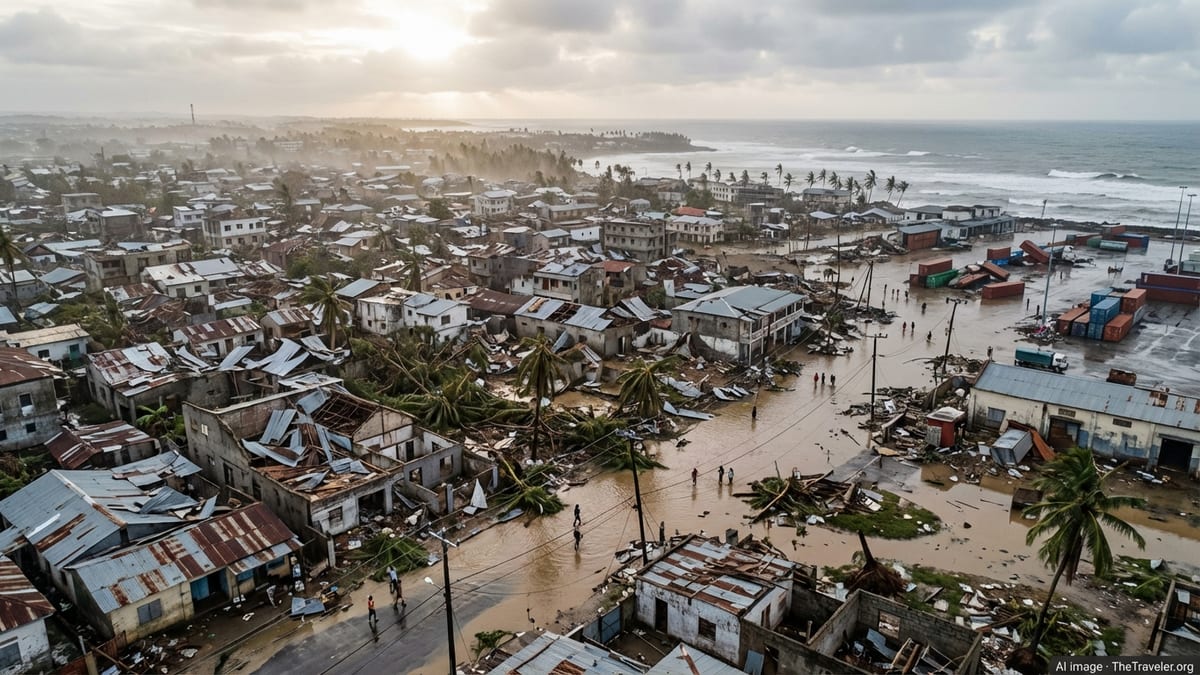
Rising Death Toll and Widespread Destruction
Madagascar is still counting the human and material cost of Cyclone Gezani, which roared ashore near Toamasina on February 10 as one of the most powerful storms to strike the island this season. Authorities now report at least 62 fatalities nationwide, with dozens more injured and several people still missing as search operations continue in remote communities.
The National Office for Risk and Disaster Management has recorded hundreds of injuries and more than 60,000 people classified as disaster victims in Toamasina and surrounding districts. Local officials describe entire neighborhoods flattened, with concrete walls collapsed, roofs torn away and power poles snapped, leaving large swathes of the city without electricity and reliable communications for days after landfall.
Initial assessments indicate that more than 18,000 homes have been destroyed and tens of thousands more damaged across the east of Madagascar, leaving families to shelter in schools, churches and improvised sites. Humanitarian agencies warn that the full impact is still emerging as roads are cleared and rescue teams gain access to flood-hit rural areas inland from the coast.
The cyclone’s arrival came less than two weeks after another major storm, compounding damage to fragile infrastructure and intensifying humanitarian needs. Aid groups say many households that had just begun to recover from earlier flooding have now lost everything a second time, heightening the risk of prolonged displacement.
Toamasina and East Coast Under Strain
Toamasina, Madagascar’s second-largest city and its principal Indian Ocean port, absorbed the brunt of Gezani’s landfall. Local authorities estimate that up to three quarters of the urban area sustained some level of damage, with entire streets still lined with piles of twisted metal roofing, uprooted trees and shattered masonry.
Key public facilities, including schools, health centers and administrative buildings, have been hit, hampering the immediate response. Dozens of classrooms have been destroyed or rendered unsafe, forcing the suspension of lessons and the use of school grounds as emergency shelters for displaced families. Hospitals are operating under pressure from trauma cases while also facing shortages of clean water and backup power.
Beyond Toamasina itself, coastal districts along the Atsinanana region and neighboring areas report severe flooding and wind damage. Bridges, secondary roads and ferry crossings have been washed out or blocked by landslides, delaying the delivery of food, fuel and medical supplies. In several communities, residents have resorted to small boats or makeshift rafts to reach markets and clinics.
Psychosocial support has emerged as a growing concern as residents process the trauma of the storm. Local organizations, backed by international agencies, have begun offering counseling in temporary shelters, particularly for children and older people who lost homes or relatives as Gezani swept through.
Travel Warnings and What Visitors Should Expect
In the wake of the disaster, authorities and foreign embassies have issued or updated travel advisories for Madagascar’s east coast, with particular emphasis on Toamasina and surrounding coastal corridors. Travelers are being urged to avoid nonessential trips to the affected areas until basic services are restored and key roads are declared safe.
Visitors already in Toamasina are likely to encounter ongoing power cuts, erratic mobile and data coverage, and limited access to bank services and ATMs. Many beachfront hotels and guesthouses have suffered structural damage or flooding, reducing available rooms and forcing last-minute relocations. Restaurants and shops that rely on daily deliveries face shortages of fresh produce and fuel, and some have temporarily closed.
Overland travel between Toamasina and the capital Antananarivo remains disrupted, with sections of the main highway affected by fallen trees, damaged bridges and localized landslides. Transport companies have cut or reduced services, and journey times are significantly longer where buses and taxis are operating at all. Domestic flights to coastal airstrips may also be subject to last-minute schedule changes as airport facilities and navigation systems are checked and repaired.
For those planning upcoming trips, tour operators recommend building in extra flexibility, including the possibility of rerouting itineraries to less affected regions of Madagascar, such as certain highland or western areas. Travelers are advised to maintain close contact with airlines, accommodation providers and local guides and to ensure they have comprehensive travel insurance that covers weather-related disruption.
Humanitarian Response and Recovery Efforts
The Malagasy government has activated emergency coordination centers in Toamasina and Antananarivo, bringing together civil protection services, the army and police, local authorities and international partners. Priority efforts include clearing debris from major arteries, restoring electricity and water to hospitals and shelters, and organizing the distribution of food rations, tarpaulins and basic household items to displaced families.
United Nations agencies and humanitarian organizations are scaling up operations to reach communities along the devastated east coast. Early estimates suggest that several hundred thousand people may require some form of assistance in the coming weeks, from emergency food and safe drinking water to shelter materials and medical care. Relief convoys have begun moving from the capital, but access challenges mean that some villages may only be reachable by air or sea in the short term.
Reconstruction is expected to be a long and costly process. Authorities have appealed for international support to rebuild homes to higher standards, repair critical port and road infrastructure and reinforce public buildings against future storms. Aid specialists say the back to back cyclones have underlined the urgency of investing in climate resilience for coastal cities like Toamasina, where poverty rates are high and many residents live in low lying, flood prone neighborhoods.
For travelers, this recovery phase will shape the experience of visiting Madagascar’s east coast for months to come. While tourism revenues will eventually be important to local livelihoods and reconstruction, officials stress that safety, access and the needs of affected communities must guide decisions on when to reopen heavily damaged districts to regular visitor traffic.
Practical Advice for Travelers and Future Planning
Travel experts and consular services are urging anyone planning a trip to Madagascar in the near term to monitor official advisories closely and to stay informed about weather developments during the current cyclone season. Given the rapidly changing conditions, relying solely on pre departure information is not sufficient; visitors should check local updates again just before travel and upon arrival.
Travelers are also encouraged to register their presence with their embassy where such services are available, especially if they plan to visit coastal regions. Carrying offline copies of important documents, keeping essential medicines on hand, and maintaining a buffer of cash can help mitigate disruptions caused by power outages and banking interruptions in affected cities.
Those already on the ground in Madagascar are advised to remain flexible with routes and timing, to avoid driving at night on damaged roads, and to heed local instructions regarding areas at risk of flooding, landslides or debris. Choosing locally owned accommodations and tour providers that prioritize safety standards not only supports the recovery economy but can also give travelers better access to up to date, neighborhood level information.
Despite the scale of destruction, many parts of Madagascar remain operational and eager to welcome respectful, well prepared visitors whose spending supports jobs and rebuilding. However, in and around Toamasina and other hard hit east coast communities, travel plans in the coming weeks should be guided first by humanitarian realities and by the pace at which vital services and infrastructure can be safely restored.