

More news on this day
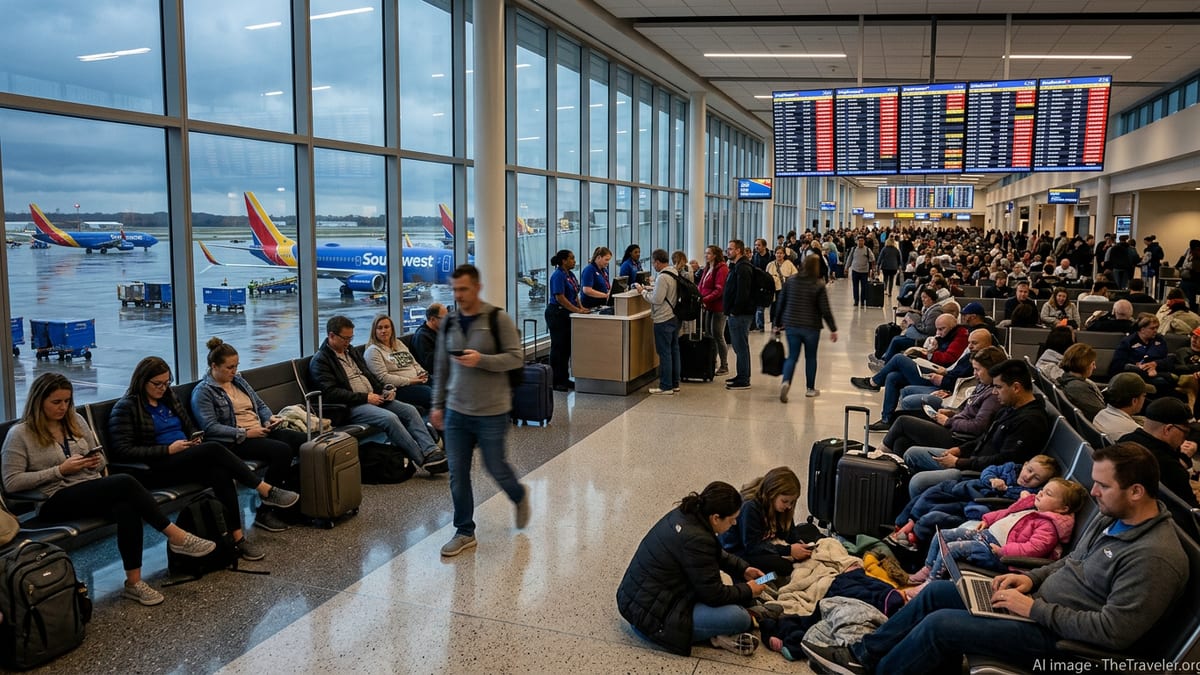
Hundreds of passengers were left stranded at Dallas Love Field on Saturday as 141 flights were delayed and 23 canceled, snarling connections across major U.S. hubs, Europe and Latin America and underscoring the fragility of an already stretched global air travel system.
Operational Snarl Leaves Travelers Sleeping in Terminals
What began as a routine morning at Dallas Love Field quickly descended into frustration as departure boards filled with red and yellow alerts. By midafternoon, a combined 141 departures and arrivals were showing delays, while 23 flights were canceled outright, according to real-time tracking data cited by airport and airline officials. Passengers reported lines snaking through the ticketing hall and security queues repeatedly pausing as new ground holds were issued.
Families headed to school vacations, business travelers bound for Monday meetings and international passengers connecting through major U.S. hubs were among those stuck in the low-slung terminal, home base for Southwest Airlines. Many travelers described a patchwork of explanations from airlines, including crew displacement, lingering weather and flow-control measures introduced to ease congestion in North Texas airspace after a week of turbulent conditions across the central United States.
As the delays stretched into the evening, rows of seats were converted into makeshift beds. Airport concessions extended hours where possible, but many stranded passengers turned to mobile apps to track rebookings, navigate customer service backlogs and search for scarce hotel rooms near the airport and in downtown Dallas.
While Dallas Fort Worth International is the region’s larger global gateway, industry analysts noted that disruption at Love Field can be just as consequential for domestic connectivity. With Southwest operating a dense schedule of short- and medium-haul routes, even a few dozen cancellations can strand aircraft and crews out of position, cascading across the network.
Ripple Effects Hit New York, Los Angeles, Mexico City and Beyond
The disruption in Dallas quickly radiated outward. Flights from Love Field feeding into New York’s LaGuardia and Chicago Midway were among those reporting rolling delays, leaving aircraft arriving late into already congested Northeast airspace. Travelers bound for Los Angeles, Phoenix and Denver described being held at gates without clear departure estimates, as dispatchers waited for updated time slots from air traffic control.
Southbound, knock-on effects were felt in Mexico City, Monterrey and leisure destinations along Mexico’s Caribbean and Pacific coasts. With Dallas serving as a key northbound connection point for U.S. and Canadian travelers returning from winter getaways, delayed departures from Texas left aircraft arriving late into Mexican airports, compressing turnaround times and forcing some late-evening services to be canceled or consolidated.
Across the Atlantic, airline schedulers flagged potential misconnects for passengers heading from Dallas to overnight flights bound for London, Paris and Amsterdam via intermediate hubs such as New York and Atlanta. Even where long-haul flights were operating on time, late-arriving Dallas passengers faced a scramble to clear security, recheck bags or obtain hotel vouchers as onward journeys slipped to the following day.
Industry observers say these kinds of cascading delays highlight how a localized disruption at a medium-size airport can ricochet through a tightly choreographed global network. With aircraft utilization pushed to near pre-pandemic highs and many airlines still rebuilding crew reserves, a narrow margin for error leaves little slack when a hub like Dallas encounters sustained operational stress.
Weather, Equipment Issues and Tight Schedules Expose System Weaknesses
While airlines and officials at Dallas Love Field did not immediately point to a single root cause for Saturday’s disruption, the pattern echoes a series of recent incidents in North Texas. In recent months, winter storms, severe thunderstorms and localized equipment failures impacting air traffic communications have all triggered large-scale delays and ground stops at both Love Field and nearby Dallas Fort Worth International, repeatedly ranking the region among the nation’s worst for on-time performance.
Aviation experts note that winter operations are particularly sensitive at airports with high proportions of short-haul flights such as Love Field. Brief but intense weather systems moving across the central United States can prompt conservative spacing of aircraft, deicing backlogs and sudden ground stops. When combined with tight turnaround schedules and aircraft flying multiple legs per day, a delay of even 45 minutes on an early departure can compound into multi-hour disruptions by late afternoon.
Recent telecommunications and radar outages in the Dallas area have added a further layer of vulnerability, forcing the Federal Aviation Administration to temporarily slow or halt departures while backup systems are activated and safety checks completed. Although these events are relatively rare, each incident strands additional aircraft and crews out of position, making it harder for airlines to recover quickly when the next weather system moves through.
“This is what a brittle system looks like,” one independent aviation analyst said, noting that airlines have optimized schedules for efficiency rather than resilience. “Passengers experience these disruptions as isolated bad-luck events, but they are really symptoms of structural strain in the network, especially at key nodes like Dallas that feed traffic in every direction.”
Passengers Juggle Rebookings, Vouchers and Limited Options
For travelers on the ground, the immediate challenge was practical rather than systemic. Long waits to speak with gate agents and call centers forced many to rely on airline apps to secure scarce seats on later departures. Some passengers reported being automatically rebooked on flights several days out, while others cobbled together multi-stop itineraries through secondary hubs to reach destinations such as New York, Los Angeles and Mexico City.
Compensation varied by airline and the specific cause coded for each disruption. Under U.S. rules, carriers are not required to provide cash compensation for delays or cancellations, even when controllable, but many offer meal vouchers, hotel rooms or frequent-flyer miles as a goodwill gesture when disruptions stretch into overnight stays. On Saturday, some Dallas passengers were handed paper meal vouchers valid only at a subset of airport concessions, while others said they were advised to seek reimbursement receipts later through online claims.
Families with young children and older travelers faced some of the toughest situations. With nearby hotels quickly selling out, several passengers described forming informal support groups in gate areas, taking turns watching luggage while others searched for food or tried to find cots and blankets. Airport staff walked through crowded concourses providing updates and directing those needing mobility assistance or medical support to quieter waiting areas.
Travel advocates again urged passengers to familiarize themselves with airline policies before flying, advising travelers to download carrier apps, keep essential medications and a change of clothes in carry-on bags, and photograph checked luggage in case it is separated during irregular operations. They also emphasized the importance of maintaining up-to-date contact information on itineraries so that automated rebooking offers and alerts reach travelers quickly when disruption hits.
What the Dallas Disruption Signals for Spring Travel
With spring break and the Easter holiday period approaching, Saturday’s turmoil at Dallas Love Field is being watched closely by airlines, regulators and travelers. The latest episode adds to a growing list of operational stumbles across the U.S. network since late last year, many tied to the same mix of volatile weather, staffing challenges and aging infrastructure that affected North Texas this weekend.
Carriers have pledged incremental improvements, from bolstering reserve crews in key cities to investing in more robust scheduling and crew-tracking software. Airport operators, including those in Dallas, are also accelerating modernization programs targeting runways, deicing capacity and terminal technology with the aim of making peak travel periods more manageable. Yet many of these upgrades will take years to fully materialize.
In the short term, experts say travelers passing through Dallas and other central U.S. hubs should build additional buffer time into itineraries, particularly when connecting to last flights of the day or onward long-haul services to Europe and Latin America. Booking earlier departures, opting for longer connection windows and monitoring forecasts for storm systems tracking across Texas and the Midwest can all reduce the risk of becoming stranded.
For the hundreds of passengers still trying to leave Dallas after a day of rolling delays and cancellations, those lessons may have come too late. But their experience, and the visibility it brings to the fragility of the system, is likely to shape how many travelers plan their journeys in the weeks and months ahead.