

More news on this day
A powerful magnitude 5.7 earthquake that struck beneath western Nicaragua has rattled cities across Central America, with strong tremors reported hundreds of kilometers from the epicenter and renewed questions over seismic risk and safety preparedness in the region.
Get the latest news straight to your inbox!
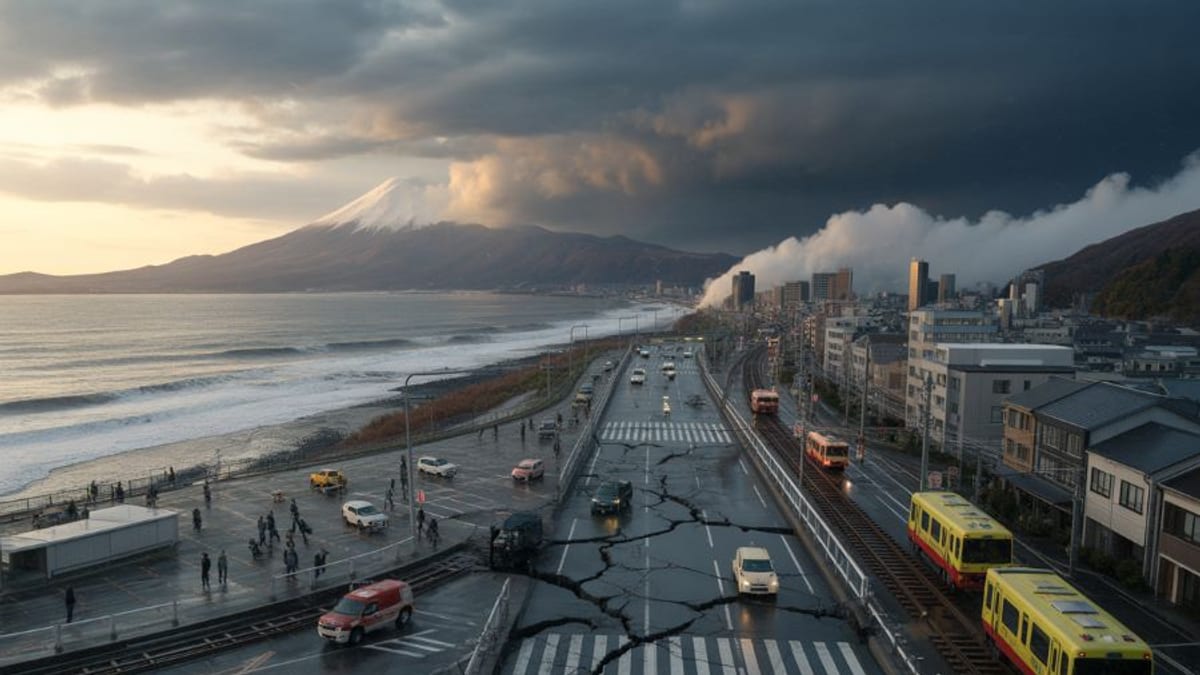
Image by Global Travel Alerts, Advisories, International Travel Alerts
Strong Deep-Focus Quake Rattles Nicaragua and Beyond
Regional monitoring networks report that the earthquake occurred on March 26, 2026, in the Managua region of western Nicaragua, with preliminary estimates placing the magnitude at 5.7 and the hypocenter at a considerable depth of around 150 kilometers. Automatic solutions compiled by international seismological agencies indicate an epicentral area near Ciudad Sandino and Valle San Francisco, just northwest of the capital Managua, a zone already known for active crustal faulting and subduction-related seismicity.
Despite the moderate magnitude, the earthquake’s depth meant that shaking was distributed widely rather than concentrated directly above the epicenter. Travel and hazard dashboards tracking regional intensities suggest that the tremor was felt across much of western Nicaragua and into neighboring parts of Honduras, El Salvador, and Costa Rica, where residents reported prolonged, rolling motion.
Initial instrumental assessments indicate shaking that would generally correspond to light to moderate intensity in urban centers, capable of rattling buildings, displacing unsecured objects, and startling residents, but typically below the threshold for widespread structural damage in well-built properties. However, the variability in local construction standards across Central America keeps concern high whenever a deep event reaches this felt intensity over such a broad area.
As of the latest publicly available updates, there were no immediate reports of major damage or casualties, but local civil-protection agencies in several countries were reviewing infrastructure, transport links, and essential services for potential impacts that may emerge over time, especially in vulnerable rural or informal settlements.
Why Deep-Focus Earthquakes Can Be Widely Felt
Deep-focus earthquakes such as the Nicaragua event occur within the subducting tectonic plate, far beneath the Earth’s surface, rather than on shallow crustal faults. In the Central America region, the Cocos Plate dives beneath the Caribbean Plate along the Middle America Trench, creating a well-known zone of intermediate and deep earthquakes that can reach depths of more than 100 kilometers.
At these depths, seismic waves travel efficiently through dense rock, allowing energy to spread over a large area before reaching the surface. For travelers and residents, this can translate into a puzzling experience: a quake that feels strong and lasts many seconds or even over a minute, while subsequent checks may show only moderate magnitude and limited localized damage.
Seismologists note that while deep earthquakes are less likely to produce catastrophic surface rupture or landslides than shallow events of similar magnitude, they can still pose risks, particularly for older masonry buildings, poorly anchored infrastructure, and hillside communities where prolonged shaking may destabilize slopes already weakened by heavy rain. The broad felt area also highlights the interconnected nature of seismic risk across Central America’s tourism and transport corridors.
For the Nicaragua earthquake, early-phase analyses point to a deep rupture within the subducting plate beneath western Nicaragua, consistent with previous events that have periodically shaken the region without always generating dramatic scenes of destruction, but still serving as a reminder of the underlying tectonic forces at work.
Regional Alerts, Infrastructure Checks and Travel Disruptions
Following the March 26 tremor, regional monitoring systems issued alerts across large parts of Central America, reflecting both the magnitude and the population exposed to noticeable shaking. Aviation and maritime advisories reviewed potential impacts, while land transportation networks performed rapid assessments of highways, bridges, and critical links serving cross-border routes.
Early reports from travel-information services did not indicate large-scale, long-lasting disruptions to airports or major highways, although localized inspections around Managua and other urban centers were prioritized. Publicly shared updates from bus and intercity transport companies suggested temporary delays as operators checked depots, terminals, and key overpasses.
Tourism-dependent destinations along Nicaragua’s Pacific corridor, including beach towns and eco-lodges, engaged in routine checks of accommodations, water tanks, and hillside access roads. For visitors already in the country, many hotels and tour operators circulated basic safety information and reminders on what to do during potential aftershocks, even though deep-focus events often generate fewer and smaller aftershocks than shallow quakes.
Across neighboring countries, civil-protection systems maintained a heightened monitoring posture in the hours following the mainshock, watching for any secondary hazards such as localized landslides in steep terrain. No tsunami alert was warranted, given the earthquake’s depth and inland epicentral region, a key distinction travelers often look for when quakes occur near the Pacific coast.
Traveler Safety: Practical Guidance for Visitors in Central America
The Nicaragua event underscores the importance of basic earthquake readiness for anyone traveling in seismically active regions, even when visiting primarily for leisure. Travel advisories and risk briefings typically recommend that visitors familiarize themselves with local emergency procedures, including evacuation routes from hotels, hostels, and vacation rentals.
During strong shaking, the standard guidance is to stay indoors if already inside a structurally sound building, moving away from windows and unsecured objects and taking cover under sturdy furniture while protecting the head and neck. If outside, individuals are advised to move cautiously toward open areas away from facades, power lines, and trees, avoiding stairways and elevators until shaking fully stops.
After a felt earthquake, travelers are encouraged to monitor local news and official communication channels for any updates on infrastructure, road closures, or service interruptions. It is also prudent to check the structural condition of accommodations, particularly in older or informal buildings, and to report any visible cracks, leaning walls, or damaged stairways to property managers.
For those planning upcoming trips to Nicaragua or neighboring countries, current information suggests that tourism infrastructure remains broadly operational, but flexible itineraries and travel insurance that covers natural hazards can provide additional reassurance in an environment where seismic events are a recurring reality.
Seismic Risk Along a Busy Tourist Corridor
Western and central Nicaragua sit on one of the most active seismic belts in the Americas, part of a broader chain that includes Costa Rica, El Salvador, Guatemala, and southern Mexico. Historical records and scientific studies describe a pattern of both shallow crustal quakes near populated cities and deeper subduction events like the recent 5.7, each contributing differently to the region’s overall hazard profile.
Many of Central America’s most popular travel destinations lie within this corridor, from colonial cities and volcanic highlands to surf breaks and coastal resorts fronting the Pacific. The combination of growing tourism infrastructure, dense urban settlements, and varied building standards means that even moderate earthquakes frequently prompt renewed discussions around preparedness, building codes, and cross-border cooperation on early warning systems.
The March 26 deep-focus earthquake adds one more data point to this evolving picture, reinforcing the message that seismic risk in Central America is not confined to rare, headline-grabbing megaquakes. Instead, a continuum of events, including magnitude 5 to 6 tremors at different depths, shapes everyday safety considerations for residents, travelers, and the tourism industry alike.
For travel planners, tour operators, and independent visitors, this latest event highlights the value of integrating up-to-date seismic information, local safety culture, and resilient infrastructure into destination choices and on-the-ground behavior, ensuring that memorable journeys through Nicaragua and its neighbors remain as safe as possible in a naturally dynamic region.