

Delaware may be one of the smallest states in the United States, but its culture is surprisingly rich and layered. From Native homelands along the tidal rivers to colonial town greens, from quiet farm roads to lively Atlantic boardwalks, the First State blends deep history with everyday traditions that still shape local life. Travelers who pause between Wilmington’s brick streets and the broad sands of Rehoboth Beach discover a place where community ties, seasonal celebrations, and a strong sense of identity define the rhythm of the year.
First Peoples and the Deep Roots of Delaware
Long before Europeans arrived, the land that is now Delaware was home to Indigenous peoples whose descendants still live here today. The Lenape, often called Lenni Lenape or Delaware people, lived along the Delaware River and its tributaries, organizing life around seasonal planting, fishing, and hunting. South of them, the Nanticoke people sustained villages near the rivers and marshes of what is now Sussex County, drawing food and material from the rich estuary ecosystems. Their presence is not only a matter of distant history; both communities remain active cultural forces in modern Delaware.
Today, the Lenape Indian Tribe of Delaware is a state-recognized tribe centered in Kent County. Tribal leaders emphasize cultural continuity, from language revitalization efforts to participation in multicultural festivals and regional Indigenous gatherings that highlight the enduring presence of Native communities. The Nanticoke Indian Tribe, based near Millsboro, maintains a community center and museum that serve both as cultural anchors for tribal members and educational spaces for visitors interested in the stories of the First State’s original inhabitants.
Seasonal celebrations underscore how living these traditions remain. The Nanticoke Indian Museum prepares for its annual Heritage Day in early May, inviting the public to experience storytelling, dance, and traditional food such as succotash and fry bread at its wooded site near the Indian River. Lenape and Nanticoke groups also collaborate with cultural institutions and universities, joining conferences on Indigenous rights and agriculture and contributing to exhibitions like Living Indigenous at the Delaware Art Museum. These events place Native voices at the center of Delaware’s cultural conversation.
For travelers, spending time at a tribal museum or community festival offers a different view of Delaware than beaches and tax-free outlets. You might watch a circle of dancers move in time with hand drums, listen to stories that describe local rivers and forests in Indigenous languages, or browse beadwork and woodcarving that reflect centuries of adaptation and resilience. Such encounters remind visitors that the modern state rests on older homelands, and that Native communities are shaping Delaware’s future as well as preserving its past.
Colonial Foundations and the First State Identity
Delaware’s official nickname, the First State, refers to its status as the first of the original thirteen colonies to ratify the United States Constitution in 1787. That milestone grew out of a much longer colonial history tied to the Delaware River and the Atlantic Coast. Early European settlements by the Dutch and Swedes gave way to English control, and towns like New Castle, Dover, and Lewes developed around courthouses, churches, and ports. Today, visitors can trace this history in brick facades, cobblestone alleys, and graceful town greens that still function as civic gathering places.
First State National Historical Park, created in the 2010s, stitches together several of these historically significant sites across Delaware and a small portion of neighboring Pennsylvania. From the green in New Castle and the old courthouse used during the colonial period to preserved tracts of Brandywine Valley countryside, the park gives context to Delaware’s early political and legal development. Walking tours and ranger talks frequently explore the state’s role in debates over independence, religious tolerance, and governance in the mid-Atlantic region.
In Dover, the State House and its surrounding historic district help explain how Delaware’s political culture took shape. The town green, framed by eighteenth and nineteenth century buildings, still hosts public events that echo an older tradition of citizens gathering to discuss issues, celebrate victories, or mark solemn anniversaries. The layering is part of the charm: school field trips and everyday government business unfold against a backdrop of brickwork and slate roofs that recall earlier eras.
Delaware’s identity as a small but influential state runs through local narratives. Residents speak of a “small-town feeling” that extends even into urban areas, where it is not uncommon to meet state officials at neighborhood events or see the same faces at farmers markets and community meetings. This intimacy is part of the First State character: politics, business, and culture are intertwined on a scale where personal relationships still matter, and history feels close at hand.
Coastal Towns, Beaches, and the Rhythm of Summer
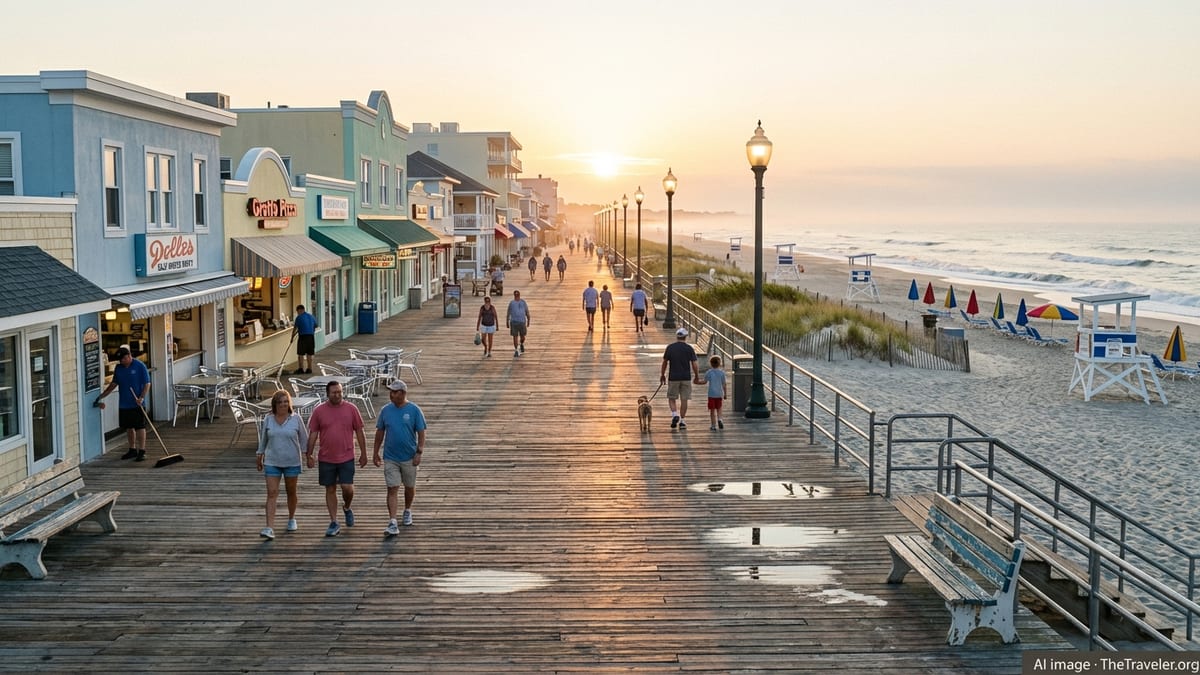
For many travelers, Delaware’s culture is first encountered on its oceanfront. Rehoboth Beach, Bethany Beach, and Dewey Beach form a string of Atlantic towns that swell in the warm months, drawing vacationers from Washington, D.C., Philadelphia, and beyond. Rehoboth Beach in particular has long billed itself as a kind of seasonal capital, a walkable town with a mile-long wooden boardwalk lined with shops, arcades, and casual eateries. The aroma of salt air mixes with boardwalk fries and caramel popcorn as families and groups of friends drift from the surf to the amusement rides and live music at the Rehoboth Beach Bandstand.
The boardwalk culture is multigenerational. Children ride the same small-scale thrill rides their parents did at the locally run Funland amusement park, while retirees enjoy benches facing the waves and early-morning walks on the sand. In the evening, the bandstand hosts free performances that become informal town gatherings, with beach chairs clustered in front of the stage and people stopping to chat along the main avenue. It is beach culture at a human scale, rooted less in resort glitz than in mid-Atlantic living room familiarity.
Delaware’s coastal culture also includes vibrant LGBTQ communities, particularly around Rehoboth Beach. Decades of activism, shifting local politics, and the success of gay-owned restaurants, inns, and shops have helped transform the town into one of the mid-Atlantic’s most established LGBTQ friendly beach destinations. South of the boardwalk, Poodle Beach has become a well-known gathering spot for gay men, while nearby areas and neighboring state park beaches attract a diverse mix of visitors. This visible inclusion gives the town a relaxed, open atmosphere that many travelers find welcoming.
Beyond the boardwalks, coastal life spreads into quieter marshes, bays, and small towns like Lewes. Charter boats depart for fishing trips, kayakers slide into tidal creeks lined with reeds and osprey nests, and bayside communities hold summer concerts and farmers markets near marinas. The Atlantic coast sets the tempo: crabbers setting pots at dawn, lifeguards raising flags on guarded beaches, and evening crowds queuing for ice cream along streets lit by a slow, golden sunset.
Foodways, Farms, and the Taste of the First State
Delaware’s food culture reflects a blend of coastal, Southern, and mid-Atlantic influences. Along the shore, crab cakes, fish sandwiches, and clam chowder fill menus at casual shacks and more polished restaurants. Inland, poultry farms and cornfields shape the diet, and farm stands heap seasonal produce along country roads, especially in Kent and Sussex Counties. The state is small enough that seafood and farm products move quickly from source to plate, and many chefs build menus around what is available in a given week.
Traditional Indigenous foods still appear at cultural events and festivals. At Nanticoke Heritage Day and similar gatherings, visitors regularly encounter dishes such as succotash made with corn and beans, and flatbreads cooked on griddles for tacos or as sides. These recipes echo pre-contact foodways adapted over centuries of contact with European and African cuisines. They serve both as comfort food for community members and as an accessible way for non-Native visitors to learn about local history through taste.
Beer lovers know Delaware for its leading role in the American craft brewing movement. Rehoboth Beach is home to the original brewpub of Dogfish Head, one of the country’s best known craft breweries, which began experimenting with unusual recipes and local ingredients in the 1990s. That creative spirit influenced a broader scene of small breweries and taprooms around the state, where tasting rooms now function as social hubs hosting trivia nights, live music, and food trucks.
Beyond beer, many Delaware communities prize simple, familiar fare tied to local institutions. Chains that began as single storefronts along the coast, such as a well-known pizza brand founded in Rehoboth Beach in the 1960s, have grown into regional fixtures while retaining a sense of hometown loyalty. In Wilmington and Newark, diners, bakeries, and multicultural restaurants line main streets near universities and office buildings, reflecting the growing diversity of the state. Whether you are eating blue crabs at a backyard picnic, grabbing sandwiches before a University of Delaware football game, or sampling chowder on a windswept boardwalk, food remains a key way Delawareans connect with one another.
Festivals, Faith, and Community Traditions
Annual festivals give a strong rhythm to Delaware’s cultural calendar. Some of the most visible events draw visitors from around the region, like the Firefly Music Festival in Dover, which rose within a decade to become one of the East Coast’s major multi-day music gatherings. For several days each summer, national touring acts, camping fans, and food vendors transform The Woodlands near Dover into a temporary city of stages, light installations, and late-night performances. For locals, the festival is both an economic engine and a striking contrast to the otherwise quiet farmland and racetrack next door.
Other celebrations are deeply rooted in specific communities. The Big August Quarterly in Wilmington, dating back to the early nineteenth century, is widely described as one of the nation’s oldest African American religious festivals. It grew out of the African Union Church founded by Peter Spencer, offering a time for free Black residents and enslaved people from surrounding areas to gather in worship, fellowship, and mutual support. Today, the festival still highlights gospel music, preaching, and family reunions, while also serving as a showcase for local vendors and civic groups.
Native communities maintain their own cycles of celebration. In addition to Heritage Day at the Nanticoke Indian Museum and seasonal events hosted by the Lenape Indian Tribe of Delaware, tribal members often participate in regional powwows and heritage months, sharing dance, drum circles, and traditional crafts. These events sometimes partner with schools, public media, and museums, helping to educate Delawareans of all backgrounds about Indigenous history and contemporary life.
Newer festivals reflect the state’s evolving diversity. Multicultural events, like the Our Delaware Cultural Festival held in 2025, bring together communities from across the state to share music, dance, and food in a single public space. At such gatherings, you might move in a single afternoon from an Irish dance performance to a Caribbean steel drum band to an Indigenous storytelling session, illustrating how Delaware’s cultural profile has broadened beyond its early European and African American roots. Churches, mosques, temples, and secular community centers also host their own seasonal celebrations, from holiday bazaars and oyster suppers to Diwali lights and Ramadan iftars, adding layers of meaning to the state’s shared calendar.
Art, Music, and Everyday Creativity
Delaware’s art scene tends to operate on an intimate scale, with regional museums, community theaters, and local galleries playing outsized roles in cultural life. In Wilmington, the Delaware Art Museum curates both historical collections and contemporary exhibitions, including collaborations with Indigenous partners such as the Living Indigenous show developed with the Nanticoke Indian Museum. These exhibitions center the perspectives of local and regional artists, weaving their work into conversations about identity, land, and the upcoming 250th anniversary of the United States.
At the coast, the Clear Space Theatre Company in Rehoboth Beach presents a year-round schedule of plays and musicals, providing professional-level performances for residents and visitors in a small theater just off the main avenue. Summertime productions draw families from the boardwalk, while off-season shows give local audiences a cultural anchor when the beach crowds thin. Nearby, art leagues and co-op galleries display photography, painting, and sculpture that often focus on coastal landscapes, working watermen, and small-town scenes.
Music is woven into daily life throughout the state. The Rehoboth Beach Bandstand hosts free outdoor concerts in the summer, featuring everything from brass ensembles and tribute bands to singer-songwriters and community choirs. In Wilmington and Newark, independent venues and campus spaces support jazz, rock, hip hop, and classical performances. Church choirs and school bands play an important role in many towns, especially during holiday parades and civic ceremonies.
Creativity is also visible in places that might not register as formal arts institutions. Murals brighten brick walls in Wilmington, telling stories of neighborhood history and honoring local heroes. Farmers markets host craft vendors selling handmade soaps, woodworking, and jewelry. Even the decoration of beach houses along the Atlantic, with their painted porches, nautical motifs, and homemade signs, becomes a form of vernacular art that visitors absorb while walking or cycling through town.
Local Life: From Small Town Streets to University Greens
For residents, Delaware’s culture is less about isolated attractions than about the feel of everyday life in compact communities. Many towns still revolve around a central main street or green, where post offices, libraries, and small businesses sit within a short walk of each other. On weekday mornings you might see state employees hurrying toward offices in Dover, retirees chatting over coffee in Milford, and farm trucks passing through town before heading back to fields outside city limits.
Wilmington, the state’s largest city, anchors the northern region with its corporate towers, riverfront redevelopment, and historic neighborhoods. In recent years, new apartments, restaurants, and arts venues have joined longstanding rowhouse blocks and corner stores, creating a mix of old and new. Commuter trains and interstate highways tie Wilmington closely to Philadelphia and other mid-Atlantic cities, yet the local culture still emphasizes personal networks and neighborhood pride.
Education plays a central role in shaping Delaware’s local identity. The University of Delaware in Newark gives that town a youthful energy, with students filling cafes, bookshops, and music venues along Main Street. Game days bring a surge of school colors and tailgate gatherings, while research programs and visiting scholars contribute to the state’s intellectual life. Delaware State University in Dover, a historically Black institution, is a major cultural and economic force, hosting conferences, performances, and public events that reach beyond campus boundaries.
Across the state, volunteerism and civic engagement remain important. Fire companies, many still volunteer-based, hold fundraising dinners and open houses. Neighborhood associations organize clean-ups and block parties. Local governments invite residents to public hearings on development and environmental policy, particularly around sensitive areas such as the coastal wetlands and agricultural lands. In this context, culture is not only expressed through festivals and museums, but also through the quiet, ongoing work of shaping shared spaces and policies.
The Takeaway
Delaware’s culture cannot be reduced to a single image of a beach chair or a historic courthouse. It is a mosaic built from Indigenous homelands, colonial experiments, African American spiritual gatherings, immigrant stories, and the everyday routines of people who live between city skylines and marsh grass. Travelers who look beyond the state border signs and outlet billboards discover a place where community ties are close, history is layered into the landscape, and local traditions continue to evolve.
Whether you spend time at a Lenape or Nanticoke heritage event, attend an art exhibition that foregrounds Indigenous or contemporary voices, walk the Rehoboth boardwalk at dusk, or listen to gospel choirs at the Big August Quarterly, you will experience facets of a living culture rather than a static postcard. Delaware rewards curiosity. Its small size makes it easy to move from a town green to a university campus, from a museum gallery to a bayside pier, gathering stories and impressions along the way.
For many visitors, what lingers after a trip to the First State is not a single attraction but the feeling of having been welcomed into a network of small communities. That feeling rests on traditions old and new, carried forward by Delawareans who see their state not only as a place on the map, but as a shared project in which culture is made every day.
FAQ
Q1. What Native American tribes are associated with Delaware today?
The Lenape Indian Tribe of Delaware and the Nanticoke Indian Tribe are both state-recognized communities, maintaining cultural centers, museums, and public events.
Q2. Why is Delaware called the First State?
Delaware is known as the First State because it was the first of the original thirteen colonies to ratify the United States Constitution in 1787.
Q3. What is unique about Delaware’s beach culture?
Delaware’s beach towns combine family-friendly boardwalks, local amusement traditions, and a strong LGBTQ presence, especially in Rehoboth Beach and nearby stretches of shoreline.
Q4. Which festivals best showcase Delaware’s African American heritage?
The Big August Quarterly in Wilmington is a long-running African American religious and cultural festival that highlights worship, music, and community history.
Q5. How can visitors learn about Indigenous culture in Delaware?
Travelers can visit the Nanticoke Indian Museum near Millsboro, attend heritage days and powwows, or explore programs and exhibits developed with the Lenape Indian Tribe of Delaware.
Q6. What role does food play in Delaware’s cultural identity?
Food connects coastal seafood traditions, Indigenous dishes like succotash at cultural events, and a strong craft beer scene anchored by pioneering breweries.
Q7. Is Delaware mainly urban or rural in character?
Delaware mixes a small urban core in Wilmington with extensive rural and small-town areas, especially in Kent and Sussex Counties, giving the state a varied feel.
Q8. What arts experiences are available for travelers?
Visitors can explore the Delaware Art Museum in Wilmington, community theaters like Clear Space Theatre in Rehoboth Beach, and local galleries, murals, and live music venues statewide.
Q9. How important is the University of Delaware to local life?
The University of Delaware shapes Newark’s atmosphere with students, research, and cultural events, and contributes significantly to the state’s educational and civic life.
Q10. What is the best way to experience everyday life in Delaware?
Spending time on town main streets, visiting farmers markets, attending local festivals, and talking with residents offer the most authentic sense of Delaware’s daily culture.