

More news on this day
Passengers traveling through London Gatwick today, Thursday 2 April, are encountering a patchy but noticeable pattern of delays and cancellations, with early-morning disruption on several European and domestic routes and knock‑on schedule changes continuing into the afternoon.
Get the latest news straight to your inbox!
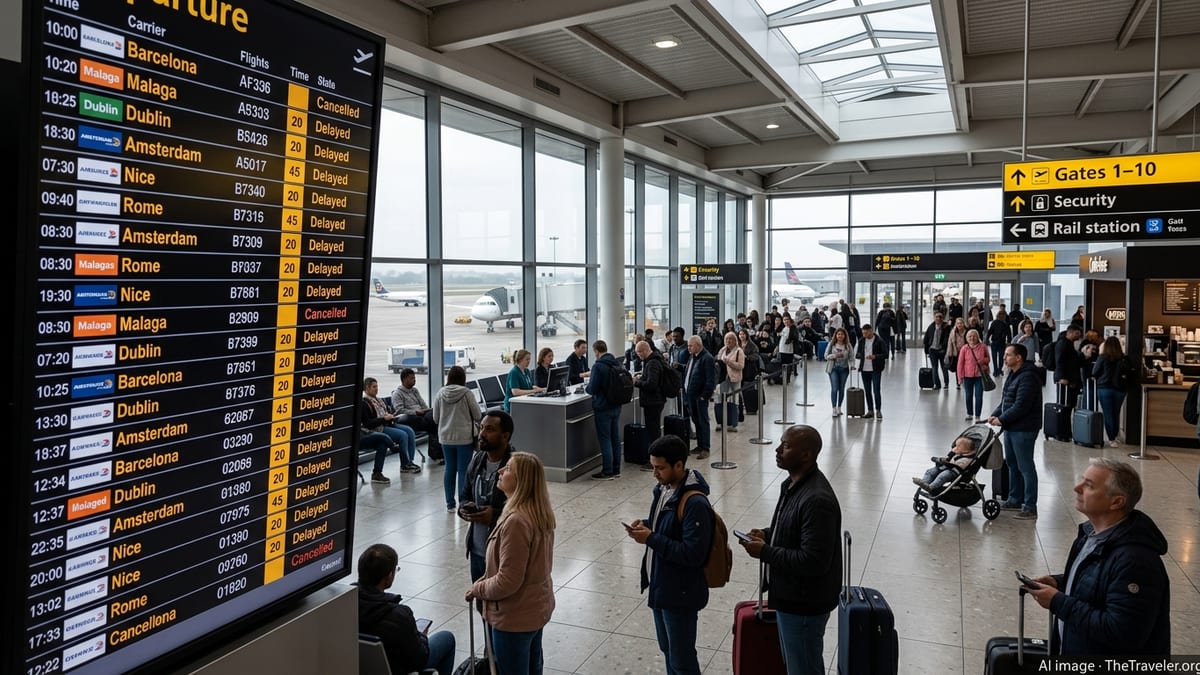
Image by SussexWorld
Flight status snapshot for Thursday 2 April
Publicly available live flight boards for London Gatwick on Thursday 2 April show a moderate level of disruption rather than wholesale chaos, with the majority of departures and arrivals operating close to schedule but a visible band of delayed services in the early morning peak. Short‑haul European routes are seeing the greatest impact, particularly departures to popular city and holiday destinations.
By late morning, data from flight‑tracking services indicated a cluster of services running 30 to 60 minutes behind schedule, alongside a smaller number subject to longer holds or cancellations. Some of these relate to aircraft arriving late from earlier sectors, leading to rolling delays as airlines attempt to recover their timetables.
Arrivals into Gatwick appear to be faring slightly better than departures in terms of outright cancellations, although several inbound flights have been re‑timed or placed into holding patterns. This has created some congestion at terminal stands and baggage collection during the busiest periods.
Despite the disruption, overall capacity at Gatwick remains high, and most carriers are continuing to operate full or near‑full schedules. Travellers are nevertheless being advised through airline channels and travel alerts to allow additional time at the airport and to monitor flight status frequently throughout the day.
Weather and air‑traffic factors behind today’s disruption
Weather over southern England and the near Continent on Thursday 2 April appears to be a contributing factor to the pattern of delays at London Gatwick. Forecasts and aviation weather feeds point to periods of low cloud and gusty winds at times, conditions that can necessitate increased separation between aircraft and more conservative runway operations.
Crosswinds and changing visibility typically have more effect on single‑runway airports such as Gatwick, where there is limited flexibility to switch operations between multiple runways. When arrival or departure rates are trimmed, even slightly, delays can build quickly during peak waves before gradually easing later in the day.
In addition to local conditions, air‑traffic control flow measures across parts of Europe are influencing some of today’s schedules. Restrictions on certain routes or at specific destination airports can prompt airlines to adjust departure times from Gatwick, either by holding aircraft on the ground or re‑sequencing flights to make best use of available slots.
Operational adjustments introduced in recent years, such as advanced spacing tools and updated approach procedures, are designed to improve resilience and reduce airborne holding, but they do not completely remove the risk of timetable disruption when several factors coincide.
Airlines and routes most affected so far
The impact of today’s disruption at Gatwick is not uniform across all carriers and destinations. Short‑haul European services, including city breaks and leisure routes around the Mediterranean and Iberian Peninsula, feature prominently in the list of delayed flights, reflecting their heavy reliance on quick turnarounds and complex aircraft rotations.
Domestic services within the United Kingdom and Ireland have also seen some schedule changes, particularly in the early part of the day when crews and aircraft were still repositioning from earlier sectors. Where airlines operate tight wave patterns, a single inbound delay can cascade into multiple outbound services before recovery plans take effect.
Long‑haul departures from Gatwick appear comparatively less affected, although some wide‑body flights have pushed back later than planned to accommodate connecting passengers or to align with revised slot times along their routes. These delays are generally shorter in number, but they can still affect arrival times at far‑flung destinations.
Low‑cost and leisure carriers that use Gatwick as a major base are working to absorb the disruption within their existing fleets, at times swapping aircraft between routes or consolidating lightly booked services where schedules and regulations allow. Such measures can help stabilise operations but may result in last‑minute gate or aircraft changes for passengers at the terminal.
Guidance for passengers flying through Gatwick today
Travel advisories issued through airline channels and airport information platforms on Thursday 2 April emphasise the importance of checking flight status frequently before setting out for Gatwick. Many carriers are urging passengers to use mobile apps, text alerts or email notifications, which are usually updated more quickly than static departure boards away from the airport.
Passengers are being encouraged to arrive in line with their airline’s recommended check‑in times, or slightly earlier where possible, particularly during the morning and late‑afternoon peaks. With some services being re‑timed at short notice, being already airside can reduce the risk of missing a suddenly brought‑forward boarding call or a substitute flight.
Those facing significant delays or cancellations are being directed to manage their bookings online where self‑service tools are available, including options to rebook onto later services, request vouchers or explore alternative routings from other London airports. In some cases, airlines are offering flexible change policies for passengers willing to switch to off‑peak departures.
Travellers with tight onward connections, especially those linking from Gatwick to rail services or flights at other London airports, may need to revisit their plans in light of today’s conditions. Advisories recommend building in generous buffers between separate tickets and considering contingency options such as earlier trains or coach transfers.
Outlook for the rest of the day
Looking ahead to Thursday afternoon and evening, operational forecasts for Gatwick suggest a gradual improvement in punctuality if weather conditions follow current projections and no additional air‑traffic constraints emerge. As the morning backlog is worked through, airlines typically gain more room to re‑sequence flights and position aircraft where they are most needed.
However, some residual delays are likely to persist into the later bank of departures, particularly on routes that rely on aircraft cycling through multiple European airports during the day. Any fresh disruption at those outstations could re‑introduce delays into Gatwick’s evening programme.
Observers of recent performance at London airports note that days starting with moderate disruption can still finish with relatively stable operations if airlines and air‑traffic managers are able to take advantage of quieter mid‑day periods. The focus at Gatwick today appears to be on maintaining safe and steady flows rather than compressing schedules to recover every minute of lost time.
Passengers travelling later today are still advised to treat flight times as subject to change and to keep a close eye on the latest information from their airline. With conditions evolving through the day, flexible planning remains the best safeguard against surprise interruptions to journeys via London Gatwick on Thursday 2 April.