

More news on this day
Travelers moving through Harry Reid International Airport in Las Vegas on March 18 are experiencing a fresh wave of disruption, as publicly available tracking data shows at least six flight cancellations and numerous rolling delays on Southwest Airlines and Delta Air Lines routes serving key domestic and international cities.
Get the latest news straight to your inbox!
Southwest and Delta Disruptions Ripple Across Key Routes
Flight-status boards at Harry Reid International Airport reflect a morning and midday marked by interruptions to normal operations. Data from airline trackers and aviation dashboards indicates that Southwest and Delta, two of the largest carriers at the Las Vegas hub, have each scrubbed several departures while pushing back departure times on others. In total, at least six flights operated by the two airlines are listed as canceled, alongside a growing list of delays.
The affected services include short-haul and medium-haul routes linking Las Vegas with Phoenix, Burbank and other major western gateways, as well as longer-range services tied into Delta’s Minneapolis hub. International connectivity has also felt the strain, with schedule changes affecting transatlantic itineraries that connect through Frankfurt and other European gateways, complicating plans for long-haul travelers.
Southwest and Delta together move a significant share of passengers through Harry Reid International, which has reported millions of monthly travelers in recent traffic updates. Against that backdrop, even a modest cluster of cancellations and delays is enough to create crowded gate areas, longer customer-service lines and mounting frustration among visitors heading to or departing from Las Vegas.
While the number of canceled flights remains limited compared with peak holiday disruptions, the uneven pattern of delays has added uncertainty for passengers trying to make tight connections or align their arrivals with time-sensitive events on the Las Vegas Strip and beyond.
Weather and Network Constraints Add Pressure
The latest setback at Harry Reid International comes as parts of North America grapple with unsettled weather and lingering operational strain across airline networks. Recent storm activity affecting the Upper Midwest has placed additional pressure on carriers that rely on Minneapolis as a connecting hub, and publicly available meteorological summaries show that airlines have preemptively thinned schedules in that region in recent days to manage safety and recovery.
Disruptions in one part of a carrier’s network can easily ripple outward. When morning departures from hubs like Minneapolis or Phoenix are delayed or canceled due to weather or airspace constraints, aircraft and crews that would later operate flights into and out of Las Vegas may not arrive on time. This type of knock-on effect appears to be a factor in some of the delays now appearing at Harry Reid International.
Operational data suggests that congested airspace and tighter turnaround times are also contributing to the slower movement of aircraft through the system. Even when conditions in Las Vegas remain favorable, broader network challenges can leave local passengers facing extended waits at gates or on the tarmac as airlines work to reposition aircraft and balance schedules.
Industry observers note that while Las Vegas is known primarily as a leisure market, its connectivity to key hubs such as Phoenix, Minneapolis and international points like Frankfurt is vital for both tourism and business travel. Any sustained disruption on those links can have an outsized impact on visitor flows into southern Nevada.
Impact on Passengers at Harry Reid International
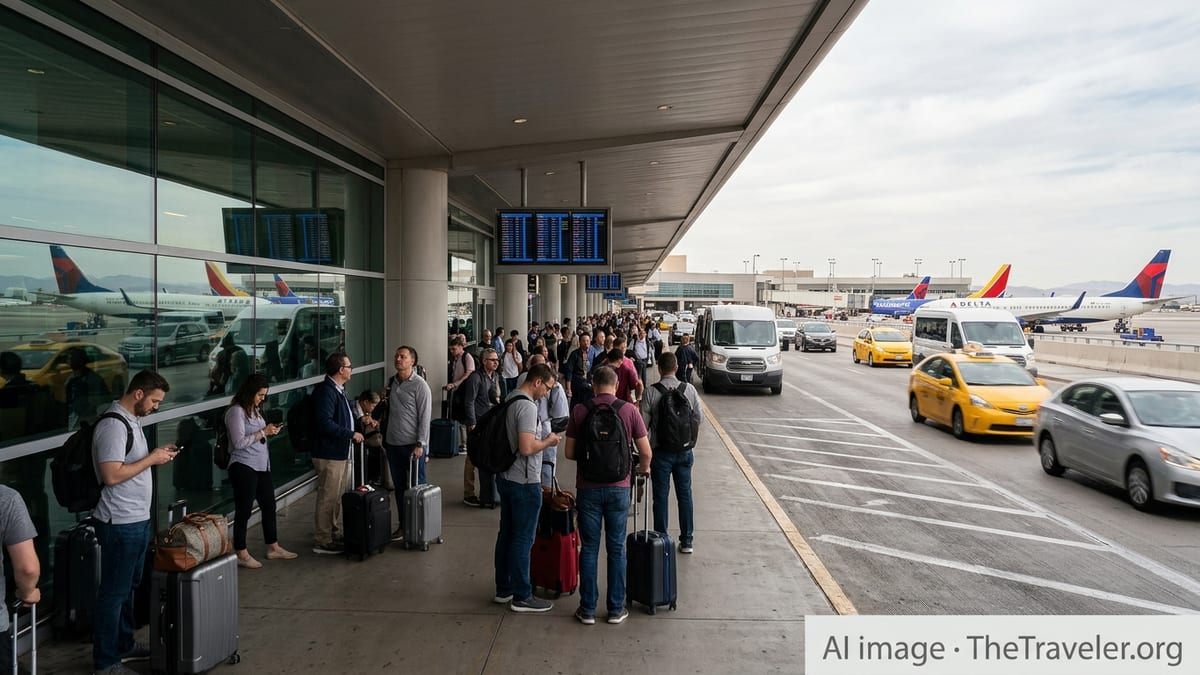
For travelers, the immediate effects of the cancellations and delays are being felt in longer lines, shifting departure times and a scramble to rebook itineraries. Publicly accessible images and social media posts from inside the terminal show busy concourses and crowded seating areas near the affected gates, as passengers wait for updated boarding information.
Those booked on nonstop flights between Las Vegas and western cities such as Phoenix and Burbank are facing particular inconvenience, as many of these routes are popular for short getaways, business day trips and conference travel. Even minor schedule changes can disrupt meetings, event attendance and carefully timed hotel check-ins along the Strip and in nearby resort areas.
Travelers relying on Delta connections through Minneapolis or European links via Frankfurt face an additional layer of complexity. Missed onward flights may mean extended layovers or unexpected overnight stays, especially for those heading to smaller regional airports that have fewer daily departures. Reaccommodation options can be limited when disruptions affect multiple flights in a single day.
Families and leisure travelers who planned tightly packed itineraries around shows, sporting events and other entertainment in Las Vegas may find themselves reordering activities or abandoning some plans altogether. For inbound visitors, even a few hours’ delay can cut into precious vacation time in a destination that markets itself on maximizing every moment.
Broader Context for Las Vegas Air Travel
The latest operational issues arrive at a time when Harry Reid International continues to handle high volumes of passengers, supported heavily by Southwest and Delta services. Recent traffic reports from the airport highlight that Southwest remains the dominant carrier in terms of passenger numbers, while Delta maintains a substantial presence, particularly for travelers connecting to the Midwest, East Coast and Europe.
Analysts point out that Las Vegas has rebounded strongly from the lows of the pandemic era, with conventions, major sporting events and large-scale entertainment residencies drawing visitors year-round. This recovery means that any interruption to air service, even when relatively limited in scale, can quickly translate into visible congestion and elevated stress levels in the terminal.
Published coverage of recent North American storm impacts and flight disruptions underscores the fragility of tightly wound airline schedules, particularly during periods of volatile weather. While the cluster of issues at Harry Reid International on March 18 does not approach the scale of historic systemwide meltdowns, it illustrates how regional weather systems and operational constraints can still cause noticeable friction for travelers in a high-demand leisure market.
For Las Vegas, which depends heavily on reliable air links to feed its tourism-driven economy, maintaining resilience in the face of such disruptions remains an ongoing challenge. Continued investment in airport infrastructure, coupled with adaptive scheduling strategies by airlines, will be critical to reducing the impact of similar setbacks during future peak travel periods.
What Travelers Can Expect in the Short Term
In the near term, travelers scheduled to fly into or out of Harry Reid International on Southwest or Delta should be prepared for the possibility of further schedule adjustments. Publicly available tracking tools show that same-day flight statuses are still in flux, with additional delays possible as aircraft and crews work back into regular rotation.
Passengers on routes touching key nodes such as Phoenix, Minneapolis, Burbank and Frankfurt may see revised departure or arrival times as airlines continue to fine-tune their operations. Those with tight connections or fixed arrival commitments are likely to be most affected, particularly if their journeys involve late-evening or overnight segments.
Industry reporting suggests that once weather systems stabilize and backlogs clear at major hubs, airlines typically recover schedules over the course of a day or two. However, during periods of sustained demand in busy markets like Las Vegas, residual delays can linger longer than expected as carriers work through the accumulation of earlier disruptions.
For now, the situation at Harry Reid International on March 18 serves as a reminder that even outside of peak holiday windows, travelers remain vulnerable to sudden schedule shifts driven by forces both inside and outside the Las Vegas airfield. Monitoring flight status closely and allowing extra time for connections continue to be prudent steps for anyone moving through one of the United States’ busiest leisure gateways.