

More news on this day
Travelers across central and eastern Canada faced fresh disruption on Friday as a cluster of delays and cancellations hit Billy Bishop Toronto City Airport, affecting key regional routes operated by Porter Airlines and Air Canada Jazz to Montreal, Ottawa and Halifax.
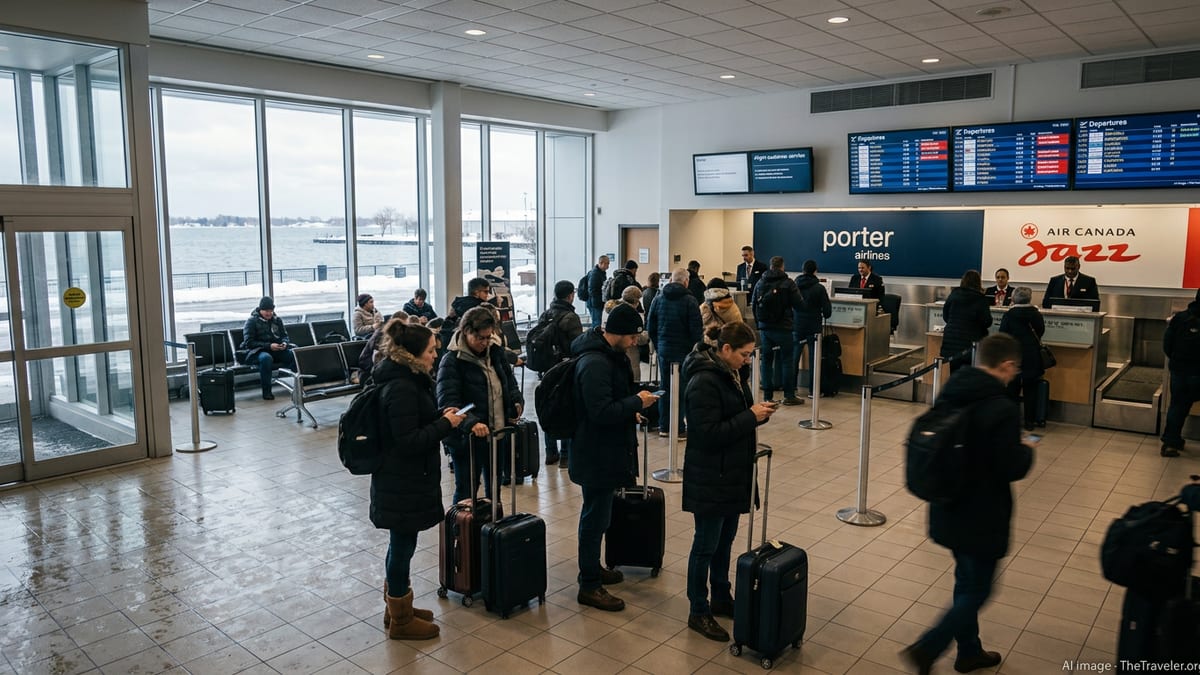
Island Airport Operations Hit by Wave of Disruptions
By mid-afternoon on March 6, operations at Billy Bishop Toronto City Airport had been marred by seven delayed departures and seven outright cancellations on services flown by Porter Airlines and Air Canada Jazz. The disruption concentrated on heavily used business and leisure corridors linking downtown Toronto with Montreal, Ottawa and Halifax, leaving passengers scrambling to adjust travel plans.
Real-time departure boards showed multiple Porter departures to Ottawa, Montreal and Halifax posting extended delays, while several Air Canada Jazz-operated flights to Montreal and Ottawa were scrubbed from the schedule. Although the airport continued to handle other movements, the concentration of problems among these two carriers meant hundreds of passengers experienced missed meetings, broken connections and unplanned overnight stays.
The issues at Billy Bishop followed a difficult stretch for air travel in central Canada, where a series of winter weather systems and tight airline schedules have frequently left little margin for recovery when operational snags occur. Friday’s disruptions demonstrated how even a relatively small number of affected flights can cascade across a regional network, particularly at a downtown airport with limited runway and gate capacity.
Airport officials did not immediately provide a detailed breakdown of the causes behind each delay and cancellation, but airlines cited a mix of weather-related constraints in the region, air traffic flow controls and aircraft rotation challenges following an already busy travel week.
Passengers in Montreal, Ottawa and Halifax Bear the Brunt
The impact of Friday’s disruption extended far beyond Toronto’s waterfront, as travelers in Montreal, Ottawa and Halifax saw their inbound and outbound plans upended. Morning and midday passengers at Montreal’s Trudeau Airport and Ottawa’s international airport reported repeated boarding-time revisions for Jazz-operated flights to Billy Bishop, with some ultimately being cancelled after hours of rolling delays.
In Halifax, a key Porter link to downtown Toronto experienced both a protracted delay and a subsequent cancellation on separate rotations, catching eastbound and westbound passengers alike in a tangle of rebookings. For many, the attraction of flying directly into Toronto’s core was quickly overshadowed by the uncertainty of getting there at all.
Business travelers relying on tight same-day returns were particularly exposed. Corporate travel managers in Ottawa and Montreal said staff were forced to shift last-minute to virtual meetings or re-route via Toronto Pearson International Airport when options from Billy Bishop disappeared. Some leisure travelers, meanwhile, faced the prospect of losing portions of their weekend plans as they queued at airline counters seeking alternatives.
With aircraft and crews tied up, seats on replacement flights were limited. Travelers reported being offered rebookings later in the evening or on Saturday, and in some cases being advised to consider departures from Pearson instead, adding ground-transport time and additional logistics to already disrupted itineraries.
Porter Airlines and Air Canada Jazz Under Scrutiny
Friday’s events have once again put the spotlight on Porter Airlines and Air Canada Jazz, the two dominant carriers at Billy Bishop. Porter, which has rapidly expanded its network in recent years, now operates the majority of movements at the island airport, while Jazz, flying under the Air Canada Express banner, maintains a crucial link for the flag carrier into downtown Toronto.
Operational data and passenger accounts over the past winter indicate that both carriers have faced recurring challenges keeping tightly timed schedules intact when confronted with low visibility, strong winds or heavy snow in the confined environment of the island airport. When conditions deteriorate, disruptions can quickly multiply as aircraft and crew are displaced from their planned rotations.
Industry analysts note that Billy Bishop’s short runway, waterfront location and defined operating hours mean airlines have less flexibility to “wait out” adverse conditions or run significantly late into the night. Instead, they are often forced into hard choices between long delays and cancellations. On Friday, that dynamic appeared to play out again, with a cluster of cancellations arriving after extended earlier delays suggested schedules were no longer recoverable.
While there is no indication of systemic safety concerns, passengers have increasingly voiced frustration over communication and rebooking policies when flights do not operate as scheduled. Both Porter and Air Canada Jazz advise travelers to monitor airline apps and airport boards closely on days with volatile weather, but for many travelers on Friday, information arrived in small increments, leaving them unsure whether to wait, rebook or attempt alternative routes.
Weather, Capacity and a Fragile Winter Schedule
Friday’s wave of disruptions unfolded against the backdrop of a winter that has repeatedly tested Canadian aviation. The Toronto region has seen several significant snow and wind events since January, including storms that forced extensive cancellations and delays at both Toronto Pearson and Billy Bishop. Even when skies appeared improved, residual constraints on aircraft positioning and crew duty-hours have lingered.
At a compact airport like Billy Bishop, those constraints are magnified. With limited gates, no overnight 24-hour operating window and a schedule built around frequent short-haul flights, any sizable delay in the morning can echo throughout the day. On March 6, early-morning delays on some departures to Montreal and Ottawa set the stage for tighter turnarounds later in the schedule, reducing the buffer to absorb further weather or air-traffic slowdowns.
Capacity pressures are also playing a role. Porter’s rapid growth and the planned expansion of services by Air Canada from the island have increased competition, but they have also raised questions about how much disruption the small airport can absorb on difficult days. While additional frequencies normally provide more options to travelers, they also mean more flights relying on the same constrained runway and airspace, particularly during peak morning and late-afternoon banks.
Airline planners and airport officials have argued that updated infrastructure and careful schedule design can mitigate many of these issues, but Friday’s events underscore how fragile winter operations remain when Mother Nature and busy timetables collide.
What Stranded Travelers Are Being Told to Do
As delays and cancellations mounted on Friday, airline staff at Billy Bishop directed affected passengers to check in at service desks or use mobile apps to secure alternative arrangements. In many cases, travelers were offered seats on later flights the same day, though availability was limited on key business routes to Montreal and Ottawa.
Some passengers were encouraged to consider rerouting through Toronto Pearson, where both Air Canada mainline and other carriers offer additional frequencies to major Canadian and U.S. destinations. This option, however, required travelers to arrange their own transit from the downtown airport to Pearson, adding time and cost to journeys that were initially chosen for convenience.
Consumer advocates reiterated that passengers whose flights are significantly delayed or cancelled for reasons within an airline’s control may be entitled to compensation or assistance under Canada’s air passenger protection regulations. Determining whether Friday’s disruptions fell into those categories will depend on whether the delays are ultimately attributed to weather, air-traffic restrictions or internal airline issues such as crew and maintenance planning.
For now, both airlines and travelers are watching the forecast and operations closely, hoping that Friday’s problems at Billy Bishop mark a short-lived setback rather than the beginning of another prolonged period of winter travel turmoil across Canada’s busy regional corridors.