

More news on this day
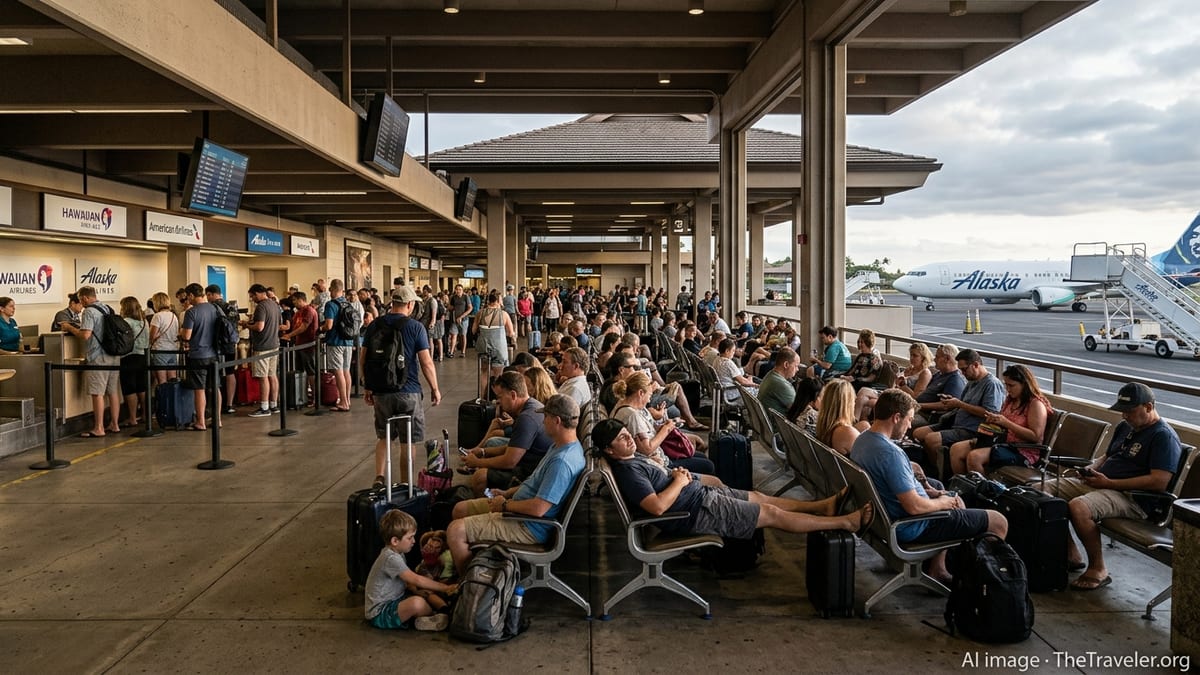
Hundreds of travelers faced hours-long waits at Ellison Onizuka Kona International Airport on the Island of Hawaiʻi after a cluster of delays and cancellations disrupted at least 15 departures, affecting major carriers and key mainland and interisland routes.
Get the latest news straight to your inbox!
Wave of Disruptions Hits Busy Island Gateway
Publicly available flight-status data on Saturday indicated that Ellison Onizuka Kona International Airport recorded at least 11 delayed departures and four cancellations over the course of the day, an unusually high number for the small but busy West Hawaiʻi hub. The disruptions affected a mix of mainland and interisland flights, leaving passengers stretched along concourses and filling open-air waiting areas as they searched for alternative options.
The pattern of delays developed through the morning and afternoon, with knock-on effects into the evening schedule. Some of the most heavily impacted flights were bound for major West Coast gateways, while others were short-haul services connecting Kona with Honolulu, Kahului, and Līhuʻe, which serve as vital links for residents and visitors moving between islands.
While exact passenger counts for each flight were not immediately available, typical load factors on peak-season services out of Kona suggest that several hundred people were either unable to depart as planned or faced significant changes to their itineraries. Many remained in the terminal for extended periods as aircraft and crews were repositioned.
The disruptions came at a time when Hawaiʻi continues to attract strong leisure demand, and when airlines have been operating tighter schedules with less spare capacity. That made it harder for carriers to move affected travelers onto later departures without creating additional bottlenecks.
Major U.S. Airlines Among Those Affected
The disturbance in Kona’s operations spread across several prominent U.S. carriers. According to airline and airport tracking boards, Hawaiian Airlines, American Airlines, and Alaska Airlines were among those listing delayed or canceled services, alongside other domestic operators with smaller footprints in the islands.
Hawaiian Airlines, which maintains a substantial interisland network and a range of mainland connections into Kailua-Kona, appeared on multiple delay notices. American and Alaska, both key links between Hawaiʻi and the U.S. West Coast, also showed schedule changes on routes that typically feed passengers to and from Los Angeles, Seattle, Phoenix, and other large hubs.
For travelers, the distinctions between carriers mattered less than the combined effect of the disruptions. With several airlines adjusting their operations at the same time, options to rebook onto competing flights were limited. Seats on remaining departures quickly filled, and some travelers were left considering overnight stays or complex routings through Honolulu or other islands.
Industry observers note that when irregular operations hit a geographically isolated market like Hawaiʻi, the impact can feel more acute than at large mainland hubs. With fewer alternative airports within easy reach, passengers are often reliant on the same small group of carriers and aircraft to get moving again.
Key Mainland Routes Face Knock-On Effects
The latest disruptions also underscored the importance of Kona’s nonstop links to the continental United States. Schedules showed delays and cancellations touching routes that connect the Big Island with Los Angeles and other major West Coast cities, itineraries that are critical both for tourism and for residents traveling for work, education, or medical care.
On days when multiple departures to the mainland are delayed or withdrawn, passengers can be pushed onto a handful of remaining options or forced to backtrack through Honolulu, adding hours to journeys that are already among the longest domestic flights in the U.S. In some cases, travelers risk missing onward connections to the East Coast or international destinations.
Published coverage and historical traffic data highlight Kona’s role as a growing gateway for nonstop flights from California and the Pacific Northwest, reflecting demand from visitors seeking direct access to resort areas along the island’s west coast. Any sustained pattern of disruption on these routes can quickly ripple through hotel check-in times, rental-car returns, tour departures, and other elements of the visitor economy.
For local residents, who often plan trips around limited departure windows, a canceled or heavily delayed mainland flight can mean lost vacation days, rescheduled medical appointments, or missed family events. When entire aircraft loads are stranded simultaneously, local ground transportation and accommodation can also come under pressure.
Passenger Experience Strained by Crowded Terminals
As delays accumulated, scenes inside Ellison Onizuka Kona International Airport reflected the strain. Kona remains one of Hawaiʻi’s more compact commercial airports, where passengers typically board via mobile stairs rather than jet bridges and where much of the waiting space is semi-open-air. Under normal conditions, that layout contributes to a relaxed island atmosphere. When several flights are held back at once, however, waiting areas can quickly become congested.
Reports from travelers on social platforms described long lines at airline counters and customer-service desks, where passengers sought rebooking assistance or clarification on updated departure times. Families traveling with small children and older visitors appeared particularly affected, with limited quiet spaces available once scheduled boarding times slipped further into the evening.
Crowded conditions can also strain amenities at a smaller airport. Seating, charging points, food outlets, and restrooms are designed around typical passenger flows. When hundreds of additional people remain in the terminal for hours beyond their planned departure times, those facilities can become overtaxed, contributing to frustration even when airlines provide vouchers or other compensation.
Some travelers arriving on time for later flights found themselves entering an environment already backed up by earlier disruptions, making it difficult to distinguish between normal crowds and those waiting out cascading delays. That can add uncertainty for visitors unfamiliar with the airport’s usual rhythms.
Part of a Wider Pattern of Operational Volatility
The issues in Kona came against a backdrop of heightened operational volatility across parts of the aviation sector. In recent years, airlines serving Hawaiʻi and other leisure-focused markets have grappled with fleet transitions, staffing constraints, and weather-related challenges, all of which can reduce the flexibility needed to recover quickly from day-of-operation disruptions.
Published analyses of U.S. airline performance point to thinner buffers in many carriers’ schedules, which can amplify the effects of relatively small interruptions. In a setting like Kona, where there are no nearby alternate airports of similar scale, a single aircraft arriving late or experiencing technical issues may trigger hours of follow-on adjustments.
For travelers, the latest events serve as a reminder of the value of contingency planning, particularly when flying to or from island destinations. Travel advisors commonly recommend leaving extra time before critical connections on the mainland, monitoring flight-status tools closely, and considering travel insurance options that cover weather and operational disruptions. While such measures do not prevent delays, they can reduce financial and logistical stress when flights do not operate as scheduled.
As airlines update schedules and reposition aircraft, future days of operations at Ellison Onizuka Kona International Airport will reveal whether the latest wave of delays and cancellations is a brief anomaly or an early sign of a more prolonged period of disruption for one of Hawaiʻi’s key visitor gateways.