


More news on this day
Travelers at Miami International Airport are facing ongoing delays and cancellations after an Amazon-branded cargo jet overran a runway and crashed, killing five people and injuring at least five more, according to multiple news reports.
Get the latest news straight to your inbox!
Runway overrun triggers deadly crash near busy terminal
Publicly available information indicates the Boeing 767 freighter, operating for Amazon Air and flown by North Carolina-based carrier 21 Air, was arriving from San Juan, Puerto Rico, when it attempted to land on Runway 30 at Miami International Airport on Sunday afternoon, September 6. The aircraft reportedly touched down late and failed to stop, continued past the runway end, crossed a roadway and struck several vehicles before coming to rest in a nearby parking area, where it burst into flames.
Reports from national and local outlets state that five people were killed in the incident and five others were injured. The fatalities include occupants of vehicles hit beyond the airport perimeter, while the injured were transported to area hospitals. Images and video published by local broadcasters show the aircraft largely intact but blackened by fire, surrounded by emergency vehicles and foam.
The Miami-Dade Aviation Department has said in public statements cited by news organizations that the aircraft overran a diagonal runway and came to a stop at the northwest side of the airfield. The crash occurred during a busy afternoon travel period, amplifying its impact on passenger operations across the airport’s network of domestic and international flights.
Federal safety investigators have opened an inquiry into the event. According to published coverage, the investigation is focusing on where the jet touched down, its speed and braking performance, runway conditions, and potential mechanical or weather-related factors.
Flight disruptions ripple through Miami International
With emergency crews, investigators and heavy equipment occupying a large portion of the airfield, Miami International Airport has been operating with reduced runway capacity. Industry-focused outlets report that two of the airport’s four runways remained closed through at least Monday morning, limiting the number of arrivals and departures that could safely be handled at peak times.
The Federal Aviation Administration issued a ground stop for flights bound for Miami shortly after the crash, initially through midafternoon and later extended into the early evening on Sunday, according to transportation reporting. That action temporarily halted many inbound flights at their origin airports, while aircraft already airborne were subjected to holding patterns and diversions.
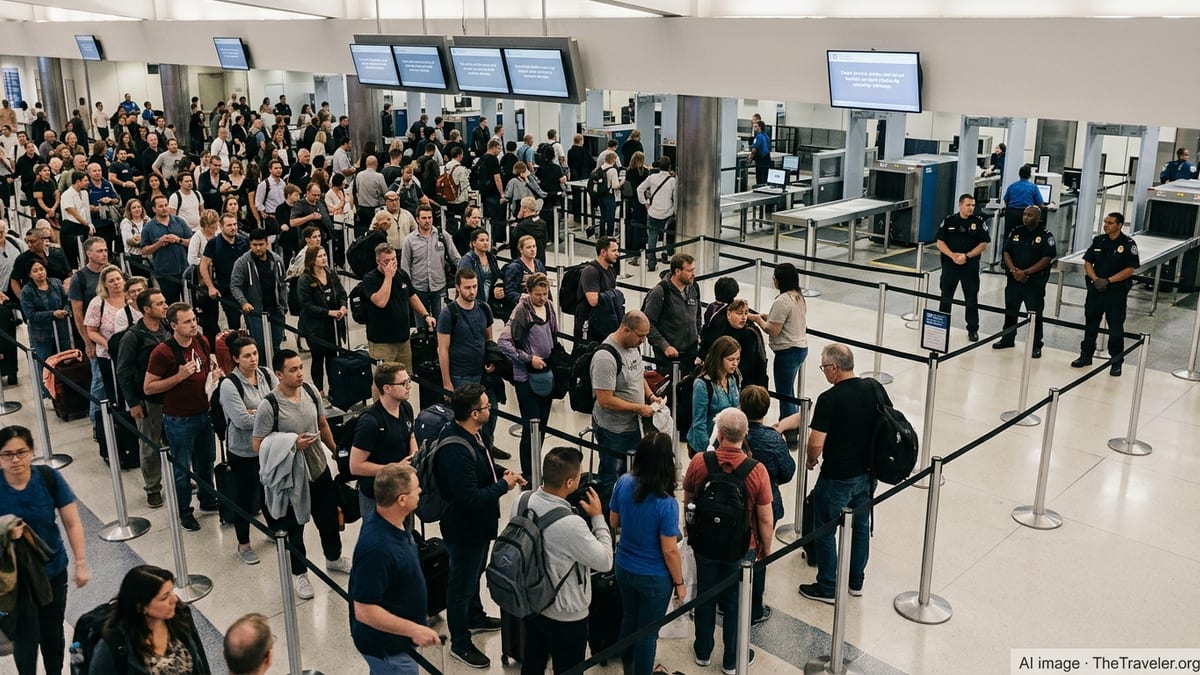
Local broadcast coverage from South Florida describes long lines at airline check-in counters and security checkpoints as passengers attempted to rebook after cancellations or significant delays. Departing travelers reported flight pushes stretching several hours, while some arrivals were rerouted to nearby airports in Fort Lauderdale and West Palm Beach.
As of Monday, publicly available flight tracking data cited by multiple outlets continued to show elevated delay and cancellation levels at Miami compared with a typical early September day. Passengers with upcoming itineraries through the hub have been advised in those reports to monitor their flight status closely and allow extra time at the airport while the situation stabilizes.
Impact on cargo operations and Amazon’s air network
The incident also disrupted one of the United States’ busiest air cargo gateways. Miami International is a key hub for freight traffic between the mainland, Latin America and the Caribbean, and Amazon uses contracted carriers to feed packages through the airport as part of its Amazon Air network.
According to aviation industry reporting, the damaged Boeing 767 had been flying regular routes in the Caribbean region, including frequent trips between Puerto Rico and South Florida. The loss of the aircraft, combined with the temporary closure of runways and taxiways, has constrained nighttime cargo movements and sorting operations around the airport’s freight facilities.
Amazon has acknowledged the crash in public statements carried by news organizations, describing the event as a tragedy and noting that the aircraft was operated by its partner airline. Logistics analysts quoted in published coverage suggest the e-commerce giant has enough flexibility in its global fleet and ground network to reroute some shipments, but localized delays for South Florida customers and regional partners are likely as flight schedules and ground flows are adjusted.
Freight specialists note that Miami’s role as a consolidation point for high-value and time-sensitive goods means any prolonged runway restrictions can affect trucking connections and onward flights, including those carrying perishable goods and medical supplies. Airlines and cargo handlers are working within the remaining runway capacity to prioritize critical shipments while accommodating diverted traffic.
Investigators focus on landing, weather and aircraft performance
The National Transportation Safety Board has dispatched a team to Miami to lead the investigation, and early updates summarized in national coverage outline several areas of focus. Investigators are examining where along the runway the aircraft first made contact with the pavement, how much stopping distance remained, and whether the crew attempted a go-around before the overrun.
Specialists will also analyze detailed flight data and cockpit voice recordings once the recorders are recovered, as well as maintenance histories and any recent technical issues reported on the aircraft. Weather at the time of landing, including wind shifts, rain intensity and runway surface conditions, forms another line of inquiry highlighted in aviation reporting.
Runway excursions are a recurring concern for safety regulators, and the Miami crash has revived discussions about landing performance margins, crew training, and the potential value of additional safety technologies at busy airports. Commentators in the aviation community have noted that Miami’s main runways are comparatively long, which places added attention on operational factors such as approach speed, touchdown point and braking configuration.
Officials have indicated in public briefings reported by the media that a preliminary report is expected within a few weeks, but a full analysis of the causes and any safety recommendations could take many months. In the meantime, the damaged aircraft remains at the edge of the airfield as investigators document the wreckage and plan its removal.
What travelers through Miami should know now
For passengers traveling through Miami in the coming days, airline and airport updates carried by news outlets emphasize the importance of checking flight status frequently, particularly for afternoon and evening departures when runway demand is highest. Some carriers have issued flexible rebooking options for customers whose flights are directly affected by the ongoing disruptions.
Travel experts cited in published coverage recommend that travelers with tight connections consider building in additional layover time or, where feasible, routing through alternative hubs until Miami’s full runway capacity is restored. Those starting or ending journeys in South Florida are encouraged to consider nearby airports if schedule flexibility is limited.
Within the terminals, travelers can expect heavier crowds near customer service desks and at security checkpoints when waves of delayed flights are retimed. Allowing extra time in the travel plan, monitoring airline apps closely, and remaining prepared for gate or schedule changes can help mitigate some of the stress associated with the current situation.
As investigators continue their work and runway repairs progress, Miami International is expected to gradually return to normal operations. For now, the deadly overrun of an Amazon-branded cargo jet has left a visible mark on one of the region’s most important transportation hubs and serves as a stark reminder of the complex safety and operational challenges at major global airports.
CBS News Miami coverage of delays and cancellations
ABC News report on the Amazon cargo plane overrun