


More news on this day
Flights in and out of Indonesia’s capital resumed early Tuesday after ash from Anak Krakatau forced a shutdown of Jakarta’s main airports for nearly two days, disrupting hundreds of thousands of journeys across the region.
Get the latest news straight to your inbox!
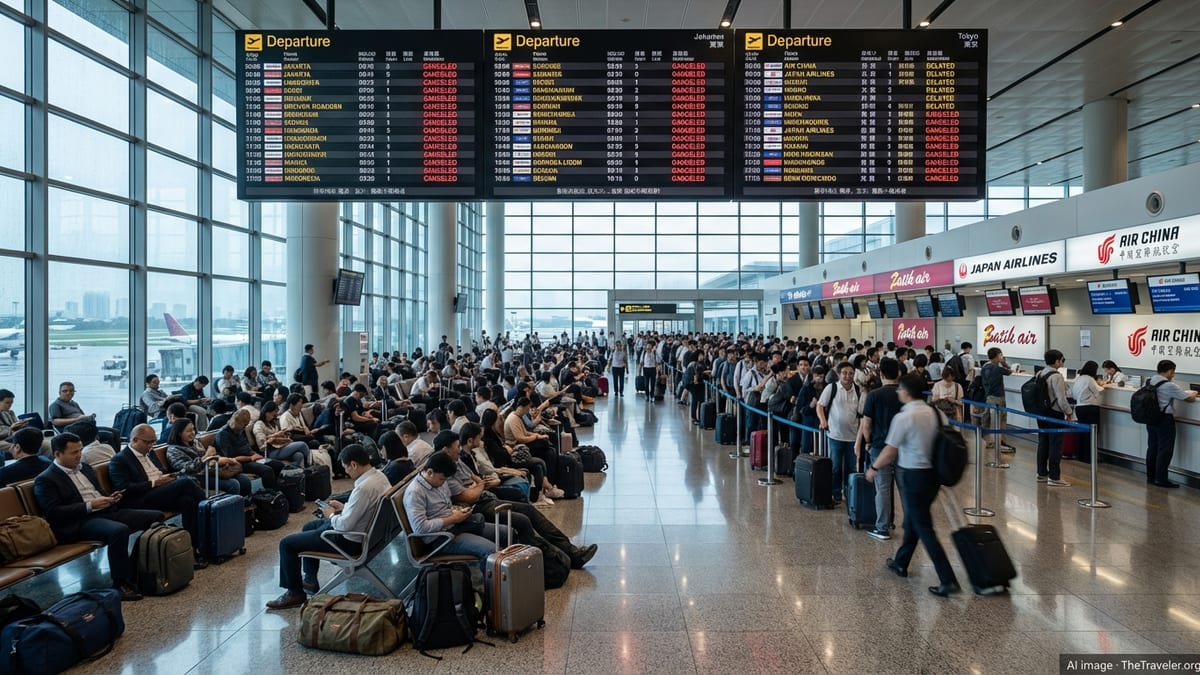
Key Jakarta hubs reopen after widespread shutdown
Indonesia’s main international gateway, Soekarno Hatta International Airport near Jakarta, restarted operations just after midnight local time on September 8, following assessments that volcanic ash had cleared from critical flight paths. The capital’s secondary Halim Perdanakusuma Airport and Husein Sastranegara Airport in Bandung also reopened within minutes, restoring scheduled services for domestic and regional connections.
According to published coverage, the decision followed a series of test flights and repeated ground level ash checks that returned negative results around Jakarta’s primary airport. Reports indicate that aviation and meteorological agencies agreed conditions had improved sufficiently to lift notices that had kept runways closed since Sunday.
The reopening marks a turning point after ash from Anak Krakatau drifted across western Java and southern Sumatra, triggering what Indonesian media describe as one of the country’s most disruptive aviation shutdowns in recent years. Earlier updates from transport authorities showed up to eight airports closed at various points as the ash plume shifted with prevailing winds.
While Jakarta’s main hubs are operating again, travel advisories note that flight schedules remain altered as airlines work through a backlog of passengers and reposition aircraft that had been diverted to alternative airports during the closures.
Thousands of passengers affected and schedules still fragile
Publicly available data compiled from government briefings and wire service reporting shows that nearly 3,000 flights have been cancelled, delayed or diverted since Anak Krakatau’s latest eruptive phase intensified on Friday. Estimates in international coverage put the number of affected passengers at well over 300,000 as airlines across Asia adjusted routes to avoid the ash cloud.
Indonesia’s transport ministry previously extended airport closures through late Monday to allow further inspections of runways, taxiways and parked aircraft that had been exposed to ash fall. Airline statements indicate that several carriers, including major domestic groups, cancelled or consolidated services into the evening of September 7 before gradually restoring operations once the reopening times were confirmed.
Even with Jakarta’s airports back online, schedules remain fragile. Carriers are advising passengers to monitor flight status throughout Tuesday and Wednesday as crews and aircraft are rotated back into normal patterns. Travellers connecting through Jakarta from other parts of Southeast Asia may still experience missed connections or changed routings while airlines clear stranded customers from regional hubs.
Some international passengers have reported being rerouted through alternative airports such as Singapore and Kuala Lumpur during the closure period. Industry analysts note that the impact on regional networks is likely to continue for several days as long haul services are rescheduled and spare capacity is allocated to recovery flights.
Monitoring continues as Anak Krakatau remains active
Anak Krakatau, a volcanic island in the Sunda Strait between Java and Sumatra, entered a more intense eruptive phase late last week with a short but powerful eruption recorded in the early hours of Sunday. Monitoring agencies reported continuous tremors and ash emissions, prompting Indonesia’s disaster authorities to maintain elevated alert levels around the volcano.
Updates from Indonesia’s geological and volcanology agencies describe ongoing but fluctuating activity, with bursts of ash and gas rising several thousand meters above the crater. Satellite imagery and regional aviation alerts continue to track the height and direction of the ash plume, which initially drifted northeast toward Jakarta before shifting with changes in upper level winds.
Officials have kept a maritime exclusion zone around Anak Krakatau and urged communities along nearby coastlines to remain cautious, though there are no indications of large scale evacuations in major population centers. Travel industry observers note that the main impact so far has been on aviation, with land travel in Jakarta and other cities operating largely as normal despite reports of fine ash dusting some urban areas over the weekend.
Volcanologists quoted in regional media characterize Anak Krakatau’s latest phase as significant but not unprecedented, pointing out that the volcano has produced similar eruptive bursts in past years. However, the proximity of the ash cloud to one of Southeast Asia’s busiest air corridors has amplified its effect on international travel.
What travelers transiting Jakarta should expect now
For travelers planning to use Jakarta as a gateway, airline and airport notices emphasize that operations have resumed but with some constraints. Passengers arriving in the next 48 hours are being advised in public statements to allow extra time for check in and security, and to confirm their flight status directly with carriers before heading to the airport.
Airport operator updates indicate that both Soekarno Hatta and Halim Perdanakusuma have cleared visible ash from runways and aprons, and that navigation systems and lighting are functioning normally. Cleaning work continues in non critical areas of the terminals, and some airlines are using adjusted gate allocations while ground handling teams work through the buildup of parked aircraft.
Travel platforms and airline advisories also highlight the possibility of temporary slot limitations as air traffic control manages the return of heavy traffic volumes into Jakarta’s airspace. This can result in holding patterns on approach or minor departure delays, even when local weather conditions are favorable and ash concentrations remain low.
Hotels near the airport corridors report elevated occupancy from travelers whose weekend departures were cancelled, and some carriers have extended waiver policies allowing one time free changes for tickets to or from Jakarta over the affected dates. Industry watchers suggest that flexible booking options and travel insurance with disruption coverage can be particularly valuable for itineraries through Indonesia during active volcanic periods.
Longer term implications for Indonesia’s aviation and tourism
The Anak Krakatau episode underscores Indonesia’s exposure to volcanic risks across its archipelago, which hosts more active volcanoes than any other country. Jakarta’s temporary isolation from air links over the past two days has prompted fresh discussion in local media about the resilience of aviation infrastructure and contingency planning for large scale ash events.
Transport policy commentators point to the use of alternative airports such as Kertajati in West Java during the closure as an example of how additional runway capacity can help absorb shocks to the system. Government statements before the reopening referred to diversion strategies and coordination between airport operators, air navigation providers and airlines in managing the disruption.
Tourism analysts expect that the short term impact on Indonesia’s visitor numbers will depend on how quickly confidence in the stability of air services is restored. Major destinations such as Bali and Yogyakarta have remained accessible by air, but the visibility of Jakarta’s closure in global headlines may prompt some travelers to watch conditions more closely when planning trips in the coming weeks.
At the same time, Indonesia’s regular experience with volcanic hazards has led to an increasingly standardized response framework for aviation, including ash detection, rapid dissemination of flight notices and coordinated reopening decisions once conditions improve. The swift resumption of operations at Jakarta’s airports, combined with ongoing monitoring of Anak Krakatau’s activity, is likely to be seen as a critical test of that system by airlines and travelers alike.
Indonesia reopens Jakarta airport, four others after Anak Krakatau ash clears – Kontan/Reuters
Jakarta airport and others reopen after volcanic ash crisis – CNA
Flights to and from Indonesia's capital resume after volcanic eruption forced closure – AP
Update on airports affected by Anak Krakatau ash – Indonesian Ministry of Transportation