

More news on this day
Delta Air Lines experienced a fresh operational setback at Salt Lake City International Airport this week, canceling five flights and triggering a cascade of delays that disrupted major routes to New York, Phoenix, Spokane, Albuquerque, Atlanta and several other cities across the carrier’s network.
Get the latest news straight to your inbox!
Wave of Cancellations at a Key Western Hub
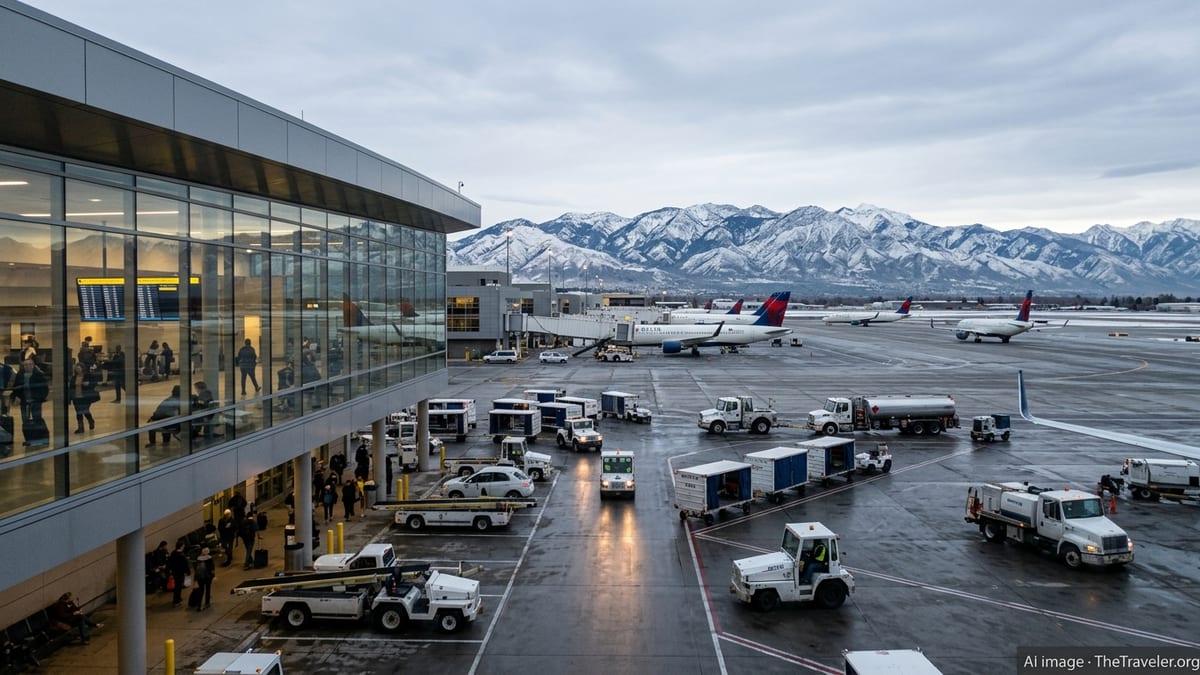
Salt Lake City International Airport serves as one of Delta’s primary hubs in the western United States, handling a high volume of connecting traffic between coastal cities and smaller regional markets. The decision to cancel five flights at the airport therefore had an outsized effect, leaving aircraft and crews out of position and compressing already tight schedules.
Publicly available flight-tracking data for the day of the disruption show that the cancellations at Salt Lake City were accompanied by numerous delays on remaining departures and arrivals. The affected flights included both mainline jets and regional connections, illustrating how closely integrated Delta’s operations are at the airport.
The pattern mirrors recent periods of strain seen across the broader US network during intense weather and winter storm systems, when even a relatively small number of cancellations at a hub can quickly translate into hours of missed connections and rebookings for travelers.
Reports from passengers indicate that some itineraries involving Salt Lake City were revised multiple times as the carrier attempted to re-thread aircraft rotations and reassign crews. Others described extended waits at gates as departure times were repeatedly pushed back, even on flights that ultimately operated.
Major Routes to New York and the East Coast Affected
Among the most visible impacts were disruptions on routes linking Salt Lake City with New York, a critical corridor for both business and leisure travelers. Flights connecting to major New York–area airports are typically timed to feed morning and evening banks of transcontinental and international services, so interruptions there often create a ripple effect for onward connections.
On the day of the Salt Lake City disruption, New York-bound passengers reported lengthy delays, misaligned connections, and in some cases last-minute rebookings onto later departures or alternative routings through other Delta hubs. Published coverage of recent network performance has highlighted how congestion at eastern hubs, combined with storm systems affecting the Midwest and Northeast this month, has narrowed the margin for recovery when a western hub experiences additional strain.
For travelers originating in New York and connecting westbound through Salt Lake City, the disruptions translated into missed links to secondary markets and a greater reliance on same-day standby availability. Some travelers were routed through Minneapolis or Atlanta instead, underscoring how the airline’s multi-hub strategy can provide alternatives but also spreads the operational impact across several airports.
Industry analysts note that this kind of disruption underscores the vulnerability of long-haul transcontinental itineraries when a single hub encounters capacity constraints, especially during a period of heightened weather volatility and heavy late-winter traffic.
Knock-on Delays to Phoenix, Spokane and Albuquerque
While headline routes to New York attracted the most attention, the cancellation of five flights at Salt Lake City also had tangible consequences for travelers bound for mid-sized cities such as Phoenix, Spokane and Albuquerque. These markets often rely heavily on connecting traffic through Delta’s hub structure, with Salt Lake City serving as a primary bridge between smaller communities and the national network.
Flight-status records show rolling delays on several departures to the Southwest and Inland Northwest following the initial cancellations. Longer-than-usual layovers, missed evening connections and overnight stays became part of the travel experience for some passengers who had planned relatively straightforward one-stop journeys via Salt Lake City.
Travel forums and social media posts from recent irregular operations periods provide a picture of crowded customer-service desks, long telephone hold times and scrambling to secure remaining seats on alternative flights. Although the specific Salt Lake City disruption involved a limited number of outright cancellations, the concentration of delays made it more difficult for travelers to find timely rebooking options, particularly on popular Friday and Sunday travel windows.
For airports like Spokane and Albuquerque, even a short-lived slowdown at a major hub can temporarily reduce the number of available seats, which in turn complicates recovery as subsequent flights depart full and leave less room for displaced passengers.
Atlanta and Other Hubs Feel the Strain
The impact of the Salt Lake City disruption was not confined to the Mountain West. Atlanta, Delta’s largest hub, also experienced flow-on effects as the airline adjusted its network to cope with aircraft and crew imbalances. According to published reports on recent operational challenges, Atlanta has seen recurring bouts of delays and cancellations when severe weather or ground holds intersect with already-busy schedules.
In the wake of the latest Salt Lake City setback, some itineraries that would normally route through Utah were shifted onto paths using Atlanta, Minneapolis or other hubs, adding fresh pressure to those airports. Passengers on eastbound itineraries reported multi-hour delays, aircraft swaps and last-minute gate changes as the airline sought to reestablish normal rotations.
Recent storm systems in the Midwest and along the East Coast have already led carriers, including Delta, to preemptively cancel or consolidate flights in anticipation of constrained airspace and ground operations. When those broader challenges coincide with localized disruptions at a hub such as Salt Lake City, the effect is compounded, increasing the risk of missed connections and overnight interruptions.
Operational data and traveler accounts from this winter suggest that while Delta continues to record relatively low cancellation percentages over extended periods, individual irregular operations events can still produce highly visible breakdowns for customers traveling through key hubs.
What Travelers Are Experiencing and How the Airline Is Responding
For travelers caught in the latest round of disruptions at Salt Lake City, the immediate concerns have centered on rebooking, securing hotel accommodation when necessary and tracking checked baggage through multiple itinerary changes. Publicly available guidance on Delta’s customer policies indicates that the airline typically offers rebooking options, and in some cases meal or hotel considerations, when cancellations or significant delays are within the carrier’s control.
Recent online accounts describing network-wide disruptions this season have highlighted mixed experiences. Some passengers report relatively quick assistance through digital channels and same-day rebooking, while others describe standing in long lines at airport counters or waiting on hold for extended periods to speak with an agent. Limited seat availability on alternate flights has been a recurring challenge during peak travel days.
Travel industry observers emphasize that irregular operations at a hub like Salt Lake City can be particularly disruptive for passengers on multi-leg domestic trips who may lack the flexibility to extend their stays or shift to different airports. Families, travelers with tight work schedules and those connecting to international flights are among the most affected when a modest number of cancellations ripple across an entire day’s schedule.
At the same time, publicly reported performance statistics suggest that Delta and other major US airlines are continuing to adjust schedules, staffing and contingency plans as they move through the tail end of the winter travel period. How effectively carriers manage these localized setbacks, including episodes like the recent disruptions at Salt Lake City, will remain a key focus for travelers choosing routes and connection points in the weeks ahead.