

More news on this day
Transpacific connectivity between the Philippines and the United States is poised for another shake‑up, with Delta Air Lines preparing a new nonstop Airbus A350 service between Los Angeles and Manila from 2027, adding fresh competition to an already fast‑growing corridor for long‑haul travel and Filipino diaspora traffic.
Get the latest news straight to your inbox!
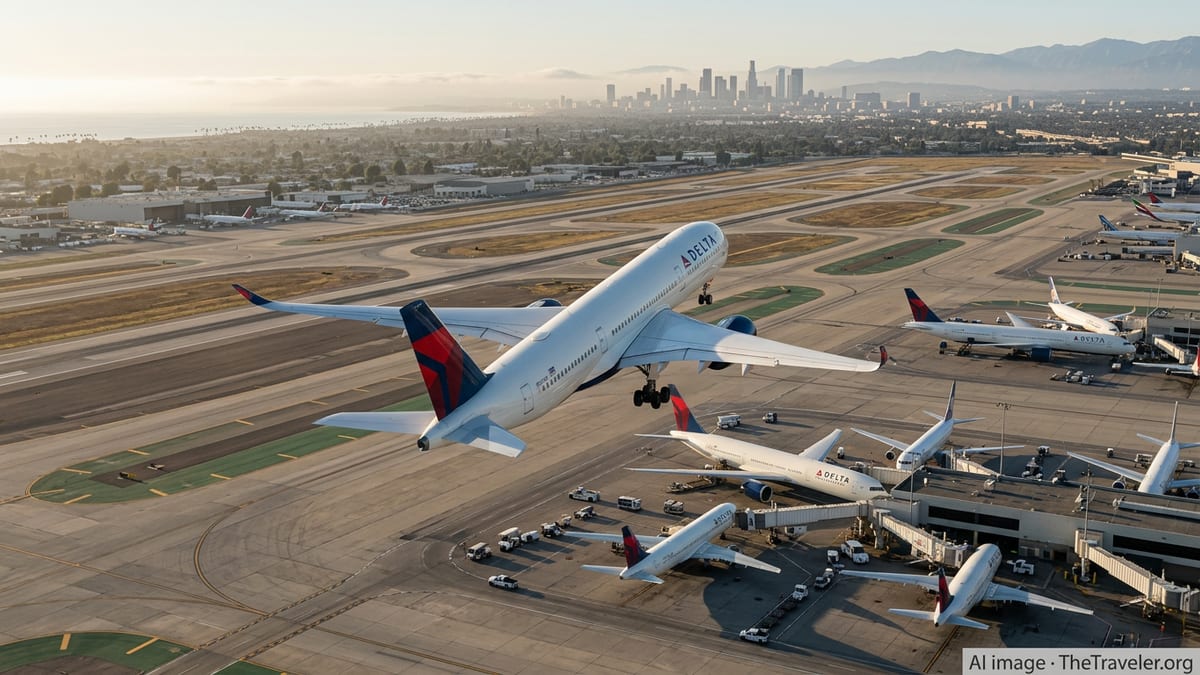
Delta Targets Manila With New West Coast Gateway
Delta’s planned nonstop route from Los Angeles International Airport to Manila’s Ninoy Aquino International Airport would mark a major strategic return for the US carrier to the Philippine capital, positioning Los Angeles as a West Coast gateway to one of the largest overseas Filipino communities. The route is expected to be operated by Airbus A350 widebody aircraft, reflecting Delta’s push to concentrate its most modern long‑haul jets on high‑demand transpacific markets.
The airline has steadily expanded its A350 footprint across the Pacific, deploying the type on services from hubs such as Los Angeles, Seattle, Minneapolis and Atlanta to major Asian cities. A Manila launch in 2027 would build on that pattern, giving Delta a direct foothold in a market currently dominated by Philippine Airlines and United Airlines on US‑Philippines traffic.
Nonstop Los Angeles to Manila flights would be timed to capture both origin‑and‑destination demand and onward connections across the United States. With Los Angeles already one of the busiest US gateways for travel to and from the Philippines, Delta’s entry would intensify competition on fares, schedules and onboard product, particularly in premium cabins.
While detailed schedules and launch dates have yet to be formally confirmed, industry expectations center on a daily operation using A350‑900 aircraft, with the possibility of later upgauging to higher‑capacity A350 variants as demand grows.
Philippine Airlines Builds Out A350 Daily US Links
Delta’s move comes as Philippine Airlines accelerates its own Airbus A350 strategy on North American routes. The flag carrier has taken delivery of its first A350‑1000 and is rolling the type into regular long‑haul service, including nonstop flights between Manila and New York John F. Kennedy, alongside its existing A350‑900 operations to the United States.
Philippine Airlines has positioned the A350 family as the backbone of its ultra long‑haul fleet, tapping the aircraft’s range and fuel efficiency to sustain daily and near‑daily links from Manila to key US gateways. Services to Los Angeles and San Francisco, traditionally among the airline’s strongest markets, are being reinforced with additional frequencies, while New York has gained dedicated A350‑1000 operations on one of the world’s longest commercial routes.
As more A350‑1000s arrive, the carrier is expected to transition additional US routes to the new flagship, enabling consistent daily schedules and expanded premium seating. That strategy is designed both to capture higher‑yield business and leisure traffic and to shore up the airline’s competitive position against US and Gulf carriers targeting Filipino travelers.
For passengers, the growing use of A350s translates into a more uniform long‑haul experience: quieter cabins, improved air quality, latest‑generation inflight entertainment and fully flat business‑class seating on most nonstop US services. Philippine Airlines is betting that this upgraded product, paired with daily frequencies, will help retain loyalty in a market where choice is rapidly increasing.
US–Philippines Air Corridor Enters New Phase
The combination of Philippine Airlines’ A350 deployment and Delta’s planned Los Angeles–Manila launch underscores how the US–Philippines air corridor has shifted from a niche ethnic market to a mainstream long‑haul battleground. Growth in overseas Filipino workers, student mobility and VFR traffic has been joined by rising business travel and tourism flows in both directions.
United Airlines has already expanded its own Philippines network, including a second daily San Francisco–Manila nonstop, and maintains Manila–Guam and Manila–Palau services out of its Pacific hub operations. Philippine Airlines, for its part, now serves multiple US points nonstop from Manila, encompassing West Coast, East Coast and Hawaii destinations, and has progressively added capacity on routes such as Los Angeles and Seattle.
Delta’s planned entry from Los Angeles would add a second US legacy carrier on the core transpacific Manila market, giving travelers more options for through‑ticketed connections across North America. For Filipino communities in California and neighboring states, the new service would further shorten door‑to‑door travel times and reduce reliance on connections via Tokyo, Seoul or other Asian hubs.
The intensifying competition is likely to put downward pressure on fares, especially outside peak holiday periods, while also encouraging carriers to differentiate through onboard service, loyalty program benefits and schedule convenience. For the broader tourism and trade relationship between the Philippines and the United States, that additional capacity points to sustained growth.
A350 at the Center of Long‑Haul Fleet Strategies
The Airbus A350’s role in this evolving transpacific landscape is significant. For both Philippine Airlines and Delta, the type provides the combination of range, fuel efficiency and passenger comfort needed to sustain long flights over the North Pacific while managing operating costs and environmental pressures.
Philippine Airlines has embraced both the A350‑900 and the larger A350‑1000, using them to restore and expand nonstop flying to North America and to enhance reliability on some of its longest sectors. The A350‑1000 in particular gives the airline the payload and range capability to operate dense configurations on routes like Manila–New York while preserving cargo capacity, an important revenue contributor.
Delta, meanwhile, has been steadily growing its A350 fleet as a replacement for older long‑haul aircraft. Deploying the A350 on a prospective Los Angeles–Manila route aligns with its broader strategy of concentrating the jet on markets where fuel savings and cargo lift can offset the complexity of ultra long‑haul flying. The aircraft’s quieter cabin and upgraded interiors also help Delta compete more effectively for premium transpacific customers.
As more A350s enter service across both carriers in the coming years, travelers can expect a higher share of US–Philippines and wider Asia–Pacific flights to be operated by this new‑generation twinjet, reinforcing its status as the workhorse of long‑haul fleets on both sides of the Pacific.
Implications for Travelers and Tourism
For passengers, the convergence of new daily A350 services by Philippine Airlines and Delta’s planned nonstop Los Angeles–Manila flights translates into a noticeable change in how they plan and experience trips. More nonstop options mean fewer time‑consuming connections and reduced exposure to missed flights or misconnections through crowded hubs.
Travelers originating beyond Los Angeles or Manila stand to gain from improved connectivity as well. Los Angeles offers an extensive domestic network across the United States, while Manila remains the primary hub for reaching Philippine provinces and key Southeast Asian destinations. Seamless through‑ticketing, coordinated schedules and interline partnerships will be crucial in turning new long‑haul links into effective one‑stop journeys for secondary cities on both ends.
Tourism stakeholders in the Philippines are also watching closely. Additional capacity from US carriers typically translates into more competitive fares and marketing campaigns aimed at American leisure travelers, which can boost arrivals beyond the traditional Filipino diaspora base. For US destinations, particularly on the West Coast, stronger air links with Manila create opportunities to attract more inbound visitors from a young, growing outbound travel market.
With Delta targeting a 2027 launch window and Philippine Airlines rapidly rolling out its A350 fleet on US routes, the coming years are set to redefine what “typical” air travel between the Philippines and the United States looks like, shifting it firmly into the realm of frequent, widebody, nonstop service powered by the latest generation of long‑haul aircraft.