

More news on this day
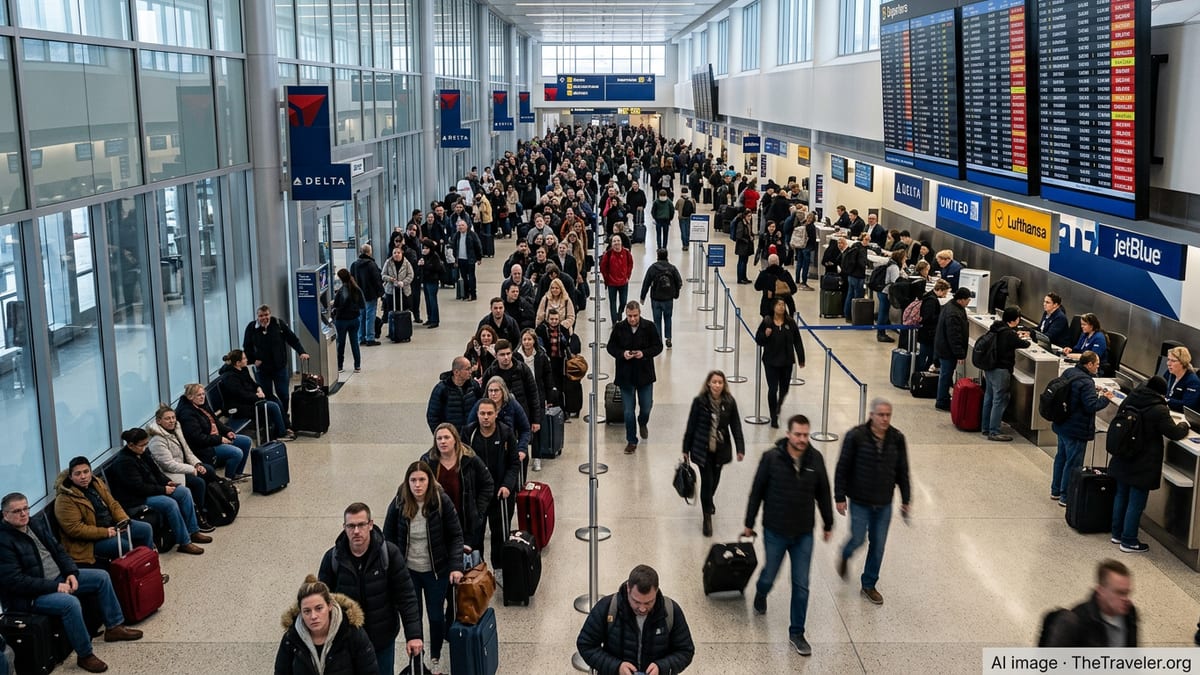
Travelers moving through Denver International Airport on April 1, 2026, faced a day of mounting frustration as at least 175 flights were delayed, three were canceled and traffic congestion around the sprawling Colorado hub intensified into full-scale gridlock.
Get the latest news straight to your inbox!
Flight Operations Struggle Through a Day of Disruption
Data compiled from aviation tracking platforms for April 1 indicates that Denver International Airport recorded at least 175 delayed flights and three cancellations, affecting both arrivals and departures across multiple major carriers. The figures place Denver among the most disrupted large U.S. airports for the day, underscoring how quickly operational challenges can cascade at one of the country’s busiest hubs.
Publicly available information shows that delays spanned the full operating day, with morning disruptions spilling into the afternoon as aircraft and crews struggled to get back on schedule. The knock-on effects included rolling gate holds, extended turnaround times and tightened connection windows for travelers attempting to make onward flights across the domestic and international networks.
Denver’s role as a key connecting point in the central United States magnified the impact. For passengers originating in Denver, delayed departures meant missed meetings, lost vacation time and rebooked itineraries. For connecting travelers, even relatively short delays rippled outward, resulting in missed links to cities across the West and Midwest and complicating airline efforts to reposition aircraft.
Industry dashboards tracking airport performance in real time show that similar disruption has affected other major hubs in recent weeks, as the national aviation system contends with spring travel surges, complex weather systems and strain on infrastructure. Within that broader picture, Denver’s latest bout of delays highlights the particular pressures facing an airport that has rapidly grown into one of the nation’s highest-traffic gateways.
Gridlocked Roads Compound the Airport Experience
While flight boards filled with delay notifications, the situation on the ground around Denver International also deteriorated. Traffic monitoring reports describe heavy congestion on Peña Boulevard, the airport’s primary access route, where ongoing roadwork and changing traffic patterns near key intersections have been documented in recent weeks. Even on ordinary days, the corridor is susceptible to bottlenecks as it funnels airport employees, rental car traffic and private vehicles toward the terminal complex.
On April 1, that vulnerability translated into gridlocked conditions that stranded some drivers in long queues before they could even reach check-in or security. Accounts shared through traveler forums and local traffic reports describe stalled traffic near construction zones and merge points, as well as significant delays in drop-off and pick-up areas outside the terminal. For passengers already aware of flight delays, the added uncertainty of simply accessing the airport intensified frustration.
Planning documents and recent studies of the Peña Boulevard corridor note that the access road returned to pre‑pandemic traffic levels several years ago and has continued to absorb growing passenger volumes. New roadworks reported near the connection with Jackson Gap Street in February highlighted the extent to which small changes in lane configuration or traffic patterns can ripple outward into major slowdowns when the airport is operating near capacity.
Tuesday’s gridlock therefore did not emerge in isolation but against a backdrop of long-running concerns about access resilience. As Denver International has added millions of annual passengers, the balance between highway capacity, curb space, parking demand and shuttle operations has grown more delicate, leaving limited room to absorb spikes in volume or minor incidents without visible disruption.
Spring Travel Surge Meets Structural Strain
The timing of the latest delays coincides with one of the busiest periods of the year for U.S. air travel. Forecasts issued ahead of the 2026 spring break season projected Denver International among the top tier of American airports by scheduled flights, trailing only giants such as Chicago O’Hare and Dallas Fort Worth. That elevated status has meant consistently high passenger volumes throughout March and into early April.
Reports from travelers over recent weeks depict a mixed picture on the ground. Some have described relatively smooth security screening with modest wait times despite the crowds, while others point to intermittent spikes that prompted the airport to recommend longer arrival windows for departing passengers. The disparity reflects an environment in which small timing differences in arrival patterns can transform a manageable morning rush into an overwhelmed checkpoint.
At the same time, national aviation data in 2026 show that many major U.S. airports are grappling with congestion, weather disruptions and staffing challenges that limit their ability to absorb irregular operations. Denver’s experience on April 1 fits into that wider pattern, where a high baseline of demand intersects with capacity constraints in areas ranging from runways and gates to security lanes and road access.
Analyses prepared for policymakers in recent months have underscored how delays at large hubs such as Denver can translate into millions of collective passenger delay hours, reinforcing questions about whether existing infrastructure and operating models can keep pace with projected growth over the coming decade.
Passenger Frustration Highlights Human Cost of Gridlock
Beyond the operational charts and traffic diagrams, the day of disruption at Denver International took a tangible toll on travelers. Public posts and travel community discussions from April 1 describe missed family gatherings, rescheduled business meetings and extended hours spent in crowded concourses while waiting for updated departure times.
For some passengers, the combination of delayed flights and congested access roads turned a standard two- or three-hour journey from home to destination into an ordeal stretching across most of the day. Reports indicate that parents traveling with young children, older passengers and those with tight connections were particularly affected, especially when rebooking options were limited by already full flights tied to the spring travel surge.
Scenes of long lines at customer service counters and packed gate areas mirror similar episodes at Denver and other major airports over the past year, where rapid swings from normal operations to heavily disrupted conditions have become more common. In these circumstances, passengers often turn to mobile apps, airline notifications and crowd-sourced information to piece together a real-time understanding of what is happening across the network.
Travel industry observers note that while airlines and airports increasingly emphasize digital communication tools and self-service options, extended delays still test traveler patience and expose gaps in wayfinding, seating capacity and basic amenities when terminals fill far beyond their peak design assumptions.
Questions Raised Over Capacity and Future Resilience
Denver International Airport’s leadership has in recent years advanced a series of expansion and modernization projects aimed at addressing precisely the kinds of pressures exposed by the latest gridlock. Public presentations describe plans for new security checkpoints in the terminal, expanded screening lanes using updated technology and reconfigured passenger flows designed to relieve chokepoints on the main levels.
Separate planning efforts for the highway network and access infrastructure around the airport have explored long‑term options for improving traffic circulation on Peña Boulevard and its feeder roads. These include intersection redesigns, lane additions and better segregation of local and airport-bound traffic in fast-growing residential areas near the corridor.
Despite these initiatives, the events of April 1 highlight the lag between planning and on‑the‑ground relief. Many of the major projects remain under construction or in early implementation phases, while passenger numbers have already rebounded and surpassed pre‑pandemic levels. In the interim, even modest weather issues, road incidents or air traffic management measures can push the system beyond its comfortable limits.
As Denver International eyes continued growth in flights and passenger totals through 2026 and beyond, the convergence of delayed aircraft, saturated security lanes and gridlocked access roads serves as a reminder that capacity has to be managed across the entire journey. For travelers who spent the day watching departure times slip and brake lights stack up on Peña Boulevard, that reality was impossible to ignore.