

More news on this day
Denver International Airport experienced a sharp spike in disruptions in early April 2026, with data from flight-tracking services indicating 323 delays and 15 cancellations as a wave of operational strain rolled across U.S. air travel.
Get the latest news straight to your inbox!
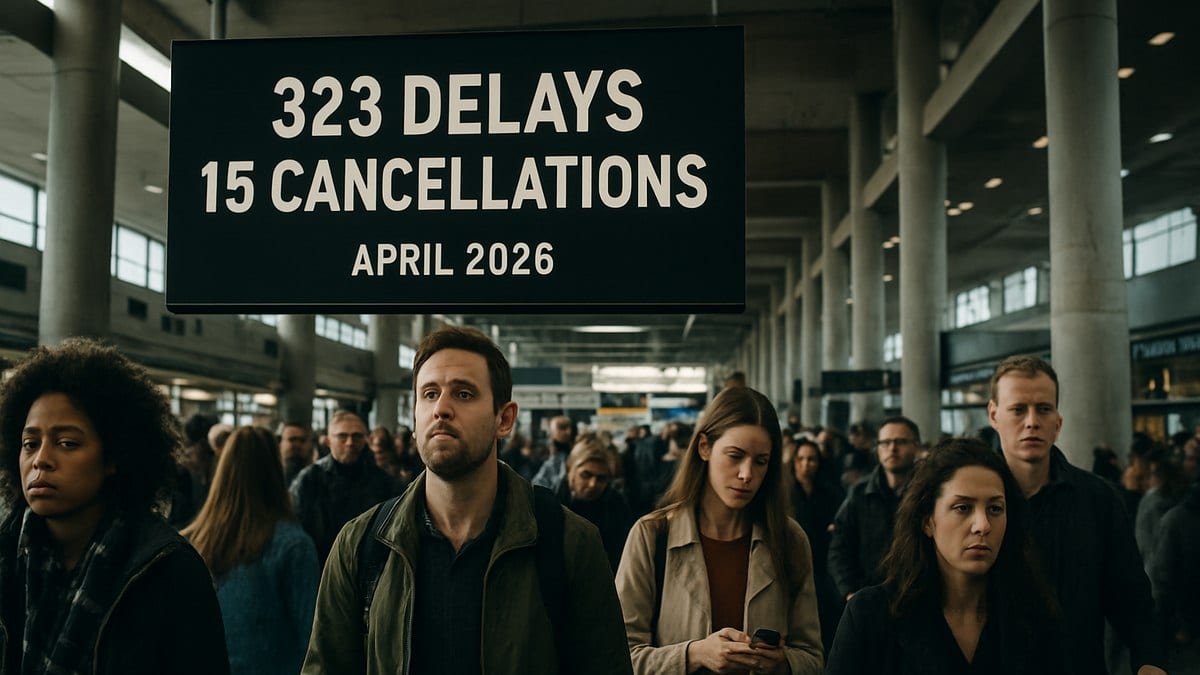
Denver’s Busy Hub Faces Another Day of Turbulence
The disruption figures place Denver International Airport among the more heavily affected North American hubs during the latest bout of irregular operations reported in early April. Publicly available tracking data for the period show hundreds of flights departing or arriving behind schedule, with a smaller but still significant number of outright cancellations compounding the strain for passengers with tight connections.
The impact extended across both domestic and international routes, reflecting Denver’s role as a central transfer point between the U.S. coasts and the Rocky Mountain region. As at other major hubs dealing with similar issues this spring, even modest schedule disturbances early in the day appear to have cascaded into longer delays by afternoon and evening as aircraft and crews fell out of position.
Although the scale at Denver was notable, it aligned with a broader pattern of disruption seen at other airports in recent days. Reports from travel and aviation outlets have described clusters of delays and cancellations at hubs in Texas, Canada and Europe, suggesting that the strain on airline networks is not confined to a single region.
For travelers, the headline numbers at Denver translated into crowded gate areas, rebooked itineraries and extended time in terminals. While many services still operated, the reduced on-time performance meant increased uncertainty for those relying on tight connections or same-day returns.
Weather, Traffic Management and Network Ripple Effects
Several familiar factors appear to lie behind Denver’s latest spike in disruptions. Spring weather across the central United States often brings fast-changing wind patterns, low ceilings and thunderstorms, all of which can force air traffic managers to slow arrival and departure rates into major hubs. Aviation-focused forums and previous coverage of Denver operations point to these conditions as a recurring source of slowdowns when clouds and gusty winds combine along the Front Range.
When arrival rates are reduced, flights destined for Denver may be held on the ground at their departure airports or placed into holding patterns en route. This kind of traffic management intervention protects safety but inevitably contributes to late arrivals, which then drive late departures for the same aircraft as they prepare for their next legs.
Once a large hub like Denver begins to run behind schedule, recovery can be challenging. Airlines typically operate tightly timed rotations, and an early delay can ripple through several subsequent flights. Recent analyses of wider U.S. disruption patterns in April 2026 have highlighted similar cascading effects at other hubs, with early-morning irregularities producing elevated delay counts by evening.
Ground operations can also feel the strain. Pushback queues, congested taxiways and competition for limited gates slow the turnaround process, while crews must observe strict duty-time rules. Together, these operational constraints can convert what might have been minor schedule slippage into more pronounced disruptions by the end of the day.
Denver’s Role in a Wider April 2026 Flight Disruption Wave
The 323 delays and 15 cancellations at Denver sit within a broader pattern of flight disruption documented across multiple continents at the turn of the month. Aviation and travel publications have reported notable spikes in delays and cancellations at airports ranging from Calgary and Madrid to major hubs in Texas, as carriers contend with volatile weather, heavy spring schedules and ongoing operational challenges.
Recent coverage has cited data from services such as FlightAware to quantify these events, showing that days with several hundred delayed flights at key hubs have become more common during periods of unsettled weather and peak demand. In this context, Denver’s figures are sizable but not isolated, instead forming part of a complex, interconnected network where disruptions in one region quickly influence performance in another.
Denver’s geographic position means it often functions as both a destination and a through-point for coast-to-coast traffic. Delays at airports in California, the Midwest or the East Coast can therefore reverberate through Denver’s schedule, even when local conditions improve. Likewise, disruptions originating in Denver can spread outward along the spokes of airline route networks, affecting travelers far from Colorado.
This interconnectedness has prompted renewed attention on how resilient current schedules are to short-notice changes. With airlines operating closer to pre-pandemic capacity and many hubs already near their practical limits at peak times, even small operational shocks can produce pronounced effects across the system.
What Travelers Moving Through Denver Can Expect
For passengers passing through Denver during this period of elevated disruption, the practical consequences have centered on longer waits, reissued boarding passes and rethought itineraries. Travelers with tight connections have been especially exposed, as even moderate inbound delays can make minimum connection times difficult to meet when gates are far apart or when deplaning is slowed by congestion.
Industry guidance and consumer advocates generally advise passengers to build additional buffer time into itineraries involving large hubs like Denver during seasons known for unsettled weather. Early departures, longer layovers and flexible same-day change options are frequently recommended tactics to reduce the risk of missed connections when on-time performance deteriorates.
In cases of significant delay or cancellation, travelers are often encouraged to document disruption times, keep receipts for essential expenses and review airline policies on rebooking and care. Publicly available information from regulators and consumer-rights organizations outlines circumstances under which passengers may be entitled to refunds or assistance, though the specifics can vary by jurisdiction, carrier and cause of delay.
At the terminal level, passengers moving through Denver during busy disruption days can expect heavier foot traffic in concourses, longer lines at food outlets and fuller seating areas near power outlets and charging stations. Some reports from recent travel weekends suggest that arriving earlier than usual for security screening and allowing extra time to move between concourses can help reduce stress when operations slow down.
Outlook for Operations at Denver in the Coming Days
While delay and cancellation tallies at Denver reached striking levels in early April 2026, similar past events suggest that conditions can normalize once weather stabilizes and airlines complete schedule recovery. As aircraft and crews return to their planned rotations, same-day disruptions often ease, even if residual knock-on effects persist for a short period.
Published data and historical performance records underline that Denver’s on-time metrics are highly sensitive to weather and air traffic control constraints. On days with clear skies and favorable winds, the airport has shown the capacity to process large volumes of flights with relatively few significant delays, although occasional congestion is inevitable at such a busy hub.
Travelers planning to use Denver in the days following the disruption wave are often advised to monitor flight status closely and to check for timetable adjustments as airlines reoptimize their operations. Some carriers may temporarily adjust schedules, swap aircraft types or consolidate lightly booked flights to help restore punctuality.
For now, the 323 delays and 15 cancellations recorded at Denver highlight how quickly conditions can shift for one of the nation’s most important connecting hubs. As spring weather patterns continue and demand for air travel remains strong, operational resilience at airports like Denver is likely to stay under scrutiny from both industry analysts and passengers watching the boards in crowded concourses.