

More news on this day
Denver International Airport is emerging as one of the latest flashpoints in the turbulent spring 2026 travel season, with flight-tracking tallies indicating 323 delays and 15 cancellations in early April as weather, congestion and airline scheduling ripple across the national network.
Get the latest news straight to your inbox!
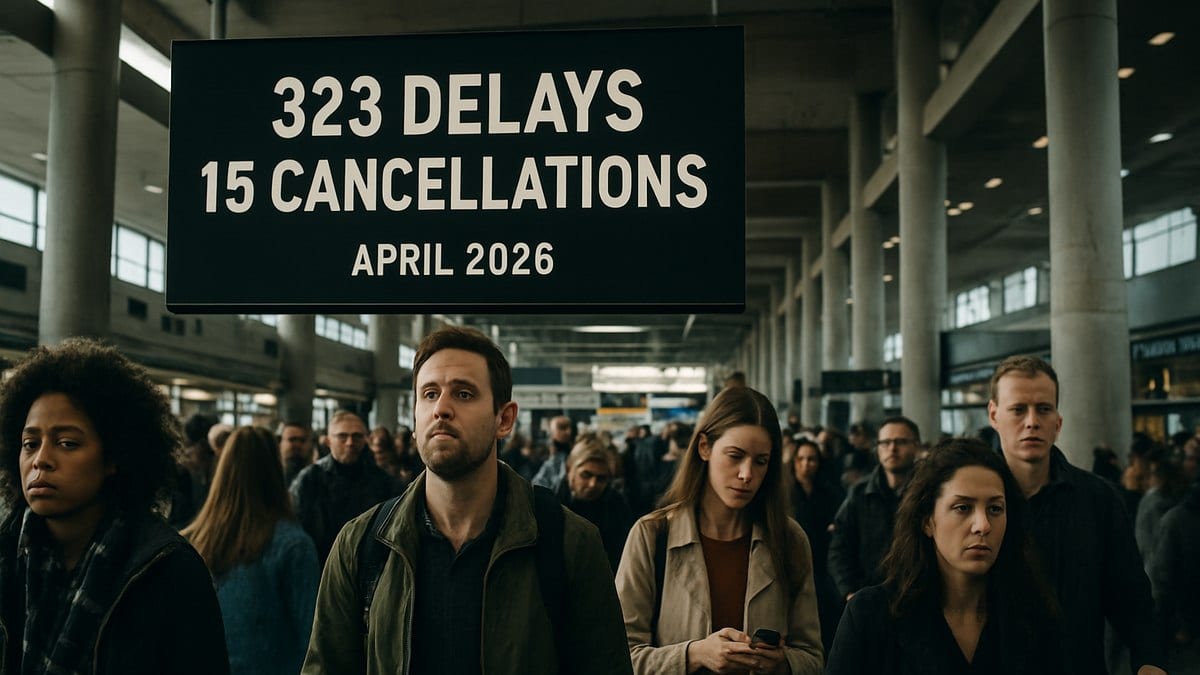
Busy Hub Feels the Strain of Spring 2026 Disruptions
The disruption numbers at Denver, while modest compared with the largest nationwide waves of cancellations and delays reported in early April, place one of the country’s busiest connecting hubs squarely inside a broader pattern of operational stress. Publicly available tracking data for April 2026 show hundreds of late departures and arrivals at Denver, on top of a smaller cluster of outright cancellations that forced some travelers to abandon or rebook their trips.
Across the United States, April 3 and the surrounding days have brought a new spike in flight problems, with national totals for delays reaching into the thousands and several hundred flights canceled on a single day. Coverage from travel and consumer outlets highlights pressure points at major hubs including Chicago, Dallas, Boston, Orlando, Las Vegas and Philadelphia, where storms, congestion and airline-specific schedule issues created rolling bottlenecks that then spilled into secondary hubs such as Denver.
Denver’s role as a key connecting point for both full-service and low-cost carriers means that even relatively limited cancellations can have an outsized effect on passengers. A single delayed inbound flight can cascade through multiple onward legs, while cancellations on crowded spring break and early-summer schedules reduce rebooking options and lengthen airport stays for stranded travelers.
Weather, Congestion and Airline Networks Intersect
Several factors are converging to drive Denver’s April disruption figures. Spring weather across the central United States has produced bouts of strong winds and intermittent storms that slow operations or temporarily limit arrival and departure rates. Reports from federal aviation and weather agencies for early April describe brisk winds and fast-changing conditions along the Front Range, a long-standing operational challenge for Denver’s wide, exposed airfield.
At the same time, airline network decisions are adding stress. Industry coverage notes that some carriers have faced particularly heavy disruption in spring 2026, with low-cost operators such as Frontier frequently cited in connection with delays and cancellations at their core hubs, including Denver. Separate reporting on full-service airlines describes how large numbers of delays concentrated at key hubs can leave aircraft and crews out of position, driving knock-on schedule problems across the wider network.
Denver’s mix of large network carriers and fast-growing low-cost airlines means the airport is highly sensitive to these broader patterns. When a carrier experiences a surge of delays at other hubs, Denver often feels the impact in the form of late inbound aircraft, tighter turn times and compressed departure banks, all of which show up in day-end counts of delayed flights even when local conditions appear calm.
Passenger Experience: Longer Lines and Tighter Connections
For travelers passing through Denver in April, the statistics translate into a more uncertain and often more time-consuming airport experience. Recent first-hand accounts on traveler forums have described early-morning security queues stretching to 30 minutes or more, particularly before 7 a.m., as spring demand returns and staffing and checkpoint layouts adapt to peak volumes. Other posts reference days when operations at Denver were described as “pretty messed up,” with diversions and departure backlogs, while more recent comments this week suggest that conditions can shift quickly from normal to strained and back again.
Connecting passengers are among the most exposed to the effects of the 323 delays reported so far. Even modest schedule slips can erode short connection windows, especially for travelers linking regional flights to mainline services or switching between concourses. When a handful of Denver departures are canceled on a busy day, remaining flights on the same routes can quickly sell out, leaving some passengers facing overnight stays or reroutes through other hubs.
The passenger experience is also shaped by the way individual airlines handle recovery. Consumer-oriented guides released in 2026 emphasize that U.S. Department of Transportation rules now give travelers clearer rights to refunds when flights are significantly delayed or canceled, but they also note that meal vouchers, hotel rooms and rebooking policies vary widely between carriers. For Denver passengers caught up in April’s disruptions, understanding the specific rules attached to their ticket and airline remains an important part of navigating an already stressful situation.
New Passenger Rights Framework Meets Old Operational Realities
The April disruption at Denver is unfolding just as new refund and transparency rules are taking effect for U.S. airlines. Policy summaries and advocacy materials published this year point out that, under updated federal guidelines, passengers are generally entitled to a cash refund when a domestic flight is canceled or experiences a significant delay and they choose not to travel. For many travelers, that represents a clearer baseline than in past years, when airlines faced criticism for offering travel credits instead of refunds.
However, these regulatory changes have not reduced the underlying operational pressures that push delay and cancellation numbers higher at hubs such as Denver. Airlines still balance ambitious schedules against aircraft utilization, crew availability and weather patterns. Airports contend with construction, airfield maintenance, air traffic control constraints and fast-growing passenger volumes, especially during holiday periods and peak travel seasons. Denver has seen all of these forces to varying degrees, and the 323 delays and 15 cancellations recorded so far in April illustrate how quickly they can converge.
Travel experts writing about the spring 2026 disruptions argue that the new rules may change how some passengers respond to severe delays, including increased willingness to abandon disrupted trips in favor of refunds and rebooking on other carriers or dates. For Denver, this could subtly shift demand patterns during and after major disruption events, altering how quickly the hub returns to normal operations once weather improves or airline systems stabilize.
What April’s Numbers Mean for Travelers Headed to Denver
For passengers planning trips through Denver later in April 2026, the current disruption totals serve as a cautionary signal rather than a guarantee of more problems ahead. Tracking sites and anecdotal reports suggest that conditions at Denver can swing from relatively smooth to heavily delayed within a single day, depending on weather shifts, national traffic levels and carrier-specific issues. On some recent days in early April, travelers have reported relatively normal operations and manageable wait times, underscoring that the airport is not facing a constant crisis.
Even so, the combination of 323 delays, 15 cancellations and a broader national pattern of spring travel disruptions suggests that travelers would be wise to build extra time into itineraries involving Denver. Practical steps commonly recommended in consumer guidance include choosing longer connection windows when possible, scheduling critical meetings or events at least several hours after scheduled arrival, and monitoring flight status frequently in the 24 hours before departure.
As the busy summer travel season approaches, Denver’s April experience offers an early snapshot of the challenges facing U.S. aviation in 2026. A single windy afternoon, a burst of storms in another part of the network, or a carrier-specific scheduling problem can quickly add dozens of new delays to the board. For now, Denver’s tally of 323 delays and 15 cancellations stands as a reminder that even on days without headline-grabbing storms, air travel remains vulnerable to a complex mix of operational and regulatory forces that travelers must increasingly factor into their plans.