

More news on this day
Detroit Metropolitan Wayne County Airport passengers faced a bruising day of delays on April 11 as a fresh wave of spring travel disruption at the Michigan hub spilled across the wider United States aviation network.
Get the latest news straight to your inbox!
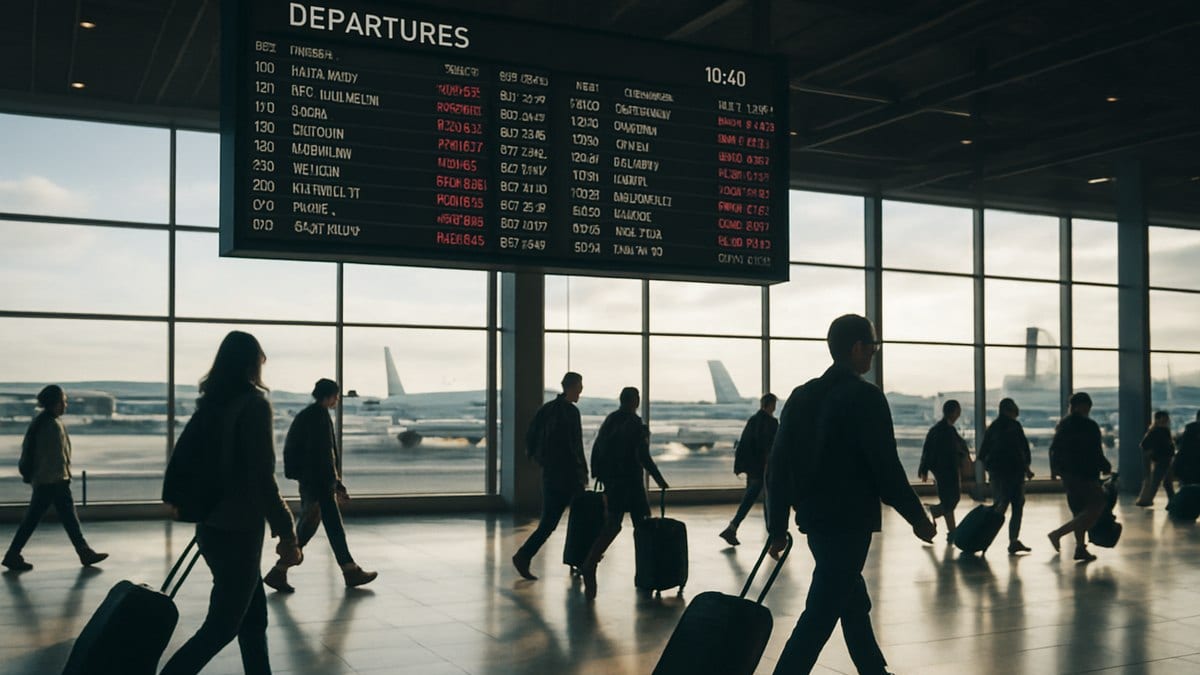
Detroit Logs More Than 100 Delays as Spring Crunch Bites
Publicly available tracking data for April 11 shows Detroit Metropolitan Wayne County Airport recording well over one hundred delayed departures and arrivals, alongside a smaller number of cancellations. Industry coverage drawing on live flight-status dashboards indicates that more than 110 flights at Detroit were delayed and several were canceled across domestic and international routes, affecting services to cities such as New York, Atlanta, Chicago, Toronto and Los Angeles.
Reports describe the disruption as part of a mounting spring travel crunch, with Detroit’s role as a key Midwestern connecting hub amplifying the impact of any operational strain. Late-arriving aircraft, tight crew rotations and congested taxiways combined to slow afternoon and evening banks of departures, even as the airport itself avoided the kind of sustained ground stop that can sometimes shut down operations for hours.
Travel industry summaries note that the figures captured by flight-tracking platforms often appear higher than delay snapshots on federal status maps, because they aggregate rolling gate holds, sequencing delays and knock-on schedule changes over the course of the day. For travelers at Detroit on April 11, that translated into long lines at customer service desks, busy rebooking channels and crowded gate areas as multiple departures slipped well past scheduled departure times.
Weather and Congestion Push Stress Across the National Network
The turbulence in Detroit formed one node in a broader pattern of disruption affecting major United States hubs in early April. Published travel news tallies for April 10 and April 11 describe thousands of delays and more than one hundred cancellations nationwide, concentrated at large airports including Atlanta, Boston, San Francisco, Denver and other busy centers. A series of storm systems tracking across the Southeast and Central states added low clouds, gusty winds and thunderstorm cells to already strained schedules.
According to data collated from aviation tracking services, weather-linked ground stops and air traffic control programs have been particularly prominent this week, with thunderstorms prompting temporary holds at airports such as Austin and rippling into connecting hubs farther afield. When those restrictions intersect with high holiday and spring-break demand, available slack in the system quickly disappears, leaving airlines little margin to recover from relatively minor operational setbacks.
Coverage from passenger rights organizations and travel advisories underscores how closely linked major hubs are in practice. Disruptions at one coastal or southern airport can leave aircraft and crews out of position across the country, forcing carriers to delay or trim schedules at secondary hubs such as Detroit, even if local conditions appear calm. The April 11 pattern fits that description, with Detroit’s delay totals rising in tandem with reported congestion at other large airports.
Atlanta, Phoenix and Other Hubs Feel the Strain
Beyond Detroit, several major hubs reported their own flashpoints on April 11. Travel-focused outlets cite Hartsfield-Jackson Atlanta International Airport as one of the hardest-hit for cancellations, reflecting its status as the country’s busiest passenger hub. Data summaries for the day point to dozens of flights scrapped and many more delayed as operators grappled with storms, crew availability questions and aircraft rotation challenges.
In the Southwest, Phoenix Sky Harbor International Airport emerged as another focal point. A review of delay statistics published on April 11 shows Phoenix logging more than 160 delayed flights and a small number of cancellations, creating bottlenecks on routes feeding major hubs such as Chicago, Los Angeles and New York. While the federal delay map did not indicate a prolonged formal ground stop at Phoenix, rolling gate holds and late inbound aircraft effectively throttled capacity for much of the day.
Earlier in the week, flight-tracking tallies also highlighted elevated disruption in Boston, Denver and San Francisco, indicating that the stress on the system was building before Detroit’s rough day. For travelers connecting through multiple hubs, those overlapping problems increased the odds of missed connections and overnight interruptions, even when individual legs showed only moderate delays on paper.
Numbers Highlight Growing Vulnerability in Early Peak Season
Statistics released by aviation data aggregators in recent days suggest that early April has delivered some of the highest nationwide delay volumes since the start of the year. One travel-industry roundup for April 10 cited more than one thousand delayed flights and over one hundred cancellations across the United States, with Detroit featuring among the affected airports. A separate April 11 overview tracked close to two thousand delays and several dozen cancellations nationwide, as storms and operational issues converged.
Within those national totals, Detroit’s figures on April 11 stand out as a warning signal for mid-continent hubs that are heavily dependent on smooth aircraft and crew flows. Flight-status feeds for the airport show delays clustered around key domestic banks, with knock-on effects for transborder services into Canada and connecting flights toward the West Coast.
Analysts quoted in recent aviation coverage argue that current disruption patterns underscore a broader vulnerability as the industry heads into the main summer season. Persistent staffing gaps in some operational roles, ongoing training pipelines for new pilots and controllers, and the growing volatility of severe-weather events are combining to make schedule reliability harder to guarantee, even on days when headline weather at many airports appears manageable.
What Travelers Through Detroit and Major Hubs Should Expect Next
For travelers booked through Detroit and other large hubs over the coming days, published guidance from consumer advocates and airline policy resources recommends treating April’s events as a reminder to build extra flexibility into itineraries. Longer connection times, earlier departures on days with critical onward links and close monitoring of flight status through airline apps remain among the most practical strategies.
Passenger-rights organizations note that, under United States regulations, travelers are entitled to refunds when an airline cancels a flight and the passenger chooses not to travel, even on nonrefundable tickets. In contrast, compensation for delays alone is more limited and typically defined by each carrier’s internal policies, particularly when weather or air traffic control constraints are listed as contributing factors.
Travel-industry coverage also stresses the importance of understanding how disruptions at distant hubs can affect local plans. On days like April 11, Detroit travelers were often caught out by delays attributed not to conditions in Michigan but to storms, crew issues or congestion in other parts of the network. With national delay totals climbing again this week, those indirect effects are likely to remain a feature of United States air travel as the spring and summer peaks approach.